


In a recent blog on The New Left Project website, Michael Krog wrote:
To cut to the chase. I don’t believe capitalism is going to be challenged in any meaningful way anytime soon…. Although obviously it’s vital that we challenge the economic dogmas of the neo-liberal version, or cult, of capitalism, I’m not really optimistic that the ‘idea’ on its own, is a match for raw power…. If we lived in a healthy and functioning democracy, with a free debating climate, and a neutral mass media, I’d be more optimistic, only we don’t…. Given the multiple crises we face … a people’s revolution would seem to be our only chance of avoiding disaster or collapse. On the other hand I’m not sure that the revolution will happen quick enough.
I could easily agree with these sentiments. However, pondering how hopeless our situation may, or may not be will get us nowhere. The practical question is what to do. Here I have changed my views about some relative priorities regarding how we expend our limited energies and resources in response to what are some important changes in circumstances from a few years ago.
The dilemma the left faces remains the same: Nowhere in Europe or the US/Canada does the left have the trust and loyalty of anywhere approaching a third of the population. Worse still, we no longer have the ability to mobilize whatever percentage does agree with us. Until this changes our ability to affect outcomes in a global capitalist world will remain minimal. And until this changes our ability to move the agenda of replacing capitalism with a participatory democratic socialism forward will also remain minimal. The percentage who agree with us varies from country to country — and that makes a big difference to what strategies should be most effective in different places. But the fact that the percentage is as small as it is everywhere remains the major obstacle we must overcome.
There is always a debate on the left about how much to prioritize electoral vs. non-electoral work, how much to prioritize working in mass reform campaigns vs. building what I call “imperfect experiments in equitable cooperation" but are generally called countercultural or prefigurative institutions, and between building social movements vs. agitation for socialism. I can speak only for the US, but at least here I believe that changed circumstances warrant a shift of priorities, at least to some extent.
(1) In light of the Citizens United Supreme Court decision which now permits unlimited and secret corporate money to pollute elections, it seems to me that working to elect decent candidates — whether they be inside or outside the Democratic Party — will prove even less productive than in the past. Those who work on electoral issues need to prioritize electoral reform more and getting particular people elected less. I also believe that until at least some headway is made on electoral reform, non-electoral work deserves somewhat greater emphasis because electoral work will become even less productive than it has been. I believe it is hard to make a case that Citizens United does not warrant less emphasis on electing progressive candidates.
(2) The center left has become the center right, and reform organizations have diminished in power at best, and abdicated leadership at worst in opposing the neoconservative onslaught. Because those are the forces the left must work with in reform campaigns, I believe reform work will also prove even less productive than in the past — at least for the moment.
While I believe (1) and (2) are logical conclusions, I do not consider them good news. Electoral work and working in reform campaigns are the most productive ways to reach out to new recruits, which is what we need more than anything else. So the fact that these kinds of activities will prove less productive than in the past, at least for now, is no cause for rejoicing. However, because electoral and reform organizing will be less productive, and also because triumphant, disaster capitalism will continue to abandon many more people struggling to simply meet their basic needs, I believe that organizing counter institutions should receive greater priority than in the past. Again, this is problematic because often when the left concentrates on building counter institutions we do so in ways that further isolates us from those we need to reach out to most.
(3) I also believe that as disaster capitalism consolidates its power and realistic prospects for social democratic capitalism dim at least in the near term, it makes more sense to preach the ills of capitalism and sing the praises of socialism. So even if only a small minority right now are receptive to the message "capitalism is the problem and only socialism is the solution," I believe this message will resonate more than in the past among those whom disaster capitalism pushes out of the middle classes and whose life prospects dim. This means that making a compelling case for how and why participatory eco-socialism not only solves our economic problems – which will continue and worsen for at least another four years, and possibly many more – but would also unlock a way forward to reversing environmental degradation and preventing climate change, and why only participatory eco-socialism can deliver true economic justice and democracy, should be a higher priority than in the past.

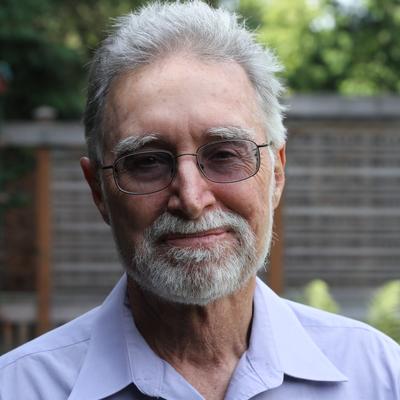
Robin Hahnel is a radical economist and political activist. He is Professor Emeritus at American University in Washington, D.C. where he taught in the Economics Department from 1976 – 2008. He is currently a visiting professor in economics at Portland State University in Portland, Oregon, where he resides with his family. His work in economic theory is informed by the work of Thorstein Veblen, John Maynard Keynes, Karl Polanyi, Pierro Straffa, Joan Robinson, and Amartya Sen among others. He is best known as co-creator, along with Michael Albert, of a radical alternative to capitalism known as participatory economics, (or parecon for short). His more recent work is focused on economic justice and democracy, and the global financial and ecological crisis. Politically he considers himself a proud product of the New Left and is sympathetic to libertarian socialism. He has been active in many social movements and organizations over forty years, beginning with the Harvard and MIT SDS chapters and the Boston area anti-Vietnam war movement in the 1960s.




