


For the fifteen to twenty years that the Washington Consensus dominated the discourse in the world-system (circa 1975-1995), poverty was a taboo word, even as it was increasing by leaps and bounds. We were all told that the only thing that mattered was economic growth, and that the only road to economic growth was to let the "market" prevail without any "statist" interference – except, of course, that of the International Monetary Fund (IMF) and the U.S. Treasury.
Great Britain's Mrs. Thatcher famously gave us the slogan, "There is No Alternative" (TINA), by which she meant there was no alternative for any state other than the United States and, I suppose, the United Kingdom. The benighted countries of the global South just had to abandon their naive pretensions at controlling their own fate. If they did, they would one day (but who could say when?) be rewarded with growth. If they did not, they were doomed to – dare I say it? – poverty.
The glory days of the Washington Consensus are long since over. Things did not improve for most people in the global South – quite the opposite – and rebellion was in the air. The neo-Zapatistas rose up in Chiapas in 1994. The social movements brought the World Trade Organization's meeting in Seattle to a halt in 1999 (from which it has never recovered). And the World Social Forum began its expansive life in Porto Alegre in 2001.
When the so-called Asian financial crisis exploded in 1997, causing vast economic damage in east and southeast Asia, and spreading to Russia, Brazil, and Argentina, the IMF pulled out of its pockets its threadbare set of demands for these countries, if they wanted any help. Malaysia had the courage to say no thank you, and Malaysia recovered the most swiftly. Argentina was even bolder, offering to pay its debts at about 30 cents on the dollar (or else nothing).
Indonesia however buckled under, and soon thereafter the long-standing, seemingly very stable dictatorship of Suharto was ended by a popular uprising. At the time, no less a person than Henry Kissinger bellowed at the IMF, saying in effect how stupid can you be? It was more important for world capitalism and the United States to keep a friendly dictator in power in Indonesia than to have a country follow the rules of the Washington Consensus. In a memorable 1998 op-ed, Kissinger said that the IMF is acting "like a doctor specializing in measles [who] tries to cure every illness with one remedy."
First the World Bank and then the IMF learned their lesson. Forcing governments to accept neo-liberal formulas as their policy (and as the price for financial assistance when their state budgets are out of kilter) can have nasty political consequences. It turns out that there are alternatives after all: People can revolt.
When the next bubble burst and the world entered what is now referred to as the financial crisis of 2007 or 2008, the IMF became even more attuned to those unpleasant masses who don't know their place. And lo and behold, the IMF discovered "poverty." They not only discovered poverty, but they set out to provide programs to "reduce" the amount of poverty in the global South. It is worth understanding their logic.
The IMF publishes a sleek quarterly magazine called Finance & Development. It is not written for professional economists but for the wider audience of policymakers, journalists, and entrepreneurs. The September 2010 issue features an article by Rodney Ramcharan whose title tells it all: "Inequality Is Untenable."
Rodney Ramcharan is a "Senior Economist" in the IMF's African Department. He tells us – the new IMF line – that "economic policies that simply focus on average growth rates could be dangerously naive." In the global South, high inequality can "limit growth-enhancing physical and human capital investments and increase calls for possibly inefficient redistribution." But even worse, high inequality "giv[es] the rich a relatively greater voice than the less homogeneous majority." And this in turn "can further skew the income distribution and ossify the political system, leading to even graver political and economic consequences in the long run."
It seems the IMF has finally heard Kissinger. They have got to worry about both the unwashed masses, especially in countries of high inequality, and of their elites, who also delay "progress" because they want to maintain their hold on unskilled labor.
Has the IMF suddenly become the voice of the world's left? Don't be silly. What the IMF wants, as do the world's more sophisticated capitalists, is a more stable system in which their market interests prevail. This requires twisting the arms of elites in the global South (and even in the global North) to give up a little of their ill-gotten gains in "poverty" programs that will appease enough of the ever-expanding poor to calm their thoughts of rebellion.
It may be too late for this new strategy to work. The chaotic fluctuations are so very great. And "untenable inequality" is growing daily. But the IMF and those whose interests it represents are not going to stop trying.
by Immanuel Wallerstein
[Copyright by Immanuel Wallerstein, distributed by Agence Global. For rights and permissions, including translations and posting to non-commercial sites, and contact: rights@agenceglobal.com, 1.336.686.9002 or 1.336.286.6606. Permission is granted to download, forward electronically, or e-mail to others, provided the essay remains intact and the copyright note is displayed. To contact author, write: immanuel.wallerstein@yale.edu.
These commentaries, published twice monthly, are intended to be reflections on the contemporary world scene, as seen from the perspective not of the immediate headlines but of the long term.]

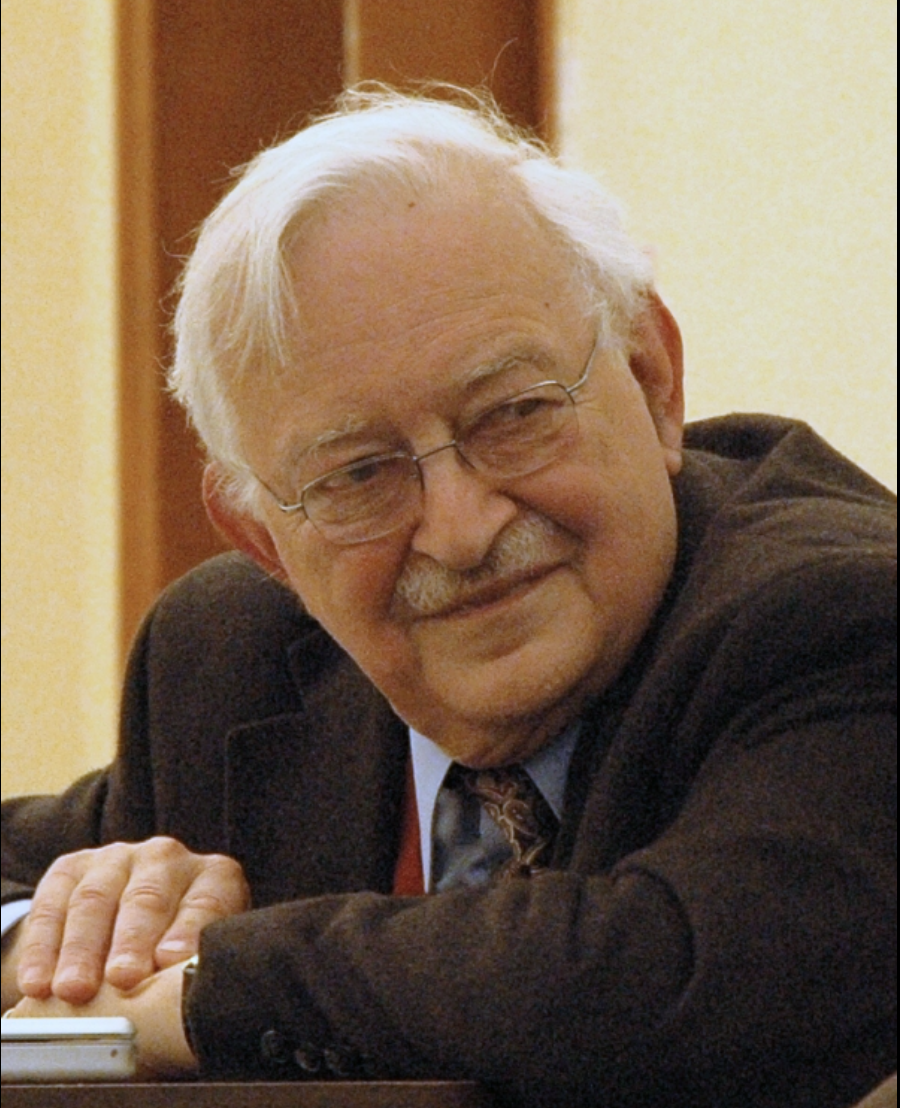
Immanuel Wallerstein (September 28, 1930 – August 31, 2019) was an American sociologist and economic historian. He is perhaps best known for his development of the general approach in sociology which led to the emergence of his world-systems approach. He was a Senior Research Scholar at Yale University from 2000 until his death in 2019, and published bimonthly syndicated commentaries through Agence Global on world affairs from October 1998 to July 2019. He was the 13th president of International Sociological Association (1994–1998). Politically, he considered himself on the "independent left" and was active in a variety of organizations. He argued that we are in the transition from our existing capitalist world-economy to some new system, and that the great political struggle of our time is about which new kind of systemic order will replace our existing one. A new systemic order could be better or worse, depending on our collective ability to push the worldwide decision in one direction or another. He believed that a crucial element in this is a vast debate about the kind of better system we wish to build, and saw the Reimagining Society Project as one of the ways to further this collective debate.




