


I’ve written in recent Future Hope columns, and for years really, about what I consider are the main elements of an overall strategy for the eventual emergence of a strong, impactful, broadly-based, Left political movement in this country. Those are:
-the forging of an independent and progressive united front, a “third force” with an activist and electoral approach that involves a willingness to support both progressive Democrats and progressive third party or independent candidates;
-the building of this alliance in a way which incorporates at its center and in its leadership representatives of key constituencies who most experience the negative impacts of the corporate-dominated system: low-income people, people of color, women, workers, l/g/b/t people, young people, people with disabilities, others;
-a commitment to issue-oriented activism, with one on-going priority being reform of our antiquated and undemocratic, two-parties-dominant, corporate-controlled, winner-take-all, non-proportional electoral system. The climate crisis, which threatens all people and all life forms on the planet, must also be a top priority; and,
-the development of democratically-organized methods for determining support of platform-based candidacies, and taking seriously the issue of accountability for those who are chosen as standard bearers.
I appreciate that there are some excellent and dedicated organizers who have little interest in relating to electoral politics, for good reasons. But the hard fact is that if we are talking about a mass movement of millions, tens of millions, we must intervene within an arena that, rightly or wrongly, the vast majority of people in this country see as the way to “do politics.” As we do that work, as we connect with more and more people, we can show by example that electoral politics is only one of a number of ways that we have to engage in to be about transforming the world.
It seems to me that the upcoming U.S. Social Forum June 22-26 in Detroit is a place where this strategy can best be advanced, and I am pleased that the Independent Progressive Politics Network (http://www.ippn.org) is working with other organizations to create a forum there for discussion of these ideas.
Not Enough
However, we could have initial success pulling together the broadest and baddest coalition of the oppressed to try to move this (or any other) strategy forward, and if we aren’t serious about the process of how we build it, how we develop our unity in action, it will eventually fall apart.
I was reminded of this critical point when I attended the Left Forum conference last weekend in New York City. There was a lot that was interesting and good about this event. I saw lots of old friends and met new people with whom I share a common commitment to devoting our lives to fundamental, transformational social change. I learned new things as I listened to people on the panels I went to hear. I made some contacts that are helpful for my work. But two things bothered me, and not for the first time as far as these annual conferences.
One was the format. In all but one of the sessions I attended, and it looked as if this was true generally, four or five people sat up front in a panel, spoke for 2/3 or more of the time, and there was then a limited, compressed amount of time for questions or comments.
A preferable format would have been shorter presentations, or fewer panelists, with ½ or more of the time given over to back-and-forth dialogue with all present, with firm time limits to prevent monopolization of the time by those who tend to go on too long.
The other thing which bothered me was a tendency toward intellectualism in the presentations made and, for that matter, some of the responses from the audience. Maybe the next Left Forum could be organized to prioritize the addressing of this and related issues, like how those who see themselves on the Left go about their day-to-day work in a way which builds the leadership skills, the ability to organize, of regular folks.
I’ve written about this dialogical style of organizing in my new book manuscript, “Love Refuses to Quit: Climate Change and Social Change in the 21st Century:”
“What this means is that we have to be prepared, have to welcome even, taking a back seat so that other people can step forward to speak up, be recognized, give leadership in situations where these things are called for. Our organizing work has to be about working with others in such a way that they grow from being new members of a group to the point where they are able to not just do these things but feel comfortable doing them. Over time, they also need to become ‘leadership trainers,’ bringing others along just as they were.
“Antonio Gramsci, a brilliant Italian socialist leader jailed for many years in the 1930’s for his opposition to fascism, wrote about how our ‘mode of existence can no longer consist of eloquence, the external and momentary arousing of sentiments and passions, but must consist of being actively involved in practical life, as a builder, an organizer, ‘permanently persuasive’ because he is not merely an orator.’
Builders and organizers function differently than eloquent speakers. Of necessity, they must be more humble, more collective in their way of working with others, consciously encouraging them to grow and learn. To build, they must have a vision of what it is they wish to construct, and this needs to be communicated to others to motivate them. This is not the same thing as getting up on the stage and speaking, the “momentary arousing of sentiments and passions.”
“’“We,’ not “I.” Organizations committed in an all-sided way to democratic process. The process of developing consciousness integrated into the day-to-day work of individual organizers and the group. This is fundamental, essential to forward progress toward our objectives.”
Ted Glick has prioritized work on the climate crisis since 2004. His recent book manuscript and other writings and information can be found at http://www.tedglick.com.

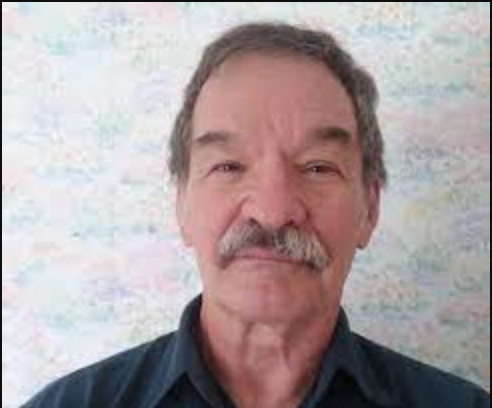
Ted Glick has devoted his life to the progressive social change movement. After a year of student activism as a sophomore at Grinnell College in Iowa, he left college in 1969 to work full time against the Vietnam War. As a Selective Service draft resister, he spent 11 months in prison. In 1973, he co-founded the National Committee to Impeach Nixon and worked as a national coordinator on grassroots street actions around the country, keeping the heat on Nixon until his August 1974 resignation. Since late 2003, Ted has played a national leadership role in the effort to stabilize our climate and for a renewable energy revolution. He was a co-founder in 2004 of the Climate Crisis Coalition and in 2005 coordinated the USA Join the World effort leading up to December actions during the United Nations Climate Change conference in Montreal. In May 2006, he began working with the Chesapeake Climate Action Network and was CCAN National Campaign Coordinator until his retirement in October 2015. He is a co-founder (2014) and one of the leaders of the group Beyond Extreme Energy. He is President of the group 350NJ/Rockland, on the steering committee of the DivestNJ Coalition and on the leadership group of the Climate Reality Check network.

