


A month ago, unexpectedly, Norman Bay resigned from his position as chair of FERC, the Federal Energy Regulatory Commission. FERC is the agency which, for decades, has been rubber-stamping permits for the natural gas industry for the expansion of pipelines and other infrastructure. This infrastructure is used to get gas, increasingly fracked shale gas, from the well to wherever it is eventually burned.
Bay’s resignation reduced the number of FERC commissioners from three to two. Ordinarily there are five, and three are necessary to approve permits for gas infrastructure. What this has meant is that, until Trump appoints and the US Senate approves another commissioner, FERC cannot do its rubber-stamping thing and approve pending permits.
How much is FERC a rubber stamp agency? In 30 years, it has turned down only one gas industry permit application, in 2016.
Norman Bay spoke at an industry conference in DC on February 15th, and he said there that he had told the Trump transition team that he would “likely leave the commission if he was replaced as chairman.” (RTO Insider) He went on to say that “he was following FERC tradition that the chair leaves after he is replaced,” which happened a couple of days before his resignation.
It is a good thing that proposed new gas infrastructure cannot be approved for a while. It would be even better if the increasingly stronger and better connected movement against fracking and fracking infrastructure was able to turn this unplanned permit hold-up into an extended moratorium. That moratorium should continue until Congressional hearings are held on all of FERC’s many problems and action is taken to change it.
Given Trump in the White House and Republican control of the Senate, and, for that matter, too many Democrats continuing to see gas as “clean” and a “bridge fuel,” that seems, on the surface, to be very unlikely. However, there are reasons to believe that it is not impossible.
-One reason is that, as distinct from just a few years ago, FERC is more well-known by the general public because of all the infrastructure build-out, the widespread grassroots opposition to it, particularly within and adjacent to the Marcellus Shale region, and press coverage of that conflict. And that exposure of FERC’s role has definitely not increased their popularity, just the opposite.
-Popular opposition to fracking has also grown over this time period. According to Gallup, opposition jumped from 40 to 51% between March, 2015 and March, 2016, while support over that time dropped from 40 to 36%.
-This opposition is not just among progressives and liberals. Conservatives, including Trump supporters, don’t like companies seizing their land for fracking wells and fracking pipelines for private gain. And they don’t like the air and water pollution that come with them either.
As one example, an article in Virginia’s “C-ville Weekly” last September reported on a survey “released September 21 by two anti-pipeline groups, the Chesapeake Climate Action Network and Virginia Organizing, [which] shows that 55 percent of Virginians do not back Governor Terry McAuliffe’s support of the two pipelines [Mountain Valley and Atlantic Coast], despite his belief they will create jobs, lower bills and help the environment. The Cromer Group, a public opinion research group, interviewed 732 of the state’s registered voters for the survey. The environmental groups note that 60 percent of female Republicans and 52 percent of female Democrats say McAuliffe has missed the mark.”
-Then there is the very important fact that the groups fighting new gas infrastructure have won several victories over the last year, defeating proposed pipelines through strong and flexible grassroots organizing, which in turn has led to a coming together and greater coordination. Last December a People’s Hearing on FERC organized by Delaware Riverkeeper Network and other groups brought together people from scores of organizations and 15 states to speak out about FERC’s abusive and corporate-friendly practices. There is nonviolent direct action happening and in the works in a number of places where pipeline construction is happening or planned. And so far, close to 150 groups have signed onto a statement pledging that, “when Trump makes his first FERC nomination we will work actively against it and the other nominations.”
-Finally, there is the reality of a climate and climate justice movement very much on the move. As was the case at the first one in September, 2014 in New York City, hundreds of thousands of people are expected for the second Peoples Climate March in DC on April 29th. There is the Native Nations March and Camp in Washington, DC on March 7-10 and the extensive, active, on-going Standing Rock divestment and local actions campaign. A campaign for a moratorium on new permits for fossil fuel infrastructure at FERC is very much compatible with and an ally of those efforts, and vice versa.
It is unclear at this point when Trump will be making his first FERC commissioner nomination. It could be very soon. But the Senate Energy and Natural Resources committee, which includes Bernie Sanders as one of its members, will then need to conduct a hearing and it will then need to go to the full Senate for a vote. Given the many other items on the Senate agenda, given the certain, widespread, visible resistance to Trump’s without-question-climate-denier nomination and people like Sanders in the Senate giving leadership in opposition, it is realistic to see this becoming a very big deal, a major battle for the people and the planet.
There is still time for groups to sign on indicating their intention to take action once Trump makes his appointment, to be found here. And there is already a campaign underway to put pressure on members of the Senate regarding this issue, found here.
No new permits for fossil fuel infrastructure!
Ted Glick is a co-founder of Beyond Extreme Energy. Past writings and other information can be found at http://tedglick.com, and he can be followed on Twitter at http://twitter.com/jtglick.

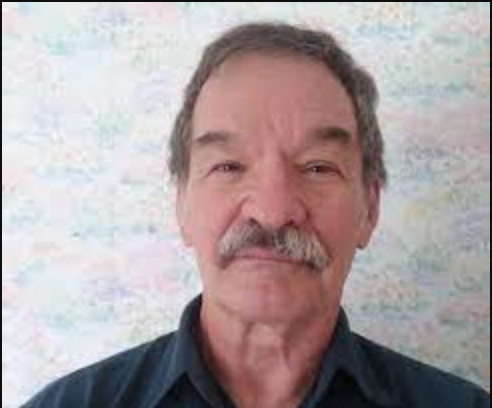
Ted Glick has devoted his life to the progressive social change movement. After a year of student activism as a sophomore at Grinnell College in Iowa, he left college in 1969 to work full time against the Vietnam War. As a Selective Service draft resister, he spent 11 months in prison. In 1973, he co-founded the National Committee to Impeach Nixon and worked as a national coordinator on grassroots street actions around the country, keeping the heat on Nixon until his August 1974 resignation. Since late 2003, Ted has played a national leadership role in the effort to stabilize our climate and for a renewable energy revolution. He was a co-founder in 2004 of the Climate Crisis Coalition and in 2005 coordinated the USA Join the World effort leading up to December actions during the United Nations Climate Change conference in Montreal. In May 2006, he began working with the Chesapeake Climate Action Network and was CCAN National Campaign Coordinator until his retirement in October 2015. He is a co-founder (2014) and one of the leaders of the group Beyond Extreme Energy. He is President of the group 350NJ/Rockland, on the steering committee of the DivestNJ Coalition and on the leadership group of the Climate Reality Check network.

