


Eloquence in Oslo cannot change the realities of war.
As President Obama neared the close of his Nobel address, he called for "the continued expansion of our moral imagination." Yet his speech was tightly circumscribed by the policies that his oratory labored to justify.
Lofty rationales easily tell us that warfare is striving for the noble goal of peace. But the rationales scarcely intersect with actual war. The oratory sugarcoats the poisons, helping to kill hope in the name of it.
A few months ago, when I visited an Afghan office for women’s empowerment, staffers took me to a pilot project in one of Kabul’s poorest neighborhoods. There, women were learning small-scale business skills while also gaining personal strength and mutual support.
Two-dozen women, who ranged in age from early 20s to late 50s, talked with enthusiasm about the workshops. They were desperate to change their lives. When it was time to leave, I had a question: What should I tell people in the United States, if they ask what Afghan women want most of all?
After several women spoke, the translator summed up. "They all said that the first priority is peace."
In Afghanistan, after 30 years under the murderous twin shadows of poverty and war, the only lifeline is peace.
From President Obama, we hear that peace is the ultimate goal. But "peace" is a fixture on a strategic horizon that keeps moving as the military keeps marching.
Just a couple of days before Obama stepped to the podium in Oslo, the general running the U.S. war effort in Afghanistan spoke to a congressional committee in Washington about the president’s recent pledge to begin withdrawal of U.S. troops in July 2011. "I don’t believe that is a deadline at all," Stanley McChrystal said.
War is not peace. It never has been. It never will be.
Actual policy always, in the real world, profoundly trumps even the best rhetoric. And so, for instance, when President Obama’s Nobel speech proclaimed that "America cannot act alone" and called for "standards that govern the use of force," the ringing declaration clashed with the announcement last month that he will not sign the international Mine Ban Treaty.
As Nobel Peace Laureate Jody Williams pointed out, "Obama’s position on land mines calls into question his expressed views on multilateralism, respect for international humanitarian law and disarmament. How can he, with total credibility, lead the world to nuclear disarmament when his own country won’t give up even land mines?"
At the outset of his speech in Oslo, the president spoke of his "acute sense of the cost of armed conflict." Well, there’s acute and then there’s acute. I think of the people I met and saw in Kabul who are missing limbs, and the countless more whose lives have been shattered by war.
In the name of pragmatism, Obama spoke of "the world as it is" and threw a cloak of justification over the grisly escalation in Afghanistan by insisting that "war is sometimes necessary" — but generalities do nothing to mitigate the horrors of war being endured by others.
President Obama accepted the 2009 Nobel Peace Prize while delivering — to the world as it is — a pro-war speech. The context instantly turned the speech’s insights into flackery for more war.
Norman Solomon is co-chair of the national Healthcare Not Warfare campaign, launched by Progressive Democrats of America. He is the author of a dozen books including "War Made Easy: How Presidents and Pundits Keep Spinning Us to Death." For more information, go to: www.normansolomon.com

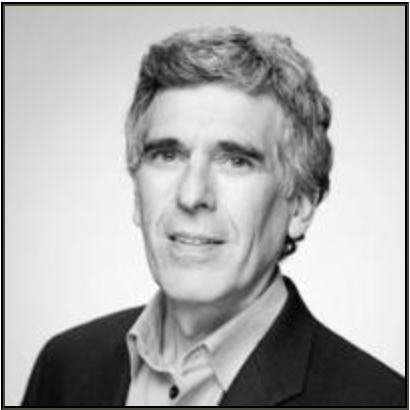
Norman Solomon is the national director of RootsAction.org and executive director of the Institute for Public Accuracy. The paperback edition of his latest book, War Made Invisible: How America Hides the Human Toll of Its Military Machine, includes an afterword about the Gaza war.




