


Imagine that you’re at the ceremonial opening of a time capsule, half a century after some forward-looking Americans sealed it during a multimedia festival just before Thanksgiving 2002.
It’s now late autumn in the year 2052. Gathered around a canister, the onlookers stare at the rusty container while someone punctures the metal top. Inside, through the stale air, they watch as symbols of early 21st-century media emerge from the past.
There’s a desktop PC, a palm computer and a cell phone — evidently selected back in 2002 to symbolize the high-tech achievements of the era. Now, as might be expected, those once-cutting-edge products look crude, even a bit pathetic — kind of like an old black-and-white TV would have seemed to people at the turn of the century.
Also pulled from the dust are samples of long-forgotten movies and music videos: best sellers in their day. Someone cranks up a pair of ancient machines capable of playing videotapes and DVDs. The crowd is attentive. The faces of senior citizens betray the flickering of nostalgia; the young people cringe.
From the bottom of the barrel comes a pair of newsweeklies, their color faded due to the intervening decades. Both magazines are dated Nov. 18, 2002. The covers display pictures of an upbeat president. Time shows him giving a thumbs-up sign with the big headline “Top Gun.” On Newsweek’s cover, a jubilant George W. Bush is yucking it up with someone identified in the caption as “Karl Rove, the GOP’s master strategist.”
Both men are long dead now, of course. Fame and power and wealth could not really make them more immortal than anyone else. Catching sight of the magazine covers, an old lady murmurs: “The evil that men do lives after them.”
Looking surprised, a little boy peers at the elderly woman, who takes the puzzled gaze as a question. “Oh, I know, you’ve been taught that such men were great,” she says. “And your most influential teachers are the big media powers like the ones that owned and edited those magazines.
“When I was a girl,” she continued, “Time and Warner were separate companies, and AOL did not even exist. By the time those editions were printed, when I was in college, there was an outfit called AOL Time Warner. But that was just a start.
“Now, most people don’t even realize that the name of the company telling us what happens in the world is an acronym. We know that most of our news is provided by the AT WONDERS mega-conglomerate, but we forget that its name came from the gradual expansions and mergers of AOL, Time Warner, Oprah, News Corp., Disney, Entertainment Inc. and Rolling Stone.”
A little girl skips out of the crowd and eagerly turns the pages of Time. She’s so energetic that her gas mask almost falls from her face. A parent quickly refits the mask over the girl’s nose and mouth, lest the omnipresent virulent pollution halt her breathing.
The girl pauses at a feature headlined “Coolest Inventions 2002.” One page, then another, then another is filled with the wonders of digital creations like a $350 million supercomputer, a microcomputer phone tooth (“can be embedded in a molar and receive cell-phone calls”), and wireless headsets: “Now you can walk around town with your cell phone tucked away in your pocket or briefcase and a tiny headset tucked into your ear.”
Leafing through the pages, the girl murmurs that the “coolest inventions” of 2002 actually seem awfully dull. Why people got so excited about all that techno-stuff is beyond her. While skimming through the edition of Newsweek, she lingers at each of the eight full pages of colorful ads for cars, trucks and SUVs.
Fiddling with the gas mask on her face, the child wishes that Americans back then had paid more attention to the content of communication and less to the technology of it. If the media preoccupations had been different a few decades ago, maybe now she wouldn’t have to wear a gas mask every time she went outside.

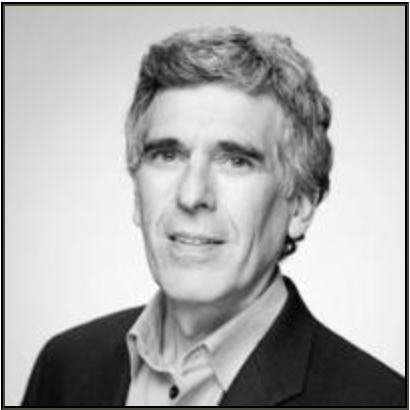
Norman Solomon is the national director of RootsAction.org and executive director of the Institute for Public Accuracy. The paperback edition of his latest book, War Made Invisible: How America Hides the Human Toll of Its Military Machine, includes an afterword about the Gaza war.




