


Farmers in United States, Europe and for that matter in other rich and industrialised countries are quitting agriculture. That makes me wonder. Why? After all, they get huge subsidies. They have the advantage of being literate and techno-savvy. They can take benefit of future trading and commodity exchanges. Linked to supermarket retail stores, they supposedly get a bigger share of the consumer price.
Yet they are herding out of agriculture. How can this be possible if the market was working to the benefit of farmers? How can this be a reality at a time when the private trade is believed to be providing higher income to farmers? Still, there must be some reason for the collapse of family farms in the developed world. Either the ground realities in the rich countries are far away from our perception of farming or something must be terribly wrong in our understanding of the market economy and farming.
What makes it still worse is that the same prescription of farming is being doled out to Indian farmers. Policy makers and the agribusiness companies never feel tired to tell us that such a paradigm shift alone will bring about a second Green Revolution and liberate farmers from the clutches of the old mandi system. What they don’t tell us is that the same farming model is not working in America. Farmers are abandoning agriculture at a pace that remains unprecedented. Farming has moved into the hands of agribusiness corporations.
Take the case of Europe. It is the biggest provider of farm subsidies. You get subsidies for entering into agriculture, you get subsidies based on the land you own, you get subsidies for keeping cow, pig or horses. You get subsidised credit for farm machinery, which is often written-off subsequently. You get subsidies for preserving biodiversity, for even planting hedges. The rural infrastructure works very efficiently, farmers have access to credit and insurance and there are no mandis (local market yards) like in India. In other words, farmer is linked to the private markets.
And yet, every minute one farmer quits agriculture. In America, there are more people in jails than on the farm. There are approximately 7 million people in jail or on parole and bail. And only about 700,000 people are left on the farm. Thanks to the farm policies, American farmers have been driven out of agriculture. In its last census in 2000, America did not count the number of farmers for the first time in history. In need not. After all the number of farmers has plummeted to a historic low. So when America talks of agriculture, it actually talks of corporations and machines.
On the other hand, despite the industrial farming systems linked to supermarkets, the number of middlemen has actually grown in the US. The new breed of middlemen operates under one umbrella organisation. You have the quality control man, the standardiser, the processor, the retailer and so on. It is primarily for the increase in the number of middlemen that the farmer’s income has got squeezed. Studies have shown that in 1995 when a farmer went to the market to sell his produce worth one dollar, his income would be 70 cents. Ten years later, in 2005, farmer’s income has dropped to a paltry four cents. The middlemen have neatly pocketed the rest.
Economists and socialites who back the entry of global retailers like Wal-mart, Tesco, Reliance and Bharti Telecom repeatedly tell us that while the intermediaries may be sulking over being left out from the newly acquired value chain, for the farmers, hopes, opportunities and wealth are all finding their way into their homes. Well, the reality is that the American farmers were actually pauperised by the value chain. If that is the situation in the Mecca of second Green Revolution, I wonder what will happen to the Indian farmers when the retail chains take over.
In any case the proponents of market economy feel that talk of farmer suicide is cheap. Like an Ostrich we should all bury our heads in the sand, and see only what they want us to see.
In America, knowing that distress sale is what the farmer faced, the government had stepped in and provided them with direct support. Each farm receives something close to US $ 33,000 a year in federal support. In Canada, the National Farmers Union has in a study shown that while the 70-odd agribusiness companies are raking in profits, farmers are the only segment of the food chain incurring losses. Farmers in the rich countries essentially live on government doles.
It is now the turn of 600 million farmers in India. Like the farmers in the rich and industrialised countries, it is now their turn to be oppressed. Whatever that remains of the marginalized farming community is now up for grabs. Not only agribusiness companies, private banks and the new micro-finance army that replaces the private money lenders with organised money lending through Self-Help Groups are getting ready to expand their activities. As the ICICI chief K.V.Kamath said: “After all, there is a lot of money to be made from rural areas”.
The economic prescription therefore is not for the farmers to get a bigger slice of the consumer price. It is not going to result in new homes rising in rural lands and children going to good schools. As the global experience shows, it is actually aimed at letting the agribusiness industry walk away with the entire cake. Who said you can’t have your cake and eat it too? #
(This article first appeared in Deccan Herald, Bangalore, India, Jan 18, 2007)
www.dsharma.net

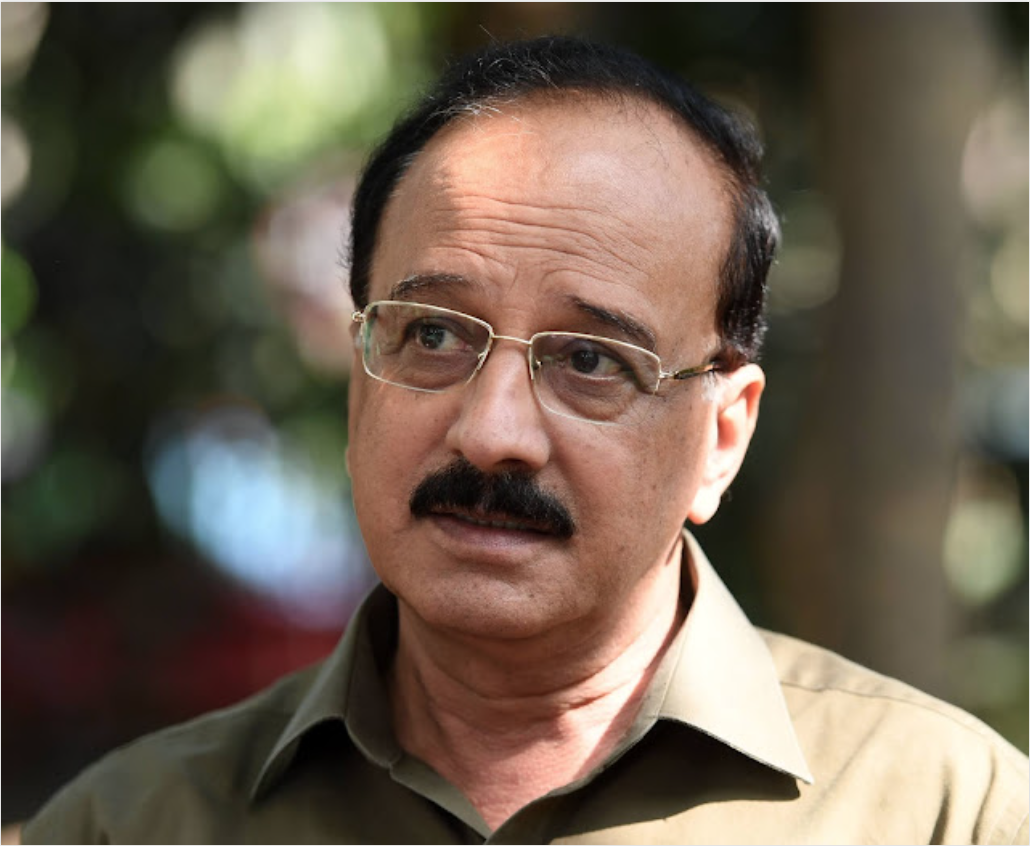
Devinder Sharma is an award-winning journalist, writer, thinker, and researcher known for his views on food and trade policy. Trained as an agricultural scientist (he holds a Master’s in Plant Breeding & Genetics), Sharma wrote for the Indian Express, and then quit active journalism to research on policy issues concerning sustainable agriculture, biodiversity and intellectual property rights, environment and development, food security and poverty, biotechnology and hunger, and the implications of the free trade paradigm for developing countries. He has been awarded with the honorary degree of Professor at Large by the CSK Himachal Pradesh Agricultural University, Palampur (India), and also has been a Visiting Fellow to the International Rice Research Institute, in the Philippines; Visiting Fellow at the School of Development Studies at the University of East Anglia, Norwich (UK); and a Visiting Fellow at the University of Cambridge (UK). Sharma is associated with numerous national and international organizations, civil society groups and farmers organisations. He also on the board of half a dozen national and international organizations, and is also a member of the CGIAR’s Central Advisory Service on Intellectual Property Rights.




