


As a teacher in adult education, I always had to balance facilitating empowered learning in the classroom with delivering a product to funders. You go into the classroom with high ideals about developing student-centered curriculum, stressing critical thinking over rote recitation, and creating an environment that fosters empowerment and critical consciousness. But then the question of "deliverables" sets in. You have to show the funders measurable outcomes. You have to prove certain levels of attendance. Students have to score within this range or that on standardized tests. Every adult ed. teacher in this country has surely sat through many a staff meeting where the focus was on whether the program was "turning in good numbers."
Not that there’s anything wrong with a product or an end point. Funders aren’t the only ones keeping track, after all. Students have goals, too. They want to be able to talk to their child’s teacher or get their high school diploma or take the next rung on their career ladder or simply have a chance to be exposed to new ideas. And they want to be treated as if they matter, as if their needs are the reason for the program’s existence.
One adult learner I know, Klare Allen (http://zmagsite.zmag.org/JulAug2004/peters0804.html), became aware that her program was grading on a curve so that they could graduate people. "But we don’t understand the material!" she argued back – essentially lobbying for a lower grade because at least it would offer the satisfaction of being realistically appraised as opposed to being treated like a pawn in someone’s funding game. It didn’t seem to matter to the program whether she understood what they were teaching, and she was deeply offended. I’m sure the program would agree that it would have been nice if the class was able to learn the material, but that wasn’t so much the goal in their minds. Rather, to put it in the crass terms it deserves: the students were merely the conduit by which the program continued to receive funding.
In a good society, there would be collective participation in the question of how resources are spent, what is allocated for education, and what education looks like. People would decide together what mix of quantitative and qualitative standards they would use to measure the effectiveness of a program. Most importantly, the people who participate in the programs would play an integral role in deciding how to judge the programs.
With these thoughts in mind and knowing first-hand the challenges that adult learners face, I was curious about the literacy campaign in Venezuela. I had heard that Chavez’s literacy programs had taught 1.5 million people to read and had wiped out illiteracy in just two years. (Talk about turning in some good numbers!)
But those numbers seemed unlikely at best. In my experience, it takes a long time for an adult to learn how to read, not because they’re not capable, but because they have so many responsibilities and demands on their time. A common sense appraisal of the claim raises questions as well. What about people with handicaps or learning disabilities? In the best of societies anytime and anywhere, it would be impossible to wipe out illiteracy.
When I traveled in Venezuela at the end of August 2007, I met with literacy workers and asked them about the 100% literacy rate. "Well, if, by literacy, you mean everyone in this country can write their name, then yes, it’s more or less accurate. But if you mean they can all read the newspaper, then, no, it is not accurate," said one literacy worker in the Andean town of Bocono.
Is Chavez guilty of overstating the country’s recent educational achievements? Does it matter?
Pro-Chavez posters and murals all around Venezuela boast 100% literacy. In 2003, the Chavez administration launched a literacy program called "Mision Robinson," and in 2005, Chavez claimed to have wiped out illiteracy. Other "missions" – Mision Ribas and Mision Sucre – fund secondary- and university-level education respectively. Clearly, the Chavez administration cares about education by funding these projects and making sure they reach deep into the country’s poorest regions. Irma Moron, who works with Mision Sucre in Biscucuy, says these projects have been a "miracle for the people that have been traditionally excluded from the educational process." She says she has seen people "open like flowers" as they gained confidence in their new found skill.
These are major accomplishments, and people like me in struggling non-profits would do well to take note. While we compete with each other for foundation grants and dwindling offerings from state DOE budgets, our neighbor to the south puts the full force of the government funding behind the ambitious goal of full literacy. The U.S. government, on the other hand, seems barely cognizant of the fact that 30 million if its adults read at a below basic level and 63 million read at a basic level (according to the 2003 National Assessment of Adult Literacy).
So, yes, the Chavez government ought to spread the good news, but in a way that tells the truth – not because some might recognize it and dismiss it as propaganda, but because the recipients of the programs themselves will recognize it as such. Senora Gonzalez, a recent graduate from a Mision Robinson class, knows exactly what her certificate means. She can read at a very basic level, she told me as she walked out of a Mision Robinson office in Bocono carrying her grandchild, and she is proud of that. Having the chance to learn is "very beautiful," she told me. "But what can I really do with this certificate?" she asked.
Senora Gonzalez’s lament about the worth of her certificate reminded me of Klare Allen’s response to the inflated grades. Both women perceive that they are being used. In the short term, good numbers might make your program look good – whether you’re a small non-profit (with a good attendance record) or a major government program (with "millions" becoming literate). But in the long term, you lose out on what matters more – people’s participation in a system that values them for how they contribute.
Cynthia Peters, formerly a teacher with the Worker Education Program in Boston, is the editor of a social justice magazine for adult learners and adult educators called The Change Agent (www.nelrc.org/changeagent).

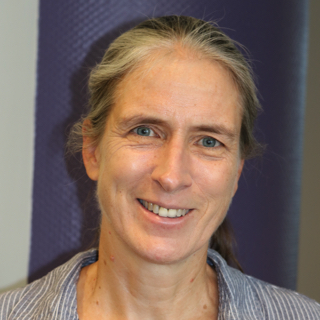
Cynthia Peters is the editor of The Change Agent magazine, an adult education teacher, and a nationally known professional development provider. She creates social-justice-oriented materials that feature student voices, along with standards-aligned, classroom-ready activities that teach basic skills and civic engagement. As a professional development provider, Cynthia supports teachers to apply evidence-based strategies to improve student persistence and develop curriculum and program norms that promote racial equity. Cynthia has a BA in social thought and political economy from UMass/Amherst. She is a long-time editor, writer, and community organizer in Boston.




