


Washington keeps condemning Iran’s government and making thinly veiled threats. But in Iran, many people are in the midst of challenging the country’s rulers, in the streets and at the ballot box.
The June 17 election for president could be a turning point or a hollow spectacle — no one knows which — but the Bush administration is eagerly trashing the whole thing. “The United States has not waited for the first ballot to be cast before dismissing Iran’s presidential election as rigged,” Agence France Presse reported over the weekend.
But Iran’s election is not rigged. There is a fierce electioneering battle underway, with some significant differences between candidates. Meanwhile, hindered rather than helped by the bellicose statements from Washington, courageous Iranian activists have begun a new wave of actions against the status quo of theocracy.
On June 12, in front of the University of Tehran, nearly a hundred courageous women sat down to demonstrate for human rights in a society where women literally and figuratively are compelled to sit at the back of the bus. “Stop Bias Against Women,” said one handheld sign. “Stop violation,” said another. And: “Freedom.”
Across the wide vehicle-choked street, several hundred Iranian men and women of all ages quickly gathered to augment the demonstration, one of the only such public protests in recent years. “Political prisoners should be free,” they chanted. A sign declared: “First Democracy, Then We Will Continue Living.”
Some of the Iranian people who most strongly oppose the government’s theocracy are boycotting the election. Others will vote, primarily for Mostafa Moin, the most popular candidate at the reform edge of the spectrum. He’s in sync with the current president, Muhammad Khatami, “termed out” after eight years in office. Khatami wasn’t able to do much to undermine the power of highly conservative clerics. Yet many young people, who have faced extremely puritanical strictures, say that life in Iran has become a bit less stifling in recent years.
The widely respected icon and hack Akbar Hashemi Rafsanjani, positioned midway on the spectrum of candidates, has been making noises that are not only somewhat conciliatory toward the United States but also indicate that he favors a move away from current restrictive pressures on media and personal freedom. He might just be blowing smoke to appeal to the youth vote, but he clearly realizes that many in the nation’s large population of young people are especially eager for such changes.
Several of the eight presidential candidates are hardline theocrats. Whether their outlook will prevail after the ballots are cast June 17 (or in the runoff scheduled for two weeks later if no candidate gets more than 50 percent in the first round) remains to be seen. So does Iran’s path after this historic crossroads that could lead to more fundamentalist repression or progress for elements of democracy in Iranian society.
As I’ve learned more about what’s at stake here for Iranian people, I’ve become more angry at the deceptive rhetoric coming out of Washington. When President Bush and his aides call Iran’s presidential election meaningless, it is wishful thinking. Some of the Bush neocons have the delusion that they can overthrow the Iranian regime with plenty of missiles. But the real means for displacing Iran’s theocratic rulers with democratic processes are grassroots efforts of the sort taking root in Iran right now.
Evidently, the Bush administration would prefer that Iran’s presidential election be won by the most reactionary theocratic forces in the country. Many of Bush’s policymakers have a fantasy that involves seeing Iran changed with military force. And a more reasonable Iranian president could make Bush’s agenda-setting for warfare more difficult.
We should remember that the Bush team has much nicer things to say about the far-more-repressive government in Saudi Arabia. And a few weeks ago, Laura Bush — with her husband’s endorsement — proclaimed Egypt’s sham election “reforms” to be an inspiration. Iran’s election process is very flawed, but it includes real aspects of democracy. Compared to the current Saudi or Egyptian electoral setups, Iran is a beacon of hope for the region.
The Washington officials who warn of Iran’s nuclear intentions fail to mention that the U.S. government has been encouraging the spread of nuclear power plants for five decades. From an environmental standpoint, Iran (like all nations) is ill-advised to develop nuclear power. But there’s no evidence it is anywhere near developing nuclear weapons. And the Bush administration, with a solid track record of winking at Israel’s hundreds of atomic bombs and lying about WMDs in Iraq, is in no credible position to lecture about Iranian nuclear activities.
Bombast from the U.S. government helps to strengthen the hand of hardline Iranian “theologues.” For them, a missile strike against Iran would be a godsend.
While in Washington there are fervent dreams of a military assault on Iran, many people in Iran have boundless dreams of creating a society that embraces human rights. Americans who want to help them should challenge the dominant rhetoric of American media and politics that is now setting an agenda for war on Iran.
Norman Solomon, executive director of the Institute for Public Accuracy, is the author of the new book “War Made Easy: How Presidents and Pundits Keep Spinning Us to Death,” which became available this week. For information, go to: www.WarMadeEasy.com

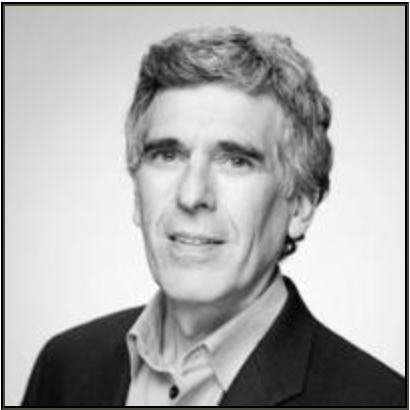
Norman Solomon is the national director of RootsAction.org and executive director of the Institute for Public Accuracy. The paperback edition of his latest book, War Made Invisible: How America Hides the Human Toll of Its Military Machine, includes an afterword about the Gaza war.




