


It was the fall of 1969, 37 years ago, at the height of the Vietnam war. I was doing anti-war community organizing in Lancaster, Pa., having left college that spring at the end of my sophomore year. Before doing so I had publicly returned my Selective Service draft cards to my draft board in Lancaster and, in response, had been sent an induction notice demanding that I report to go into the army.
That early September morning, I showed up with 100 people to support me as I burned my induction notice in front of the draft board rather than get onto the bus to go to the induction center in Harrisburg.
As the weeks went by after that action, as I did my local organizing, and as no legal action was taken against me, I found myself questioning if I was doing enough to try to stop the war. Every day there were reports about hundreds of Americans and Vietnamese being killed. The U.S. air war was escalating and the danger of an expanded war with China seemed very real. Weren’t there stronger actions that could be taken?
Yes, there were, and several months later I participated in one. Joining together with Catholic priests and nuns and others, I helped to plan and participated in nonviolent civil disobedience at draft boards in Philadelphia and the offices of a war corporation, General Electric, in Washington, D.C. on two consecutive nights in February. For the next seven months, until I was arrested inside a federal building in Rochester, N.Y. at 5 a.m., I lived a “life of crime” as part of what was called the Catholic Left.
Who would have expected it? Nothing in my middle-class upbringing pointed toward this as my post- college “career,” except for one thing: being brought up by two loving parents to believe that if you felt deeply about an issue, you should follow your conscience, do what you believe is right even if there is risk involved.
I’ve been remembering those early years of my activist career recently. I’ve done so because, within the two mass movements that I’m most active with, the peace movement and the movement to slow, stop and reverse global heating, there is discussion (the latter) and action (the former) to “up the ante.” This summer thousands of people fasted for anywhere from a day up to a couple of months as part of a “troops home fast” initiated by Code Pink. Then last month, according to the website of United for Peace and Justice, “more than 275 people were arrested in over 20 nonviolent civil resistance and civil disobedience actions, at the White House, Congressional offices, military bases, and military recruitment centers in D.C. and across the country.”
There should have been more people arrested. What the peace movement should be doing is something on the scale of, if not exactly the same thing as, what was done in May of 1971 when thousands of people were arrested in Washington, D.C. as part of a Mayday action to disrupt the functioning of government for that one day. No more business as usual if the war isn’t ended!
The peace movement needs the spirit and mass willingness to risk injury or arrest that we most recently saw with the youth-driven global justice movement of 1999-2001.
The climate crisis movement needs the same thing, but it appears that it’s nowhere close to it, unfortunately. Despite months of talk about the need for “next level” actions, there have been none since a student sit-in on the campus of Penn State and a small Congressional office sit-in in Montana this spring.
This is so despite the fact that just about every week there is a new, scary scientific report about what is happening to our climate or what will happen barring a rapid change in energy policy:
-The perennial Arctic sea ice, which normally survives the summer melting season, abruptly shrank by 14% between 2004 and 2005. -Extreme drought is predicted to affect about a third of the planet this century, according to the Hadley Center for Climate Prediction and Research in England. -A study reported in the journal Science found that “the speed at which the Greenland ice sheet was melting has risen threefold in the past two years compared with the previous five.” If the Greenland ice sheet melts into the ocean, sea levels worldwide will rise by 20 feet. -BBC News reported on September 4th that “carbon dioxide levels are substantially higher now than at any time in the last 800,000 years, the latest study of ice [cores] drilled out of Antarctica confirms.”
Dr. Eric Wolff from the British Antarctic Survey went on to explain that “in the core the fastest increase seen was of the order of 30 parts per million (ppm) [of carbon dioxide] over a period of roughly 1000 years. The last 30 ppm of increase [in recent years] has occurred in just 17 years.” -Methane, a greenhouse gas 23 times more powerful than carbon dioxide, is being released from melting permafrost at a rate five times faster than previously thought, according to a recent Nature study.
Scientists are deeply concerned that with this acceleration of the process of climate change, we may soon, within years, reach a “tipping point” at which there will be so much carbon dioxide and other greenhouse gases in the atmosphere or “in the pipeline” that it will be almost impossible to avoid an escalating series of catastrophic natural calamities throughout the world.
In the face of this deepening world crisis, what is the state of the climate movement?
There’s a lot that’s positive. Over the past year and a half, a number of events seem to have had the cumulative effect of broadening, popularizing and strengthening the movement: the Kyoto Protocol going into effect in February, 2005; Hurricane Katrina; the actions around the world on December 3rd last year, especially the big 30,000 person demonstration in Montreal outside the U.N. Climate Change conference; and the popularity of Al Gore’s “An Inconvenient Truth.”
There’s important movement on college campuses with the Campus Climate Challenge and within the religious community, including among conservative evangelicals.
It’s encouraging to see the broadly-based activism leading up to the Congressional elections, particularly for the second International Day of Climate Action on November 4th (http://www.climateusa.org).
Over 300 mayors, representing cities and towns with about 45 million people, have signed onto the Mayor’s Climate Protection Agreement, indicating an intention to take action to reduce greenhouse gas emissions in their locality as if they were signers of the Kyoto Protocol.
It was important that the California state government passed legislation to reduce greenhouse gases by 25% by 2020, and it’s very important that there is now legislation in Congress, in both houses, to reduce greenhouse gases by 80%, the amount needed to stabilize the climate, by 2050.
However, the likelihood is that this timetable is far too long to avert catastrophic climate change. We don’t need 80% reductions 44 years from now, we need them now or as soon as possible.
That is where nonviolent civil disobedience comes in.
Down through history social movements that were effective had to push the envelope, or needed a wing of it that was willing to do so. Status quos don’t change by playing by the big money-stacked rules of the game. We can’t have any illusions that ExxonMobil, Peabody Coal, the other giant energy corporations and their bought politicians will just nicely go along with a serious clean energy revolution.
Dramatic, creative, intelligent, nonviolent actions are urgently needed to ramp up the political pressure and force a quickening of the timetable.
We have to draw strength from the spirit and example of the young people of the civil rights movement of the ’60s. Often as they were sitting in or breaking laws that were protecting injustice, they sang a song written by Malvina Reynolds:
It isn’t nice to block the doorway, It isn’t nice to go to jail, There are nicer ways to do it, But the nice ways always fail. It isn’t nice, it isn’t nice, You told us once, you told us twice, But if that’s Freedom’s price We don’t mind.
It’s past time for some climate activists prepared to pay the price of Freedom from Big Oil and a Healthy Planet for our children and grandchildren.
Ted Glick is active with the Climate Crisis Coalition (www.climatecrisiscoalition.org) and is coordinator of the U.S. Climate Emergency Council (www.climateemergency.org). He is also active with the Independent Progressive Politics Network (www.ippn.org).

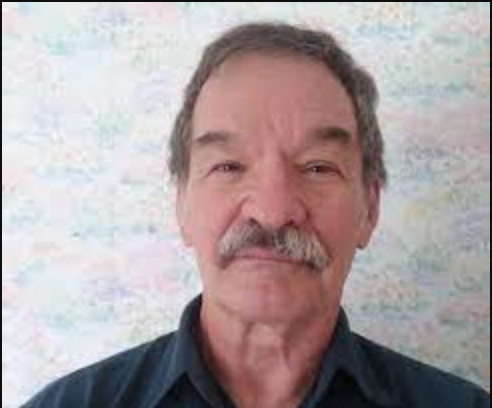
Ted Glick has devoted his life to the progressive social change movement. After a year of student activism as a sophomore at Grinnell College in Iowa, he left college in 1969 to work full time against the Vietnam War. As a Selective Service draft resister, he spent 11 months in prison. In 1973, he co-founded the National Committee to Impeach Nixon and worked as a national coordinator on grassroots street actions around the country, keeping the heat on Nixon until his August 1974 resignation. Since late 2003, Ted has played a national leadership role in the effort to stabilize our climate and for a renewable energy revolution. He was a co-founder in 2004 of the Climate Crisis Coalition and in 2005 coordinated the USA Join the World effort leading up to December actions during the United Nations Climate Change conference in Montreal. In May 2006, he began working with the Chesapeake Climate Action Network and was CCAN National Campaign Coordinator until his retirement in October 2015. He is a co-founder (2014) and one of the leaders of the group Beyond Extreme Energy. He is President of the group 350NJ/Rockland, on the steering committee of the DivestNJ Coalition and on the leadership group of the Climate Reality Check network.




