


Off and on, for the last five years that I’ve been actively involved with the climate movement, I and others have analogized what we need to be doing on this issue to the civil rights movement of the 1950s and 1960s. What we’ve meant is that we need a mass movement that is sweeping, that is broadly-based and grounded in the grassroots, that forces civil society to choose between what is right and what is wrong, that uses a wide variety of tactics, and that ultimately is successful in bringing about change.
But there’s a much harder lesson from the civil rights movement that, so far, the climate movement as whole, or even significant sections of it, have not internalized: that when faced with deeply-rooted, powerful institutions, it will take people making sacrifices, putting their bodies on the line, if we are to have a realistic chance of bringing about the changes urgently needed.
Or to put it another way: electing Barack Obama as President isn’t enough. Especially when his political party and too many of its Congressional members get sizeable amounts of campaign contributions from Big Oil and Dirty Coal.
This inconvenient truth has been dramatically revealed with the public release two days ago, after a month and a half of internal Democratic Party negotiations, of a 932-page legislative proposal, the American Clean Energy and Security Act of 2009, by Henry Waxman’s House Energy and Commerce Committee.
It’s virtually impossible to be a self-respecting climate activist and support this corporate-polluter-influenced document. According to an initial analysis by the 1Sky campaign, 58% of the proceeds from the potential sale of permits to emit greenhouse gasses would be “polluter giveaways and fossil fuel industry handouts.” A Dow Jones Newswire story on May 15th stated that “the proposed legislation would give away up to 85% of the carbon allowances to industry and states, leaving only 15% to be auctioned off and for the government to decide what to do with the proceeds.”
Contrast this with the position that President Obama took during his Presidential campaign and that he put forward just a few months ago in his budget authority proposal: putting a price on carbon via a 100% auction of emissions permits. 80-85% of the money raised would be returned to American taxpayers directly by way of tax rebates to help them deal with the rising cost of carbon-based products, and the remainder would be used for clean energy, green jobs, energy efficiency and other programs to help drive the transition to a clean energy economy.
Why is Obama so silent, so acquiescent to this hijacking of climate legislation by the corporate polluters? He needs to be held publicly accountable by all of those who voted for him, all those young people and others, those who believed that we finally had a champion who would lead us in a different direction on this and other issues.
And we have to stop being so “nice.”
There’s a great song from the civil rights movement, “It Isn’t Nice.” Written by Malvina Reynolds, it speaks to us from the past about what we need to be doing right now. Among its verses are these:
It isn’t nice to block the doorway,
It isn’t nice to go to jail,
There are nicer ways to do it,
But the nice ways always fail.
It isn’t nice, it isn’t nice,
You told us once, you told us twice,
But if that’s Freedom’s price,
We don’t mind.
It isn’t nice to carry banners
Or to sit in on the floor,
Or to shout our cry of Freedom
At the hotel and the store.
It isn’t nice, it isn’t nice,
You told us once, you told us twice,
But if that’s Freedom’s price,
We don’t mind.
How about those years of lynchings
And the shot in Evers’ back?
Did you say it wasn’t proper,
Did you stand upon the track?
You were quiet just like mice,
Now you say we aren’t nice,
And if that’s Freedom’s price,
We don’t mind.
Malvina Reynold’s verses remind us of what the individuals who made up the civil rights movement in the segregated South were up against: centuries of the most brutal and violent oppression, lynchings, beatings, disenfranchisement and dehumanization on a scale that most of those who are part of the climate movement just don’t appreciate.
More than once, many times really, I’ve heard climate activists talk about how hard it is to work on this issue because it’s so big, so overarching, so urgent. And, without question, one of the difficulties in building this movement is that it’s easy to feel despair that we’ll be able to overcome in enough time the fossil fools and the political systems aligned with them which seem so powerful. But in comparison with what the nonviolent revolutionaries of the Student Nonviolent Coordinating Committee, SNCC, experienced throughout the deep South as they worked to get black people to register to vote—murders, beatings, arrests, deep fear, brutal racist intimidation—well, there’s really no comparison.
But look at what they and others in the civil rights movement were able to do because they faced their fears, changed their lives, built a supportive movement culture and led by example!
It’s time to update the verses of It Isn’t Nice while taking action in its spirit.
Ted Glick is the Policy Director of the Chesapeake Climate Action Network (http://www.chesapeakeclimate.org). Past columns and more information can be found at http://www.tedglick.com.

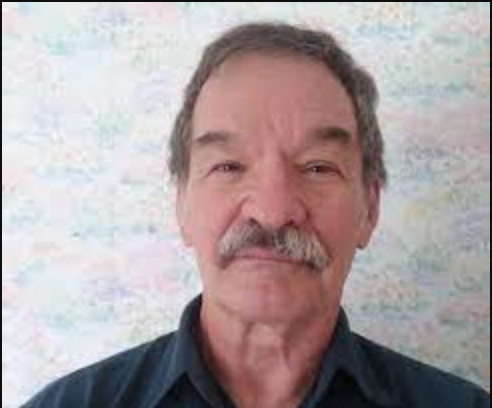
Ted Glick has devoted his life to the progressive social change movement. After a year of student activism as a sophomore at Grinnell College in Iowa, he left college in 1969 to work full time against the Vietnam War. As a Selective Service draft resister, he spent 11 months in prison. In 1973, he co-founded the National Committee to Impeach Nixon and worked as a national coordinator on grassroots street actions around the country, keeping the heat on Nixon until his August 1974 resignation. Since late 2003, Ted has played a national leadership role in the effort to stabilize our climate and for a renewable energy revolution. He was a co-founder in 2004 of the Climate Crisis Coalition and in 2005 coordinated the USA Join the World effort leading up to December actions during the United Nations Climate Change conference in Montreal. In May 2006, he began working with the Chesapeake Climate Action Network and was CCAN National Campaign Coordinator until his retirement in October 2015. He is a co-founder (2014) and one of the leaders of the group Beyond Extreme Energy. He is President of the group 350NJ/Rockland, on the steering committee of the DivestNJ Coalition and on the leadership group of the Climate Reality Check network.

