


"I am imagining a conversation on Sept. 11, 2011, in which the top leaders of al-Qaeda are assessing their achievements ten years after their attacks on U.S. soil. I think they would be very upbeat about how much they have accomplished.
To understand this, we have to consider what they thought the 9/11 attacks were supposed to accomplish. At the time, Osama bin Laden set out clearly what his long-term objectives were. He said he wished to efface eighty years of humiliation for the Islamic world. Eighty years? Bin Laden was referring to the abolition of the caliphate in 1924 (not quite 80 years) by Mustafa Kemal Ataturk. Bin Laden's avowed objective was the recreation of a caliphate over the entire Muslim world, presumably by a direct descendant of Muhamed and governed by shar'ia.
What stood in the way of this objective? Three main obstacles. The first was the United States, which used its power to subjugate the Islamic world. The second and third were the governments of Saudi Arabia and Pakistan, which bin Laden considered the two pillars of support of the United States within the Islamic world, and whose governments he denounced as "un-Islamic."
And how would the 9/11 attack further this objective? Let us follow his reasoning. The direct and spectacular attack on the United States, on its home soil, was intended to expose the fact that the United States was a "paper tiger" and to install deep fears among Americans about their physical safety and their collective future. Only this past week, al-Qaeda publicly criticized Pres. Ahmadinejad of Iran for suggesting that 9/11 was the work of the Americans, and not of al-Qaeda.
The Americans, bin Laden hoped, would be drawn into an endless "war" – one that they could not win, even if they did not "lose" it in any short-term military sense. Bin Laden expected that the continuing strain of the endless war would eventually exhaust the United States, by costing it dearly, both materially and geopolitically. If this was bin Laden's intent, it is hard to argue in 2011 that the last ten years have shown that he was mistaken.
But why then also try to bring down the Saudi and Pakistani governments? And how? Bin Laden's analysis was that both governments – which he considered corrupt as well as un-Islamic – were able to survive, indeed flourish, by virtue of the ambiguity of their discourse. Both governments sought to retain the support both of Westernizing, materialist elites and of strongly Islamic popular forces by talking two languages – one to the Western world, and another internally.
Bin Laden's strategy was clearly to expose their duplicity by forcing them to choose between the two rhetorics. To do this, he counted on United States pressure – as a result of 9/11 – to help him do what he wanted. That is, the United States would become his agent in forcing the Saudi and Pakistani regimes to end their ambiguity.
By 2011, it seems clear that this is exactly what is happening in Pakistan. As the military situation becomes more and more difficult for the United States in Afghanistan, the United States has become more and more impatient with the fact that the Pakistani regime – or at least that powerful part of it that is the intelligence agency, the ISI – is clearly sustaining various groups that are actively combating the United States in Afghanistan: the Taliban, the Haqqani network, and even al-Qaeda itself.
The U.S. Congress has become very restive, and wishes to cut off aid to Pakistan. The new U.S. Secretary of Defense, Leon E. Panetta, is pushing for direct U.S. military action inside Pakistan. And even Adm. Michael Mullen, outgoing chairman of the U.S. Joint Chiefs of Staff, who had been insisting heretofore on great prudence vis-à-vis the Pakistanis (reflecting a widespread reluctance within the U.S. armed forces to engage militarily in yet another geographical arena) seems to have finally lost his patience and has now openly criticized the Pakistani government.
The Pakistani response? The Minister of the Interior, Rehman Malik, has in turn openly criticized U.S. unilateral attacks on Islamist militants in Pakistan. He demanded that the United States "respect our sovereignty." The Pakistanis have called on their other close allies to sustain them. They obtained an open endorsement of the defense of their "sovereignty" by the Chinese Vice-Premier. And the head of the ISI flew off to Saudi Arabia to firm up the Pakistani-Saudi joint resistance to U.S. pressure.
Al-Qaeda can take great satisfaction in the fact that it was the successful killing of their leader by U.S. Navy Seals that precipitated this open confrontation of U.S. and Pakistani leaders, because it exposed to public view the division within the Pakistani government between those who had been collusive in hiding bin Laden (and were therefore not informed by the United States of the impending raid) and those who had colluded with the U.S. government by pinpointing the location of bin Laden. In the wake of the U.S. action, Pakistani public opinion has been almost unanimous in condemning the U.S. attack.
Today, the U.S.-Pakistani alliance is, everyone agrees, extremely fragile. Al-Qaeda is no doubt congratulating itself. Has al-Qaeda done as well in undermining the Saudi regime? Not quite as well. The Saudi government has managed to continue the ambiguity up to a point, but only by taking greater distance from the United States in its multiple actions within the Arab world. The Saudi regime has clearly been worried that they might replicate the kind of breakdown in relations that is occurring in Pakistan.
The way the Saudis have been handling this has been a combination of great internal firmness within the country, some additional concessions to the elite elements (witness the new announcement of allowing women to vote), direct intervention when necessary to sustain the governments of the neighboring Gulf states (witness the military troops sent to aid the Bahrain government), and increased economic and diplomatic aid to the Palestinians. But will all this be enough? The biggest single problem for the regime is the oppressed, contentious Shi'ite minority, who are fortuitously located just where the largest oil deposits sit. In addition, Al-Qaeda is not going to help the Saudi regime deal intelligently with the Shi'ite complaints.
So, how shall we sum this up? True, al-Qaeda leaders have been repeatedly killed by U.S. Special Forces. Indeed, they have lost bin Laden himself. But this doesn't seem to have slowed them down. Al-Qaeda has become an Islamic franchise, and there seem to be new groups all the time who wish to assume the name, even if they act in practice autonomously. The United States is clearly weaker geopolitically today than in 2001. The Pakistani regime is fighting for its life. And the Saudis are very worried.
No caliphate yet, but the al-Qaeda leaders are impatiently patient. Operationally, they are impatient. Strategically, they are very patient.

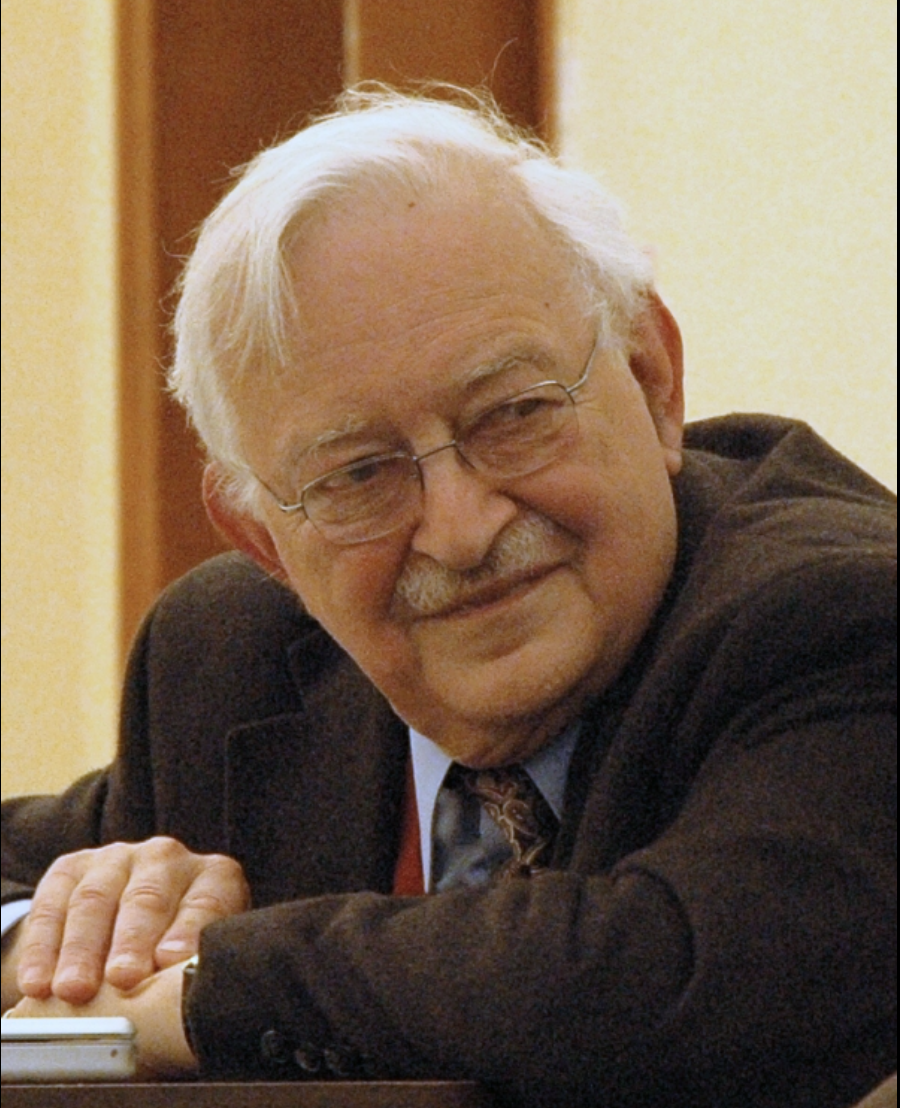
Immanuel Wallerstein (September 28, 1930 – August 31, 2019) was an American sociologist and economic historian. He is perhaps best known for his development of the general approach in sociology which led to the emergence of his world-systems approach. He was a Senior Research Scholar at Yale University from 2000 until his death in 2019, and published bimonthly syndicated commentaries through Agence Global on world affairs from October 1998 to July 2019. He was the 13th president of International Sociological Association (1994–1998). Politically, he considered himself on the "independent left" and was active in a variety of organizations. He argued that we are in the transition from our existing capitalist world-economy to some new system, and that the great political struggle of our time is about which new kind of systemic order will replace our existing one. A new systemic order could be better or worse, depending on our collective ability to push the worldwide decision in one direction or another. He believed that a crucial element in this is a vast debate about the kind of better system we wish to build, and saw the Reimagining Society Project as one of the ways to further this collective debate.




