


In the world of corporate scandals, the story breaks, there is a frenzy of reportage, a culprit in the lower levels of upper management is thrown to the SEC and then, slowly, the story dies. It is helpful, of course, if the company changes its name or vanishes into respectability: such as Union Carbide’s metamorphosis into Dow Chemicals after its corporate terrorism in Bhopal (1984).
Our current scandal among scandals is Cheney’s Halliburton – the payoffs, the price gouging, and the contracts. Forgotten in this melee is how the Bush administration saved Halliburton from doing an Enron nose-dive in the Fall of 2001. Diligent reporting from Dana Milibank of the Washington Post and Jordan Green of the Institute for Southern Studies revealed the news of Halliburton’s special treatment by the Bush administration, but because of the fog of 9/11, few cared. What does all this pettiness matter in the face of the Global War on Terrorism (GWOT)?
In the Fall of 2001, both Halliburton and Enron lost value on the stock market, both availed themselves of Arthur Andersen’s special skills, and both seemed poised for trouble. Andersen, it turned out, helped Halliburton boost its books by postponing losses and counting uncollected money as revenue.
So called “unbilled receivables” allowed Halliburton to carry $234 million in disputed claims in 2001 (twice the amount from the previous year). Halliburton and Andersen changed the rules on “unbilled receivables” when Cheney was its CEO. When Cheney moved to Bush’s side, his second-in-command, David Lesar, took over the firm. Before Lesar joined Halliburton, he was a senior partner in Andersen.
Additionally Halliburton was in the midst of potentially lethal lawsuits over its use of asbestos. On December 7, 2001 one of Halliburton’s subsidiaries, Dresser Industries, lost a liability suit for its use of asbestos in its products. Halliburton’s shares plummeted. Asbestos suits had already bankrupted insulation and roof manufacturers Johns Manville and Owens Corning, and even with its $2 billion liability insurance, Halliburton looked weak.
Lesar told the press, “There has been a huge overreaction to these events.” An attorney who has made it his business to make money on asbestos, however, said, “Halliburton has been able to go under the radar without making big payments because we were focused on the other defendants. Now that some of those other companies are bankrupt, people are starting to look more closely at Halliburton.”
Bad accounting practices and a weak flank on the asbestos issue left Halliburton vulnerable. During his tenure as its CEO, however, Dick Cheney had crafted a close relationship between the firm and big government. He saw to it that $3.8 billion per year transferred from the taxpayers to Halliburton via the Pentagon. His links to the emirates in the Gulf enabled Cheney to win the contract to quell the oil fires in Kuwait.
Cheney’s ties to the UN bureaucracy enabled Halliburton to refurbish Iraq’s oil refineries through the oil-for-food program. When asked about his work in Iraq, he reported, “The good Lord didn’t see fit to put oil and gas only where there are democratic regimes friendly to the United States.” Halliburton became the commercial wing of US foreign policy.
The skills to build bases and forward military posts came from Halliburton’s expertise in the manufacture of prisons within the US. Kellogg, Brown and Root (KBR), Halliburton’s subsidiary, is the second largest player in prison design and construction within the US. The prison boom of the 1990s boosted Halliburton.
Halliburton could have slipped down the precipice after Enron, but its close ties to the government meant it survived and flourished.
In late December 2001, Business Week offered the following cynical assessment of Halliburton’s exposure on the asbestos scandal: “Halliburton does have a potential escape hatch. The idea of limiting asbestos liability has been kicking around in Congress for years. And the company has contributed more than $100,000 to legislators who supported the notion. Cheney even kicked in $13,500 when he was a corporate officer. Now that he is in power, many analysts hope the company will benefit from favorable legislation.”
In January 2002, rumors filled the business press that the Bush administration would aggressively push its tort reform plan and cap asbestos lawsuits. Halliburton’s stock rose by 43% in mid-January. As the Dow Jones News Service noted, “Companies under the cloud of potential asbestos liability saw their bonds gain Friday on speculation that President Bush may address the question of mounting asbestos litigation.”
Halliburton won a reprieve. In late December 2003, once the parent company had taken control of its Enron-like situation, two subsidiaries with the most exposure on the asbestos issue filed for bankruptcy, leaving unhappy insurance companies with over $2 billion in payments.
The main government assistance for Halliburton came from the flood of contracts to build forward bases for the Fifth Afghan War. In December 2001, the Halliburton subsidiary, KBR won a decade-long contract with the Pentagon called the Logistics Civil Augmentation Program. In Pentagon jargon the contract is called a “cost plus award fee, indefinite delivery/indefinite quality service” – or else, as Pratap Chatterjee of CorpWatch put it, “The federal government has an open-ended mandate and budget to send Brown and Root anywhere in the world to run military operations for a profit.” The program’s details are classified, but the contract runs to almost $1 billion.
In the 1990s, Halliburton earned $2.5 billion for similar work, and the Pentagon spokesperson said that this contract would earn Halliburton substantially more. Of course, the British also chipped in with a $418 million contract for Halliburton to supply tank transporters.
Halliburton’s Lesar, who bagged a compensation package of $11.3 million in 2001, boasted, “Augmenting our military troops with contractor-provided support has proven to be an invaluable force multiplier.” In other words, the US government provided the bailout to prevent an Enron-like burnout. Cheney, who walked away with $20.6 million from his sale of Halliburton stock and who receives a $1 million annual deferred compensation salary while Vice President, must surely have been aware of the events at his former firm.
Angry at the GAO request for information, Cheney told his friends at Fox, “Can you imagine an FDR or Teddy Roosevelt, in the midst of a grave national crisis, dealing with the problems we’re having to deal with now, over here on the side of a matter of political expediency, trading away a very important principle of the presidency?” The principle is secrecy, not for the national interest, but for the interest of the plutocratic chamber of commerce.
The present history of Halliburton shows us that scandals do not effect its market position, because all those who invest know that HAL shines – if there is any problem, it will be bailed out. Bush & Co. tossed Enron to the wind; Halliburton keeps them warm. These scandals are the battles that Halliburton will face as the administration’s key commercial ally in the GWOT, as probably the largest partner in the Coalition of the Willing.

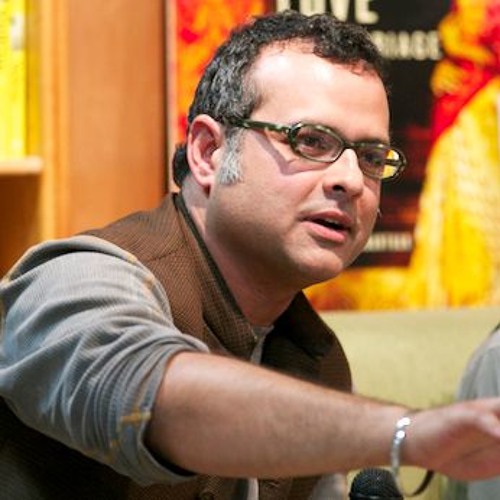
Vijay Prashad is an Indian historian, editor, and journalist. He is a writing fellow and chief correspondent at Globetrotter. He is an editor of LeftWord Books and the director of Tricontinental: Institute for Social Research. He is a senior non-resident fellow at Chongyang Institute for Financial Studies, Renmin University of China. He has written more than 20 books, including The Darker Nations and The Poorer Nations. His latest books are Struggle Makes Us Human: Learning from Movements for Socialism and (with Noam Chomsky) The Withdrawal: Iraq, Libya, Afghanistan, and the Fragility of U.S. Power. Tings Chak is the art director and a researcher at Tricontinental: Institute for Social Research and lead author of the study “Serve the People: The Eradication of Extreme Poverty in China.” She is also a member of Dongsheng, an international collective of researchers interested in Chinese politics and society.




