


I have always failed to understand why the governments have been lowering the interest rate on bank savings. In England, as early as in 1996, banks provided barely one per cent interest on savings.
In India, interest on savings has been progressively reduced to 3.5 per cent. If given a choice, Prime Minister’s Economic Advisory Committee would like to also reduce it still further.
All these years the basic habit of household savings has come under a sharp attack. Forced by orthodox economists, and backed by the fast-moving consumer goods industry, governments have deliberately reduced the incentives to save saying that the more you spend the more you add to the national economy. Well, if you don’t believe me read what Alexei Kudrin, Finance Minister of Russia had to say recently: “If you smoke a pack of cigarettes, that means you are giving more to help solve social problems such as boosting demographics, developing other social services and upholding birth rates…People should understand: Those who drink, those who smoke are doing more to help the state.”
The logic being that the more people spend, the more will be the economic growth. Unfortunately, this is not true. The less people save and more they consume, the more the economy becomes unsustainable in the long-run. It increases people’s inability to cope up with economic pressures, and thereby multiplies their vulnerability to any economic volatility. In turn it brings heavy expenditure burden on the governments, and the economy starts to hang precariously. Such flawed economic thinking sowed the seeds of the US housing bubble in 2008, when people were left with no savings to pay mortgages, triggering a global economic meltdown.
Such predatory lending policies, in the absence of adequate legal protection, is also ‘sucking the blood’ of the poor in the name of micro-finance. The same flawed and in many ways criminal lending practices are robbing the poor across the globe.
If you think the leaders of G-20 economies have learnt their lessons, the answer is no. They continue to pursue the same faulty policies, and want to shift the blame to a ‘foreign hand’. Whether it is micro-finance or global capital, it follows the same route. Instead of taming the galloping horse, the US is trying to do what the Wall Street wants. It is printing excess money to ward-off its short-term crisis, and blame China for its present crisis. We all know that the US and its allies pumped in huge bailout packages, which again went to service the banks and a privileged few, leaving the masses in shock and awe.
China’s trade surplus is what the US is now eyeing to reduce. And China is refusing to oblige. Rightly so.
Isn’t it therefore amusing to find America and its allies calling for balancing growth across countries so that some countries do not grow at a breathtaking speed, while others languish? Since when have the rich and industrialised countries begun to think of balanced growth across nations? Shouldn’t the same principle be also followed when it comes to international trade? Take the case of agriculture. Almost 35 per cent of the global trade in agriculture is in the hands of America and European Union. The US has time and again reiterated its desire to pierce open the developing country markets. WTO is designed to service the interest of agribusiness companies of the developed countries. In the process, 105 of the 149 Third World countries have already become food importing countries. Successful completion of Doha Development round will make the remaining nations also become food importers.
America does not see any wrong in the way it is using WTO to its sole advantage. And it is here that the Seoul Summit of G-20 nations that ended failed to stand up. Nor did the G-20 leaders call for a radical change in the structural problems that are behind the growing economic crisis. Much of the economic crisis that the world faces emanates from the US, which has over the years multiplied debt, and destroyed natural resources, to buttress growth. In other words, rich countries have aggressively pursued policies that widened economic disparities.
In America, studies show that 10 per cent of the population receives half of the total income every year. On top of it David Rockefeller and Ted Turner (along with multinational corporations) receive phenomenal agricultural subsides. The American decision to pump in an additional $ 600 billion in government bonds further distorts the term of trade. In India, rich corporate houses get a subsidy of Rs 5.16 lakh crore by way of tax exemptions, which is roughly half the total annual budget of the country. In almost all the major economies, 10 per cent of the population has control over 80 per cent of the resources.
The increase in income disparities, aided by fiscal policies that discourage household savings, fuels the stock markets. It is here that speculation takes over, and in the absence of tough regulations, capital flows dictate the economic policies. In the past few months, agricultural commodities prices are once again witnessing price spiral. With over 30 per cent jump in prices, one doesn’t know whether the world will soon witness a repeat of the food riots of 2007. In essence, G-20 leaders have lost control not only over where the excess liquidity flows, but also the global food system.
Ian Fleming gave James Bond the licence to kill. G-20 fails to withdraw the licence to speculate. Global capital therefore continues to be on a killing spree.

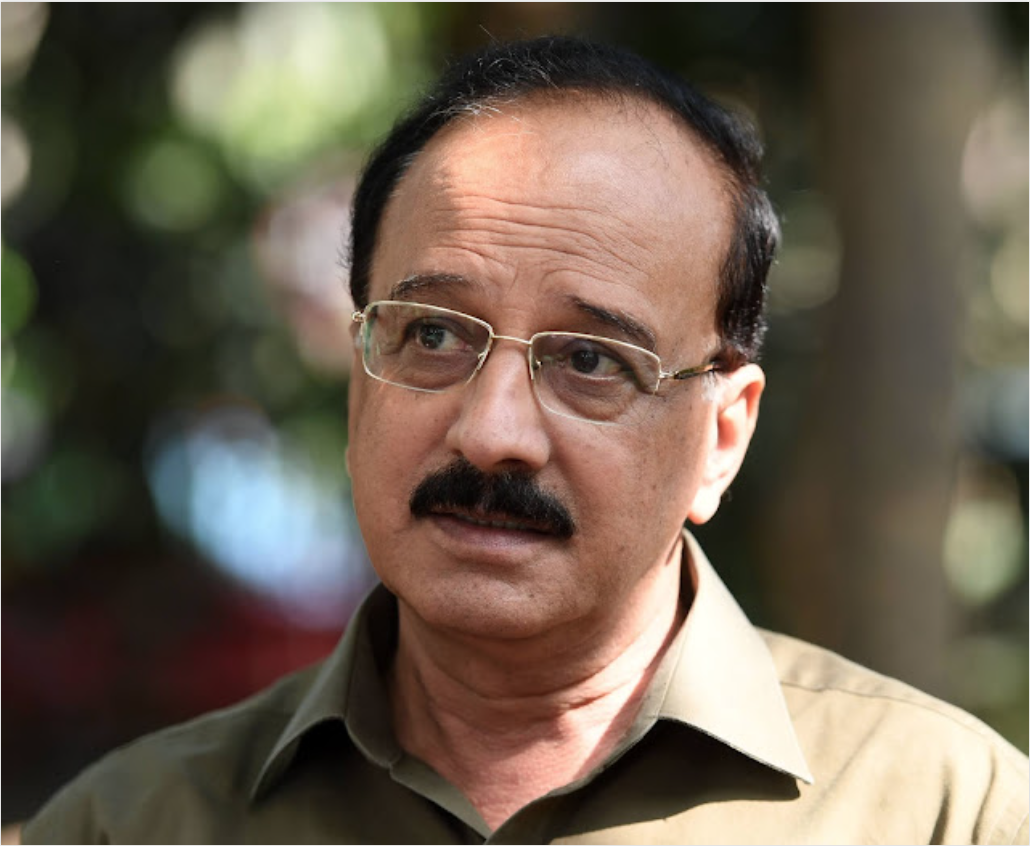
Devinder Sharma is an award-winning journalist, writer, thinker, and researcher known for his views on food and trade policy. Trained as an agricultural scientist (he holds a Master’s in Plant Breeding & Genetics), Sharma wrote for the Indian Express, and then quit active journalism to research on policy issues concerning sustainable agriculture, biodiversity and intellectual property rights, environment and development, food security and poverty, biotechnology and hunger, and the implications of the free trade paradigm for developing countries. He has been awarded with the honorary degree of Professor at Large by the CSK Himachal Pradesh Agricultural University, Palampur (India), and also has been a Visiting Fellow to the International Rice Research Institute, in the Philippines; Visiting Fellow at the School of Development Studies at the University of East Anglia, Norwich (UK); and a Visiting Fellow at the University of Cambridge (UK). Sharma is associated with numerous national and international organizations, civil society groups and farmers organisations. He also on the board of half a dozen national and international organizations, and is also a member of the CGIAR’s Central Advisory Service on Intellectual Property Rights.




