


Top leaders from the largest 20 economies of the world — called G-20 — will assemble in London on April 2. As the Hungarian-born billionaire George Soros said: "this will be the world’s last chance to avert economic disaster."
George Soros is an honourable man. He is not the only one. Almost each one of the so called top economist, policy maker, and humanitarian — and I am including the likes of Bill Gates and Warren Buffet — in this category have actually misled us to believe that the economic stimulus, which now exceeds US $ 10 trillion, needs to be further strengthened to bailout the global economy from the clutches of a likely depression. I am in fact amused when I see people who are in one form or the other responsible for the economic meltdown trying to preach us about the possible way out.
In India, it is the likes of lesser-known people like a state minister in Karnataka. Mr G Janardhana Reddy, himself says that he is worth Rs 1500-crore now. He exports iron ore to China from the hot and dusty mineral-rich district of Bellary. He and others rakes in money, but the mining activity has turned a vast rainwater reservoir Lakshmipura Kunte, rust red and laced with poison, the forests destroyed, farm ruined.
Undeterred, as a newspaper report says he is helping draft the karnatka’s state mining policy which allows fresh mining leases only for those who can ‘value-add’, meaning industrialists like him. Business barons like him surely need more than one economic bailout package.
The G-20 Summit will be not look beyond such levels of growth. These political leaders haven’t learnt any lesson. They are like the weak students in a classroom trying to sit behind the intelligent ones in an examination so that they can copy some of the answers. I am therefore no longer shocked at their inability to stand up and show the way. You will see these leaders will end up parroting what the likes of George Soros have to say, the man who reportedly made one billion dollars on short-selling sterling on "Black Wednesday" in 1992.
While the likes of George Soros, World Bank director general Robert Zoellick and WTO director general Pascal Lamy are moving in the corridors of power seeking more thrust on ‘inclusive growth’ — inclusive only to the rich barons and the financial tycoons — G-20 is unlikely to take even a notice of the strong message that comes out from the march that thousands of people participated in Britain, France and Germany last week to protest the global economic crisis and urge world leaders to take action on poverty, jobs and climate change.
The G-20 leaders suffer from myopia. They can only see the corporate and big business interest. Rest everyone is beyond their visibility coefficient. I sometimes wonder why can’t these leaders ever realise that if the worlds best brains and scientific acumen that has been generated over the past several decades was so brilliant why is it that forests are disappearing at an alarming rate, oceans have exhausted the fish stocks, crop fields are turning barren and sick, water is becoming scarce, environment has been polluted beyond redemption, hunger is growing in the midst of growing trade, and the world is warming up to an extent that if we do not make a radical correction now, it would be too late.
Just sit back and think. If these scientists, economists, and management gurus were so good, why should the world gobble up its natural resource base? Why is that that the growth economics that we are taught in the university curriculum actually ends up in violence? I mean violence against nature, violence against the environment and finally violence against the human beings. How can we be led on a garden path to believe that our future is safe in the hands of these Nobel laureates, and the likes? If they were so good they should have shown us a way out of the crisis rather than pushing us deeper and deeper towards an environmental catastrophe.
I have nothing against these distinguished scientists and economists, but sometimes I wonder with so much of brilliance around us why are we fast sliding on a downhill path? What is the use of this brilliance if the Earth is fast becoming an unsuitable place to live? Why do we need to switch off the lights for one hour to draw the attention of the political leadership towards the dangers of global warming staring at us?
The answer is simple. In our quest to demonstrate our brilliance we have forgotten some simple lessons that nature provides. We feel ashamed to even acknowledge that nature provides us the right solutions. If we do so, people would scoff at our post-doctoral degrees that we pick up from Harvard, Yale and Cambridge. You have to look different, and the more you are educated the more sophisticated form of confusion you create. This in turn kills traditional wisdom.
If the G-20 leaders had ever stopped by a village pond and looked at the frog swimming in the waters they would have found the answer to the global economic meltdown that the world is faced with, which in reality is the cause behind global warming. Just pause and think, and you will understand what I mean. The frog has lived generation by generation in that small pond. But it did not drink the pond. It lived in harmony with the pond. The pond has not dried up, nor has it become unbearable for the frog to migrate or look for fresh water sources elsewhere.
We haven’t learnt from the frog. We live on Earth, and yet we have eaten up the natural resources. In our quest for economic growth, we have destroyed the planet treating nature as an economic commodity to be sold. Is this the path we should continue to move on? Should we not learn from the frog, and try to reverse the destructive path? Should we not try to preserve the pond that we live in?
I wish someone could take the G-20 leaders to visit a village pond. The world will not be the same again. This is our last chance.

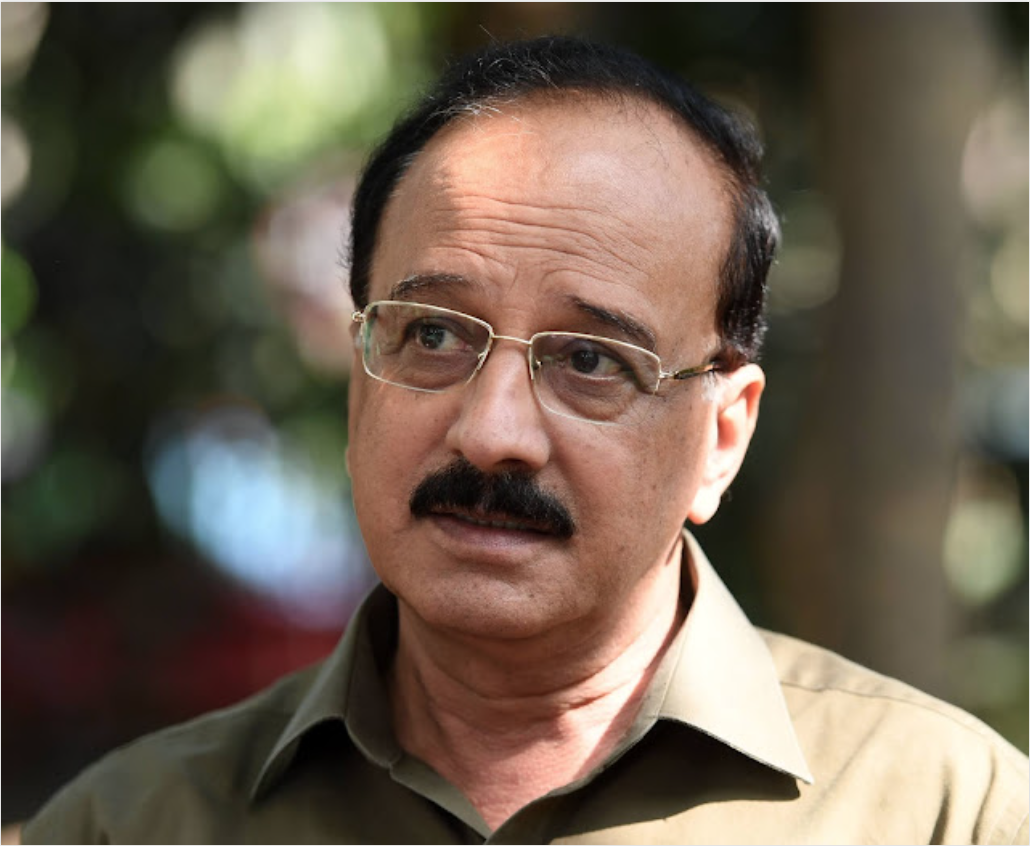
Devinder Sharma is an award-winning journalist, writer, thinker, and researcher known for his views on food and trade policy. Trained as an agricultural scientist (he holds a Master’s in Plant Breeding & Genetics), Sharma wrote for the Indian Express, and then quit active journalism to research on policy issues concerning sustainable agriculture, biodiversity and intellectual property rights, environment and development, food security and poverty, biotechnology and hunger, and the implications of the free trade paradigm for developing countries. He has been awarded with the honorary degree of Professor at Large by the CSK Himachal Pradesh Agricultural University, Palampur (India), and also has been a Visiting Fellow to the International Rice Research Institute, in the Philippines; Visiting Fellow at the School of Development Studies at the University of East Anglia, Norwich (UK); and a Visiting Fellow at the University of Cambridge (UK). Sharma is associated with numerous national and international organizations, civil society groups and farmers organisations. He also on the board of half a dozen national and international organizations, and is also a member of the CGIAR’s Central Advisory Service on Intellectual Property Rights.




