


The US State Department-Pentagon has a bad record on war aims. During the lead-up to the Gulf War, the Bush administration, Part 1, argued that the US was needed to liberate Kuwait. The invasion of a state of 2.2 million people, in which only 28% earned the right to citizenship and a part of the oil wealth, was to be liberated by the full force of the US military. As ships and aircraft went toward the Gulf, those of us in the peace movement wondered about the size of the deployment and the war aims of Bush I: will it really take so much firepower to dispatch the Iraqi army from Kuwait, and does the US really need to amass such a broad coalition for this purpose?
Indeed, the war aims of Bush I transmuted from the liberation of Kuwait to the overthrow of the Ba’athist regime led by Saddam Hussein from Iraq. Even as he addressed the nation two hours after US planes unloaded their payloads on the Iraqi people, Bush I did not talk of the removal of Hussein from power. “We are determined to knock out Saddam Hussein’s nuclear bomb potential,” he said on 16 January 1991. “We will destroy his chemical weapons facilities. Much of Saddam’s artillery and tanks will be destroyed.” On 26 February, the Iraqi forces left Kuwait; on 6 March, Bush I told Congress that “the war in Iraq is over”; by 7 April the Alliance established the northern no-fly zone and began the intermittent bombardment of Iraq (and the major bombing of December 1998), in effect continuing the war till this day. The war aim now is the overthrow of Saddam Hussein.
The war aims in retaliation to 9/11 transmuted faster than they did in 1991, but in a most expected fashion. With no firm proof, and reminiscent of the 1995 Oklahoma City bombing, the Bush administration, Part 2, put its finger on Osama bin Laden. In 1998, the Clinton administration bombed Sudan and Afghanistan without warning for the bombings at the eastern African embassies by a network that may be linked directly to bin Laden. This time, Bush II was interested in a comprehensive solution and not a symbolic bombardment. “Infinite Justice” was the first name of the campaign (since renamed to “Enduring Peace” after criticism from the oil sheikhs who said that only the divinity can be infinitely just).
The White House approached Pakistan and offered the false choice of being part of the bombardment or being a recipient of it. Pervez Musharraf agreed to join the alliance, but only for bin Laden to be brought to book, and not to threaten the Taliban regime in Afghanistan. After all, the Taliban are an old Pakistani ally and Pakistan was then only one of three countries to recognize their rule (it is now the only one, as Saudi Arabia and the UAE abandoned ship). Within days it became apparent that the war aims have shifted: the US government will not be content with bin Laden, but it now seems to want the demise of the Taliban. The New York Times reports (3 October) that the Pentagon is rethinking its Pakistan strategy, mainly because the shift in war aims has compromised Musharraf and set the stage for a coup there.
And to replace the Taliban we are bringing out old Zahir Shah from his Roman suburb and the remnants of the notorious Northern Alliance, the same cast of characters who were fated to take office in 1980. Zahir Shah has lived in Rome since 1973, and he has over the years, most recently in November 1999, tried to convene a Loya Jirga, or an elders meeting, which would include the brigands who remain locked out of Kabul. Shah, a pensioner of an unnamed Gulf State, is apparently an unwilling protagonist, but those who have funded him for three decades are perhaps eager to see him back in power – to give them title, perhaps, to the Turkmenistan-Pakistan natural gas pipeline.
Just as the US joined hands with and funded the unpleasant Iraqi National Congress, it now appears that the Trojan horse for US imperialism will be the Northern Alliance, a rag-tag bunch of fighters who have spent most of their time fighting each other after the retreat of the Soviet army, and whose short-lived reign in Kabul was well-known for its ferocity.
The roots of the Northern Alliance can be traced to the defection of General Abdul Rashid Dostam with his Uzbek militia from Najibullah’s side in March 1992 – with this act the decimated People’s Democratic Party of Afghanistan’s days were numbered. The mujahidin entered Kabul and, in mid-April, they circumvented an immediate continuation of the war with a Peshawar alliance headed by the Jamait-i-Islami boss Professor Burhanuddin Rabbani (who is still the recognized head of the country).
By August of 1992, the war began again, as Gulbuddin Hikmatyar’s Hezb-i-Islami took on the Professor’s regime, and the ensuing instability resulted in the final demise of Najibullah’s government in December. In March 1993, the factions conducted the Islamabad Accord so that Rabbani continued as President, while Hikmatyar became Prime Minister.
But Hikmatyar was a poor ally, because he continued his terror, in alliance with the Hezb-i-Wahdat and in opposition to Rabbani (whose troops remained in the command of the late Ahmed Shah Masood, but who worked in cooperation with the ex-communist, Dostam). In January 1994, Hikmatyar formed an alliance with Dostam, and so the musical chairs continue until this day. Hikmatyar, with Dostam, then with Masood, then Rabbani in the background – all the while the Taliban consolidated power, took Mazar-i-Sharif in 1997 and then finally Kabul.
As the civil war unfolded the Northern Alliance inflicted massive pain on the Afghan population. In January 1997, Dostam’s forces ruthlessly bombed Kabul and Masood’s forces continued to do so, even the day after 9/11 in retaliation for his assassination three days earlier. An interested reader may study Amnesty International’s reports published in 1995 on major abuses by Rabbani’s Jamait-i-Islami, Hikmatyar’s Hezb-i-Islami, Dostam’s Junbest-i-Melli Islami and Hezb-i-Wahdat: (1) Afghanistan: International Responsibility for Human Rights Disaster [AI Index ASA 11/09/95] and (2) Women in Afghanistan: A Human Rights Catastrophe [AI Index ASA 11/03/95]. When the Taliban entered Kabul, this history was re-written by the powers mainly because the Northern Alliance now appeared as a reasonable alternative to the loss of control over the Taliban. That many of the Northern Alliance cultivated Iran was not to be a stumbling block, particularly after the slow, but steady US-Iran rapprochement.
US war aims, then, are simultaneously as brutal and unfocused in Afghanistan as they are in Iraq – to overthrow one corrupt regime and put in place another, but this time friendly with the US. The US Left needs to speak out not only against the war, but also against the slowly formulated war aims, and certainly against the restoration of “stability” in the name of capital. The Northern Alliance is not “at least better” than the Taliban, as liberals want to believe: they are as bad for the people of Afghanistan.
What are the alternatives? The mujahidin, mainly Hikmityar’s crew, have killed much of the intelligentsia during its reign of terror in the 1990s, and it led to the exile of a huge number of reasonable Afghans, many of whom took shelter in New Delhi (and do not wish to return to a place that has given their families such nightmares). Organized refugee groups, like RAWA (Revolutionary Association of the Women of Afghanistan), the Afghan Women’s Network, and other such people’s organizations have been at work for years trying to restart a progressive dynamic among Afghan refugees, but also to spill over into the besieged country. These groups will not be party to the types of corrupt capitalist deals already being worked out in Roman suburbs and in Uzbekistan: a moratorium on the exploitation of Afghanistan is perhaps in order, with the profits from a potential natural gas pipeline drawn into the redevelopment of the country’s productive base and democratic institutions rather than toward Unocal or Bridas. These are our fights, against the war aims of the US and their new, yet old, allies, but in support of those popular agencies that oppose the Taliban from within the contradictions of Afghan life, both in diaspora and at home. It is time to move on the contradictions.

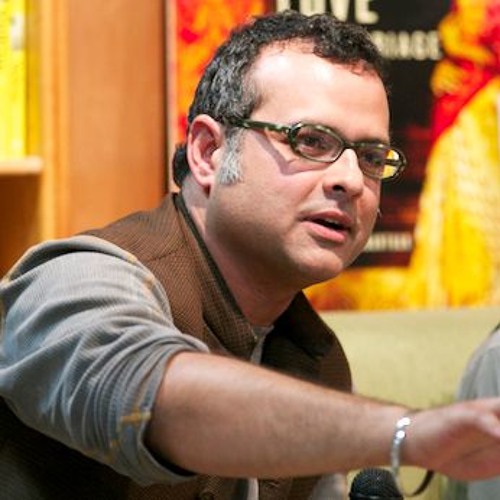
Vijay Prashad is an Indian historian, editor, and journalist. He is a writing fellow and chief correspondent at Globetrotter. He is an editor of LeftWord Books and the director of Tricontinental: Institute for Social Research. He is a senior non-resident fellow at Chongyang Institute for Financial Studies, Renmin University of China. He has written more than 20 books, including The Darker Nations and The Poorer Nations. His latest books are Struggle Makes Us Human: Learning from Movements for Socialism and (with Noam Chomsky) The Withdrawal: Iraq, Libya, Afghanistan, and the Fragility of U.S. Power. Tings Chak is the art director and a researcher at Tricontinental: Institute for Social Research and lead author of the study “Serve the People: The Eradication of Extreme Poverty in China.” She is also a member of Dongsheng, an international collective of researchers interested in Chinese politics and society.




