


/ Creators Syndicate
For several weeks now, the suffering of refugees from Kosovo has filled our TV screens.
Empathy seems to motivate much of the public support for the ceaseless bombing of
Yugoslavia.
Fortunately, Americans can be stirred by moral outrage. Unfortunately, that outrage has
been manipulated by a constellation of forces that could be described as a
military-industrial-media complex.
Central to U.S. news coverage is a paradigm as old as the macabre art of propaganda
itself. Routinely, media reports make a huge distinction — sharp yet cloaked — between
worthy and unworthy victims. Policy-driven from the White House, the coverage emphasizes
some suffering and downplays or ignores other suffering.
While American television lenses focus on the anguish of Albanian refugees and the
carnage at a high school in Colorado, less worthy victims remain out of media sight and
out of public mind.
In East Timor — occupied for a quarter-century now by the U.S.-backed Indonesian
government — more than 1,000 paramilitary thugs, actively abetted by Indonesia’s army and
police, went on a murder spree targeting pro-democracy activists in mid-April. On a single
day, confirmed accounts put the number of dead at more than a dozen. In the atmosphere of
the U.S. mass media, this was no big deal. The victims were not worthy.
During this decade — seen through the media window on the world tinted red, white and
blue — the Kurdish people slaughtered inside Iraq by the Baghdad government have been
worthy victims. In contrast, viewed through that same media window, the Kurdish people
slaughtered inside Turkey by the Ankara government (a member of NATO) have been unworthy
victims: deserving scant coverage or outcry.
In the wake of the Colorado school tragedy, President Clinton said that the nation’s
prayers went out to the victims and their loved ones. But, of course, he offered no
prayers for victims and loved ones in connection with the incessant bombing of Yugoslavia.
The president declared with a straight face: "We do know that we must do more to
reach out to our children and teach them to express their anger and to resolve their
conflicts with words, not weapons." Mainstream American journalists were far too
circumspect to point out that such pieties were being uttered by a leader who has
championed the deadly use of many weapons by the United States and other NATO countries.
The high-school shootings occurred while NATO warplanes were in the midst of the most
intense bombardment of Yugoslavia yet — with 603 "missions" reported in a
24-hour period. Civilians under those bombs were mere blips on our media screens.
Ever since the bombing began a month ago, the Clinton administration has been committed
to continuing — and trying to justify — that military assault. No official wants to
admit that the results of bombing have been absolutely opposite of the proclaimed aims.
In a candid moment, a media spokesperson in Washington or Brussels may yet echo an
infamous claim made for U.S. military actions in Vietnam three decades ago: Perhaps we’ll
have to destroy Kosovo in order to save it.
As disastrous as the NATO assault has proven to be — measured against its initial
announced purposes — the human catastrophe experienced by Albanian refugees has been
tremendously important in marshaling support for this war from Americans. There is much
talk about our moral obligation to do something. The fact that U.S. actions have gravely
worsened the situation is presumably of minor importance.
The greatest lies are commonly told by inference and emphasis — by the unacknowledged
chasm between repetition and evasion, between victims deemed worthy and unworthy. A truth
told to the virtual exclusion of another truth can become, simultaneously, a truth put to
use for distortion and manipulation.
Such selectivity cheapens compassion and turns it into the coin of propaganda.

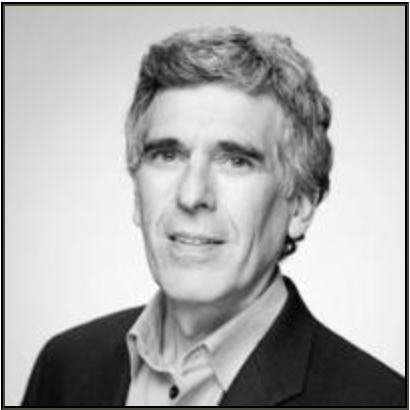
Norman Solomon is the national director of RootsAction.org and executive director of the Institute for Public Accuracy. The paperback edition of his latest book, War Made Invisible: How America Hides the Human Toll of Its Military Machine, includes an afterword about the Gaza war.




