


You might remember the old movie “Twelve Angry Men,” starring Henry Fonda, Lee J. Cobb and E.G. Marshall. Most of the dramatic film takes place inside a jury room as a dozen people deliberate at the end of a murder trial. It’s sweltering hot. At the outset, most of the jurors are eager to render a guilty verdict and go home. As the story unfolds, viewers learn that some are influenced by prejudice against the dark-skinned defendant.
We’d like to think that such bias doesn’t hold sway in jury rooms these days. After all, “Twelve Angry Men” came out in 1957, and a lot of progress has occurred since then. But stereotypes and semi-conscious racism are still widespread factors in American society.
An essay in the new anthology “Race and Resistance” notes that “the power of the media is profound” — and adds that “its most powerful impact is on children, who frame definitions of and draw conclusions about the world through the messages they receive.”
Written by mass communications professor Alice Tait and journalist Todd Burroughs, the essay refers to internalized racial spin in the United States: “Studies conducted in the 1990s show that children across all races associate positive characteristics more with white characters they see on television, and negative characteristics with the minority characters.”
Several years ago, physician Michael LeNoir coined the apt term “image distortion disorder” to describe a prevalent social dynamic that blurs and obscures our common humanity. “Most of the images that one ethnic group has of another are developed by the media,” LeNoir pointed out. With some minorities often depicted in a bad light, especially on television, media-fed perceptions create “a background of anxiety and fear in America that is dangerous.”
Some repetitive media representations of African Americans, Latinos and Asians “have a devastating effect on every person in this country and undermine any attempt to bring us together as a people,” says LeNoir, who practices medicine in Oakland, Calif. He advocates speaking out: “Those of us in America who are concerned about race relations must react to obvious distortions in the media by raising our voices in protest over the never-ending attempt to portray people of color in these caricatured, fragmented and distorted images.”
Such images have profound consequences in many spheres of American life — including the nation’s courts. News outlets frequently exacerbate the illness of “image distortion disorder,” but they’re sometimes effective at calling attention to how various forms of racism contribute to terrible injustices in the present day.
One of the virtues of a recent special report on national radio is that it did just that. In a documentary called “Deadly Decisions,” from American RadioWorks, correspondent Alan Berlow found that “jurors may be influenced by their own fears and prejudices when they sentence people to death.”
The documentary, co-produced by Minnesota Public Radio and NPR News, succeeded in ways that public radio shows like “Morning Edition” and “All Things Considered” routinely fail. Meticulously researched, the special report devoted a full hour to scrutinizing what happens under the surface of official accounts, easy narratives and quick soundbites.
The result was exemplary journalism that explained how people can be put to death by a legal system that’s theoretically equitable but functionally skewed against defendants without white skin or financial resources. Combining well-ordered factual information and vivid interviews (see www.AmericanRadioWorks.org), the “Deadly Decisions” report built a logical case for some very disturbing conclusions.
One of the documentary’s illustrative stories involved the experiences of a man named Michael Callahan, who was a juror in a murder trial. Callahan described a jury atmosphere reminiscent of “Twelve Angry Men.” But instead of sitting in a make-believe cinematic jury room in the 1950s, Callahan was sitting in a real jury room in the 1980s.
Most of the jurors seemed inclined to convict even before the trial began. And the prosecutor’s case was so weak that Callahan recalled feeling “aghast.” Yet, convinced that “sooner or later the truth is going to come out,” he went along with voting to convict the defendant, Rolando Cruz, of first-degree murder.
An entire decade passed before the truth came out. “Cruz had nothing to do with the murder,” the documentary reported. “He had lost nearly 12 years of his life, most of it on death row.”
Such stories — exposing grim realities of injustice in our midst — are difficult to tell with the detailed care that they deserve. When journalists find ways, there is more hope for the future.

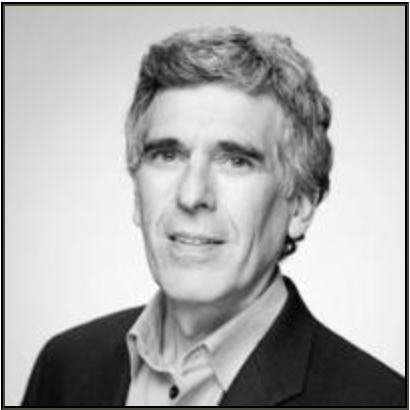
Norman Solomon is the national director of RootsAction.org and executive director of the Institute for Public Accuracy. The paperback edition of his latest book, War Made Invisible: How America Hides the Human Toll of Its Military Machine, includes an afterword about the Gaza war.




