


Top Democrats and many prominent supporters — with vocal agreement, tactical quibbles or total silence — are assisting the escalation of the U.S. war effort in Afghanistan and Pakistan. The predictable results will include much more killing and destruction. Back home, on the political front, the escalation will drive deep wedges into the Democratic Party.
The party has a large anti-war base, and that base will grow wider and stronger among voters as the realities of the Obama war program become more evident. The current backing or acceptance of the escalation from liberal think tanks and some online activist groups will not be able to prevent the growth of opposition among key voting blocs.
In their eagerness to help the Obama presidency, many of its prominent liberal supporters — whatever their private views on the escalation — are willing to function as enablers of the expanded warfare. Many assume that opposition would undermine the administration and play into the hands of Republicans. But in the long run, going along with the escalation is not helping Obama; by putting off the days of reckoning, the acceptance of the escalation may actually help Obama destroy his own presidency.
Ideally, in 2009, Democratic lawmakers would see as role models the senators who opposed the Vietnam War — first Wayne Morse and Ernest Gruening, and then (years later) others including Eugene McCarthy and Robert Kennedy. Earlier and stronger opposition from elected officials could have saved countless lives. The dreams of the Great Society might not have been crushed. And Richard Nixon might never have become president.
Now, everyone has the potential to help challenge the escalation of the Afghanistan-Pakistan war — on a collision course with heightened disaster.
In early April, the Sunday Times of London reported that U.S. drone attacks along the Afghan-Pakistani border on Saturday killed "foreign militants" and "women and children" — while Pakistani officials asserted that ³American drone attacks on the border . . . are causing a massive humanitarian emergency." The newspaper says that ³as many as 1 million people have fled their homes in the Tribal Areas to escape attacks by the unmanned spy planes as well as bombings by the Pakistani army."
This is standard catastrophic impact of a counterinsurgency war. In short, as former Kennedy administration official William Polk spells out in his recent book "Violent Politics," the key elements are in place for the U.S. war in Afghanistan to fail on its own terms while heightening the death and misery on a large scale.
Citing UN poverty data, a recent essay http://www.huffingtonpost.com/tom-hayden/progressive-think-tank-te_b_179174.
html by Tom Hayden points out that in Afghanistan and Pakistan "the levels of suffering are among the most extreme in the world, and from suffering, from having nothing to live for, comes the will to die for a cause." While the Washington spin machine touts development aid, the humanitarian effort adds up to a few pennies for each dollar going to the U.S. war effort.
A report from the Carnegie Endowment began this year with the stark conclusion that "the only meaningful way to halt the insurgency’s momentum is to start withdrawing troops. The presence of foreign troops is the most important element driving the resurgence of the Taliban." Hayden made the same point when he wrote that "military occupation, particularly a surge of U.S. troops into the Pashtun region in southern Afghanistan and Pakistan, is the surest way to inflame nationalist resistance and greater support for the Taliban."
In his pitch to NATO for more support, President Obama tried to make the U.S. war goals seem circumscribed: "I want everybody to understand that our focus is to defeat Al Qaeda." But there’s no evidence that Al Qaeda has a significant foothold in Afghanistan. That group long since decamped to Pakistan.
In any event, the claim that a massive war is necessary to fight terrorism is hardly new. Lest we forget: After George W. Bush could no longer cling to his claims about WMDs in Iraq, he settled on the anti-terrorist rationale for continuing the Iraq occupation.
Even among allies, the anti-terrorism rationale is not flying for a troop buildup in Afghanistan. After Obama¹s latest appeal to the leaders of NATO countries, as the New York Times reported Sunday, "his calls for a more lasting European troop increase for Afghanistan were politely brushed aside."
Europe will provide no more than 5,000 new troops, and most of them just for the Afghan pre-election period till late summer. In the words of the Times: "Mr. Obama is raising the number of American troops this year to about 68,000 from the current 38,000, which will significantly Americanize the war."
For those already concerned about Obama’s re-election prospects, such war realities may seem faraway and relatively abstract. But escalation will fracture his base inside the Democratic Party. If the president insists on leading a party of war, then activists will educate, agitate and organize to transform it into a party for peace.
The mirage of wise counterinsurgency has been re-conjured by the Obama White House, echoing the "best and brightest" from Democratic administrations of the 1960s. But the party affiliation of the U.S. president will make no difference to people far away who mourn the loss of loved ones. And, whether in Afghanistan, Pakistan or the United States, the president will be held to the astute standard that Barack Obama laid out as he addressed unfriendly foreign leaders in his inaugural speech: "People will judge you on what you can build, not what you destroy."
_____________________________________
Norman Solomon is on the advisory board of Progressive Democrats of America and a national co-chair of the Healthcare NOT Warfare campaign. His books include "War Made Easy: How Presidents and Pundits Keep Spinning Us to Death," which has been made into a documentary film of the same name. For information, go to: www.normansolomon.com

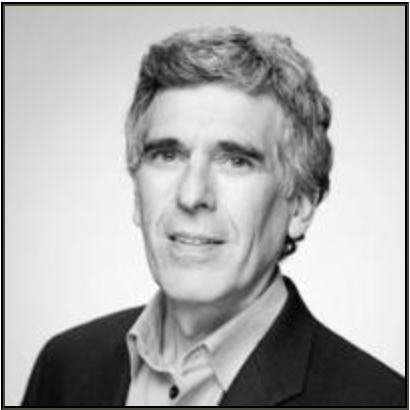
Norman Solomon is the national director of RootsAction.org and executive director of the Institute for Public Accuracy. The paperback edition of his latest book, War Made Invisible: How America Hides the Human Toll of Its Military Machine, includes an afterword about the Gaza war.




