


More than once over the last several years I have talked with people who understand the deep hole humankind has dug for itself because of our reliance on fossil fuels and the dominant system’s environmentally destructive model of “development.” They have difficulty seeing a way that we will ever get out of this hole. Intuitively, they see little hope that we can avoid climate catastrophe. They ask me why I’m doing what I’m doing given that likelihood.
What I say to them is, OK, let’s assume the worst. Let’s accept that it is unlikely that we will be able to overcome in enough time the power of the fossil fuel interests and those allied with them and enact a clean energy revolution in enough time. Let’s accept that throughout this century billions of people will die and the world’s population is reduced to several hundred million people, the prediction of James Lovelock. What then? What does that mean for those of us alive today who want to do the right thing with our lives?
First of all, what we do today can increase the odds that those who come after us will be both greater in numbers and in a better situation than would be the case if we just give up or half-step it. The stronger, the bolder and the qualitatively better a climate/progressive movement we build, the sooner we can expect the U.S. government and other governments to get serious about the changes urgently needed, and the greater the chances that future generations will be able to rebuild human society on a firmer and sounder foundation.
Secondly, perhaps we will find an inner peace that will give us the strength we need if we accept, if we just accept, that just as each of us as individuals is going to someday die, life on earth as we have known it—a world dominated by injustice, war and exploitation, in the main, for millenia—may also have to die in order for a qualitatively higher form of civilization to have a chance of evolving.
This is a strange thing to write. It can be interpreted as my saying that humankind deserves what is coming down the pike, even the most catastrophic version of it. And given that it will be overwhelmingly the poor people of the world, those who have done the least to cause global heating, who will suffer and die first and the most, this seems very insensitive.
And yet I know from my own personal experience, the experience of someone who has fought as best as I’ve been able for over 40 years against injustice, war and exploitation and who intends to do so until I die, that what I am saying is true. I am in no way suggesting that people can or should find “inner peace” by withdrawing from the struggle for change, concentrating solely on qualitative personal change (as important as that is), accepting our human and societal limitations and the likelihood of the Great Catastrophe. But if a person engages in the movement for climate and social justice, giving it their best, taking care of themselves along the way, one’s spiritual and emotional life will improve.
We feel better, we are better, if we connect with and follow our conscience no matter what the odds.
Finally, we just don’t know what the future may hold as far as potential new discoveries that could be game-changers. As one example of a number of “geoengineering” ideas that are being seriously investigated, research has been underway for years to come up with a way to take carbon dioxide out of the air. There are at least two huge problems associated with this process. One is the problem of what you do with the CO2 once it is removed from the air. The other is the tremendous cost of this process if done on the scale necessary. However, these problems might be overcome if the political will for strong action grows among the U.S. population and among the peoples of the world as the crisis unfolds and more and more catastrophic weather events take place. The financial costs, for example, could be met by a dramatic reduction in preparation for war and a hefty “wealth tax” on the obscenely-rich.
And there could be other technological breakthroughs, other game-changers, that as of now we have no knowledge of.
In “Our Final Century,” a book by Martin Rees, former President of the British Association for the Advancement of Science, he refers to a 1937 study by the U.S. National Academy of Sciences aimed at predicting coming breakthroughs. “It came up with some wise assessments about agriculture, about synthetic gasoline and synthetic rubber. But what is remarkable is the things it missed. No nuclear energy, no antibiotics (though this was eight years after Alexander Fleming had discovered penicillin), no jet aircraft, no rocketry nor any use of space, no computers; certainly no transistors. The committee overlooked the technologies that actually dominated the second half of the twentieth century. Still less could they predict the social and political transformations that occurred during that time.”
Some words of hope there, for sure.
Those of us alive and aware right now as we’re about to enter the second decade of the 21st century are an absolutely decisive generation for the world. Those before us were not able to build a broad enough movement with sufficient political will to make the changes needed. Those coming after us in the third decade, even later in this decade, will probably be too late to be able to avoid runaway and catastrophic climate change if we can’t take the steps in the first half of this decade, the sooner the better, that guarantee an irreversible, broad, deep and rapid clean energy revolution.
There are lots of opportunities for internationally-coordinated actions this fall—September 21-25, October 12th, October 24th, November 30th, December 12th. Let’s make this fall a period in earth’s history that future generations will look to as the rise-up time that launched the worldwide popular movement which changed history!
Ted Glick is the Policy Director of the Chesapeake Climate Action Network (www.chesapeakeclimate.org). Past Future Hope columns and other information can be found at www.tedglick.com.

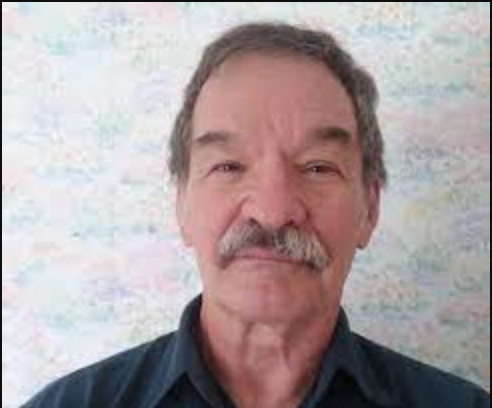
Ted Glick has devoted his life to the progressive social change movement. After a year of student activism as a sophomore at Grinnell College in Iowa, he left college in 1969 to work full time against the Vietnam War. As a Selective Service draft resister, he spent 11 months in prison. In 1973, he co-founded the National Committee to Impeach Nixon and worked as a national coordinator on grassroots street actions around the country, keeping the heat on Nixon until his August 1974 resignation. Since late 2003, Ted has played a national leadership role in the effort to stabilize our climate and for a renewable energy revolution. He was a co-founder in 2004 of the Climate Crisis Coalition and in 2005 coordinated the USA Join the World effort leading up to December actions during the United Nations Climate Change conference in Montreal. In May 2006, he began working with the Chesapeake Climate Action Network and was CCAN National Campaign Coordinator until his retirement in October 2015. He is a co-founder (2014) and one of the leaders of the group Beyond Extreme Energy. He is President of the group 350NJ/Rockland, on the steering committee of the DivestNJ Coalition and on the leadership group of the Climate Reality Check network.




