


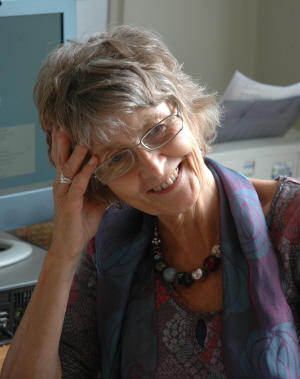
This year marks the 40th anniversary of the publication of Ann Oakley’s Housewife.
Based on Oakley’s PhD research, the pioneering feminist book looks at the role of the housewife in modern industrialised society. “The study of domestic labour was not taken seriously at all – it wasn’t understood to be a topic, in fact”, Oakley tells me as we sit in her office at the Institute for Education in London where she is Professor of Sociology and Social Policy.
Interviewing 40 women living in suburban London, Oakley, now 70, found they tended to be dissatisfied because of the monotony, fragmentation and social isolation inherent in the role of housewife. Therefore, as “housework is directly opposed to the possibility of human self-actualisation” she concluded with a call to abolish the housewife role. “I was being deliberately provocative”, she explains about the book’s final chapter which also called for the abolition of the traditional family and the abolition of traditional gender roles.
Four decades later, what’s changed? “I think the whole notion of women being housewives has changed”, she replies. “If you asked women now to talk about themselves as housewives they wouldn’t know what you were talking about really.” But while she concedes men do more housework today, she explains it’s still not equal. “I don’t think there is any study in the world which shows it’s equal.”
Sure enough, in the newly published 2014 Global Trends survey 70 percent of British women said they are mostly responsible for cooking, food shopping and household cleaning. These findings are supported by research from the Organisation for Economic Cooperation and Development (2013) and the Institute for Public Policy Research (2012), both of which show British women still do the lion’s share of domestic labour.
“Most of the change that has happened since the 70s has been, in my view, fairly superficial”, Oakley says. “The change in behaviour is probably less than the professed attitude – what people say is more egalitarian than what they do.”
In particular, Oakley’s 1970s research was interested in the inequality of responsibility. “In so far as men did housework it was construed by the men and women as him helping her with the housework – not the other way round. In terms of the issue of responsibility, what happened in the 1970s is still happening now.”
When men do pitch in studies show they generally end up doing the tasks that are arguably more enjoyable and leisurely – gardening and DIY, for example. Oakley agrees: “In the area of childcare, it’s still the case that men are more likely to be doing the more enjoyable side of childcare, rather than changing the dirty nappies.”
So why does this grossly unfair status quo continue? “Patriarchy is the simple explanation”, Oakley argues. “Men are a privileged group and there is no reason they should give up their privilege unless they are forced to do so.” This is where feminism comes in: “Most of the change in men’s behaviour, I suspect has come about because the women they are involved with have put pressure on them to change. Men haven’t, en masse, decided that housework is a good thing to do.”
Oakley sees increasing men’s involvement in housework and childcare as an important step in addressing the social problem of masculinity – a topic she explored in a 2011 Guardian article co-written with fellow feminist academic Cynthia Cockburn. Quoting government statistics, they noted “men were perpetrators in 91% of all violent incidents in England and Wales… 81% for domestic violence, 86% for assault, 94% for wounding, 96% for mugging, 98% for robbery.” In addition, Ministry of Justice figures show men to be responsible for 98% of sexual offences, 92% of drug offences and 89% of criminal damage. “The evidence is that being involved in basic care work, being involved in very close relationships with dependent people including children, is something that brings out qualities which are traditionally associated with being a woman – caring, altruism and all that”, Oakley says. “That happens with men too but they have to first of all be willing to put themselves in the position so those changes can occur.”
According to 2011 research by Churchill Home Insurers one in seven of the population pay for outside hired help to do housework. Oakley doesn’t buy this as a solution to the problem. “That’s not a solution because very often the people who are hired are women and they are underpaid, their job conditions and security are not good”, she says. “And usually it is the woman in the household who is responsible for looking after the hired help. So you’ve simply passed the oppression on in some sense.”
Oakley’s politics and research interests were energised by the second-wave feminism of the early 1970s. 40 years later many commentators argue we are currently in the midst of fourth-wave feminism, with groups and campaigns such as UK Feminista, Everyday Sexism and No More Page 3 evidence of renewed feminist activism.
“I don’t know enough about it really”, Oakley admits when I ask her about the resurgent movement. However, she feels that some of the media discussions around contemporary feminism she is aware of have little in common with the women’s liberation movement of the 1970s. She points to the current focus on the representation of women in positions of power: “We were not arguing for women’s share of the top jobs. We were talking about basic issues, we were arguing on the level of basic reproductive rights and access to childcare – state-provided childcare. It was all about doing something about the domestic oppression and not about undoing the privilege at the top.” Rather than getting a bigger portion of the pie, she argues “It was about changing the pie. We wanted a different kind of pie.”
She is philosophical when I suggest her work, and the work of many other feminists from her generation, are rarely cited in the popular feminist polemics being published today. “Time moves on – it’s one of the sad things that so much has to be re-discovered time and again”, she says. In fact she says she found one book that referred to her as dead – “The late Ann Oakley.”
“I’m not late in the sense I’m dead and also I’m quite a punctual person”, she quips.
Having read Housewife and Oakley’s stupendously good Gender and Planet Earth – a book that moves from men and meat-eating to critiquing post-modernism – I can safely say contemporary feminism is missing a lot by ignoring Oakley’s ground-breaking work. As the recent surveys mentioned above show, housework continues to be a source of inequality between men and women. Housewife could therefore be the key text in the revival of feminist concern over housework that must take place if women are to gain any semblance of equality in the future.
Ian Sinclair is the author of The March That Shook Blair: An Oral History of 15 February 2003, published by Peace News Press. He tweets @IanJSinclair


I am the author of the book 'The march that shook Blair: An oral history of 15 February 2003', published by Peace News Press: http://peacenews.info/node/7085/march-shook-blair-oral-history-15-february-2003. I also write feature length articles, interviews, book reviews, album reviews and live music reviews for a variety of publications including the Morning Star, Peace News, Tribune, New Left Project, Comment is Free, Ceasefire magazine, Winnipeg Free Press, Columbia Journal, The Big Issue, Red Pepper and London Tourdates. Based in London, UK. ian_js@homail.com and http://twitter.com/#!/IanJSinclair




