


Over the years, stuck in debates over affirmative action, inevitably someone asks a version of the following question: “Why should white men face discrimination now because of past wrongs of slavery and Jim Crow?”
I always say, no, discrimination is not fair. One individual should not have to forgo college because of the injustices that flow from the past into the present. As an educator I want everyone to go to college regardless of their preparation because I believe that college is an experience for social development and not just to further one’s career. In college people should get the opportunity to explore ideas, to organize into groups, to struggle for a vision of the world that suits them – college should be about growth and not just about the transfer of skills. So, with that as a premise, it is impossible for me to say that anyone should be denied a seat in college despite the obvious advantages secured by historical barbarity for some over others. Reverse discrimination is not the answer.
The question posed to those of us who support affirmative action is a trap and we must resist the pressure to answer it. What we need to do is to explore all that the question leaves outside its purview. For instance: Why shouldn’t everyone go to college? Why do colleges have to be “selective”? What does it mean for us as a civilization that we measure the value of a college by its rate of refusal of students rather than its success in the production of socially committed humans? Why can’t both the white man and the folk of color go to college? Why have we reduced college entry to a problem of scarcity when we as a civilization have the means to send everyone to college?
Because we need our guns. As a society, we spend vast amounts on repression, both of our own population (with the police) and of the world (with our military). The ruling clique has chosen to defraud us from the fruits of civilization and the enlightenment – our youth often join the military to “see the world” or else to have access to college.
There is something ghastly about our unwillingness to bring the discussion of overall resource distribution into the conversation on affirmative action and allow the ruling clique to sit pretty with its weaponry, while we debate whether a working class person of color or a working class white person should go to college. The debate is arid and unfair, because it once more pits the exploited against each other as the Man goes about business as usual.
Colleges, we are told, need to be selective. To be selective means to rely on one or another measure of standard tests or the standard of the high school, or else the heritage of the applicant. Having taught in higher education in the US, I have found that my classrooms are always uneven, that even if the college tries to be “selective,” it ends up with a range of students who have different skills and dreams, in other words of human beings who cannot all be weeded out into one homogenous mass of SAT 1400 or GPA 3.9.
Some students who test poorly end up being very sharp and generous classroom discussants, while others who earn high marks may be shy: these sorts of distinctions are not on the radar of the admissions’ committees who are under pressure to raise the college’s US News & World Report rank rather than produce an energetic classroom. Teaching is about the negotiation of the uneven classroom, to draw in those who are less willing to participate and to teach those who are faster to be patient.
In other words, the classroom is also a place to make people human and to understand that we are social and not just individuals.
If we are so worried about standards, we should bolster the capacity of our students with such things as more writing classes (for everyone), more remedial math, more guidance counselors, more funds for student organizations. All this needs funds, lots of it, but in this period of neoliberal assault, these are the very programs under the gun. Retention, or the rate of those who graduate after being admitted, should be a far more important marker than admission rates. My limited experience suggests that those who would need such assistance aren’t always folks of color or immigrants, but also privileged white youth who go to expensive schools. We need some affirmative retention.
There are a ton of unemployed and stressed teachers who would love to be in the classroom teaching students, making our world a better place. But there are no jobs for them, indeed with places like UMASS Amherst on the slash and burn, there may be no jobs for most of us. If there were more money in higher education, if there was as much as we spend on destruction, affirmative action would not be on the agenda with such ferocity. The debate over affirmative action is a way to hide the class nature of the attack on higher education, on the way we have to treat as normal the lack of resources for our youth, that we must accept that some get into college and others don’t. This must be attacked and rejected.
We must continue to support affirmative action because its presence allows students of color an anti-racist horizon on college campuses. But this support must be simultaneous with a demand for more money for education, for a refusal to allow ourselves to be trapped into a “divide and rule” debate. To demand more money for higher education, indeed for all education, is an anti-racist demand because it cuts the feet out from under the vacuous zero-sum logic of the courts and of the neoliberal orthodoxy.

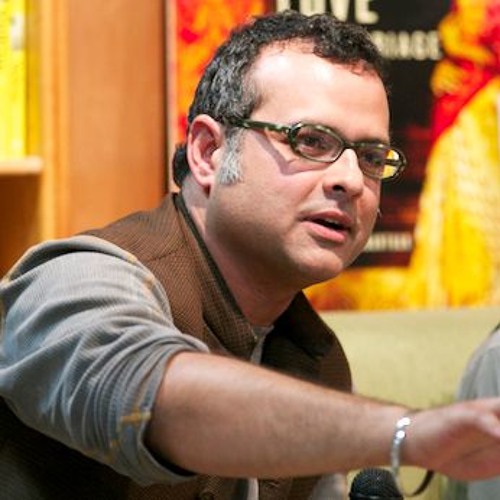
Vijay Prashad is an Indian historian, editor, and journalist. He is a writing fellow and chief correspondent at Globetrotter. He is an editor of LeftWord Books and the director of Tricontinental: Institute for Social Research. He is a senior non-resident fellow at Chongyang Institute for Financial Studies, Renmin University of China. He has written more than 20 books, including The Darker Nations and The Poorer Nations. His latest books are Struggle Makes Us Human: Learning from Movements for Socialism and (with Noam Chomsky) The Withdrawal: Iraq, Libya, Afghanistan, and the Fragility of U.S. Power. Tings Chak is the art director and a researcher at Tricontinental: Institute for Social Research and lead author of the study “Serve the People: The Eradication of Extreme Poverty in China.” She is also a member of Dongsheng, an international collective of researchers interested in Chinese politics and society.




