


With the 2010 Winter Olympics in Vancouver just wrapping up, I’d like to expound upon on a ZNet commentary written by Michael Albert around the time of the 2006 Winter Olympics in Torino. Albert’s commentary, published on February 19, 2006, entitled "Olympics Parecon", said in part:
"Leftists ought to realize that the reason [that athletes who tout the line that ‘winning isn’t important, it’s playing well’ are seen as pathetic] happens is because we live in a savage market economy in which the credo that winning is everything is imposed by market logic. If we deny it for sports, we may deny it more generally, and that is too dangerous a prospect to tolerate."
I agree that markets for many important reasons must be abolished and replaced. The projects around a participatory society, including participatory economics, certainly rank among the more detailed proposals for a more just successor economy and society. But in his commentary about the Olympics, Albert seems to imply that sports themselves essentially won’t change, even if the economics surrounding them will change to that of a participatory economy. We’d presumably still have sports and games, presumably with a competitive ethos, complete with winners and losers, even if we’d have jobs balanced for desirability and empowerment, remuneration per effort and sacrifice, and participatory planning instead of markets or command planning.
These two systems – competitive contemporary sports and participatory economics – each follow a different logic. In the realm of, say, a competitive hockey game in the Winter Olympics, you have a team that winds up winning and a team that winds up losing in the course of trying to achieve a result (for example, winning the gold medal game in the Olympics hockey tournament) that cannot be shared by both teams. On the other hand, in the realm of participatory planning within the model of participatory economics, you have a goal that can and must be shared by all participants: all those in participatory planning work with the shared goal to eliminate excess economic demand. All of the participants either all win by achieving this goal, or all lose by not achieving it. (It brings to mind the Chomsky quote: "Even if a single child goes to bed hungry, the entire economic system is a total disaster.")
Left activists involved with the Participatory Society projects have worked to adapt this logic of solidarity used by parecon to other social spheres beyond economics, enough to fill a book in fact (Real Utopia, edited by Chris Spannos). But those of us involved in these projects should look for other realms for this logic to fill, and one front we could pursue is to adapt this logic to those of the sports and games that we play. Instead of having sports and games where we have one winner and one or more losers, we should develop and encourage sports and games where everyone wins or everyone loses, mirroring the logic of participatory economics and a participatory society.
I can imagine many people reading these words who may think that this proposal, and sports and games generally, is just a big waste of time. Given the urgency and scale of the collective problems we all face, who has time for stupid games? (Not to mention the protests outside the Vancouver Olympics and the crackdown on independent journalists trying to cross the U.S./Canada border to cover those protests.)
But sports and games often serve as an informal training ground for many aspects of society. And sometimes they’re not so informal — police and military in the United States have for years used retail first-person-shooter video games as training tools.
It’s also worth noting that sports and games are and have been enormously popular, and dismissing them also dismisses increased potential for outreach. We need to expand our collective activist reach beyond the proverbial choir if we hope to have a chance to transform society. That means reaching out to where people and their interests lie, and for a great many people, that includes sports and games.
The benefits could be profound in other ways. For one, an emphasis on "solidarity gaming" could serve as an extraordinary icebreaker for activists. Instead of trying to reach out to "ordinary people" through an unreadable sectarian newspaper or an ugly typo-riddled flyer, why not use a game instead? And games can provide a training ground in the kind of everyone-wins-or-everyone-loses-so-let’s-all-work-to-win logic that participatory society projects aspire to build. It might be an easier segue from the kind of games we could encourage to the larger new systems we do encourage in economics, politics, kinship, and community.
One argument against pursuing solidarity gaming is that nobody’s going to be interested in non-competitive games because they’re NOT FUN. But just because a game is competitive is no guarantee that it’ll be fun. Likewise, just because a game follows a solidarity logic doesn’t mean it has to be dull. It all depends on the game.
So what could be some specific examples of participatory gaming? Let’s turn to the Winter Olympics. If you take, say, alpine skiing (the first listed sport on the Vancouver 2010 list of Olympic sports), competitive gaming has athletes take turns trying to run the slalom or downhill, with the hopes of trying of going as fast as possible, and certainly faster than other athletes, for an unshareable gold medal. A solidarity gaming version of alpine skiing might have athletes running slalom all working to achieve a collective shared skiing time that the competitors themselves decide on in advance. If they achieve it, all the competitors win gold. If they don’t, none of them get it.
On my ZNet blog, I’ve written about a game called Solidarity Poker (rules are online here: http://bit.ly/bHET3q), and at meetings of the Chicago Area Participatory Economics Society I’ve taught and played Solidarity Scrabble (players play Scrabble but work together to cover the eight Triple Word Score squares on a Scrabble board — if they do so, they all win; if they don’t they all lose).
Solidarity Gaming at first might sound overly strict, a tad uninspiring, perhaps hokey, but it would be an extension of this solidarity logic to a sporting and gaming environment. One day it may even extend beyond mere sports and games, to help build the solidarity that humanity may need for survival in a precarious future.
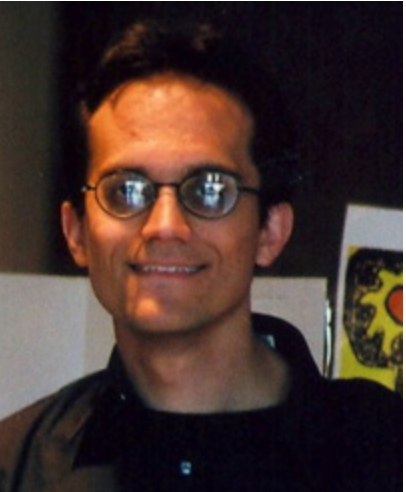
Mitchell Szczepanczyk is a radio show host, TV producer, and political activist on media issues. He co-founded the group CAPES (the Chicago Area Participatory Economics Society) and has organized events with CAPES around the model of participatory economics.


