Comrade Programme director, thank you for welcoming me to Aotearoa once again. May I express my sincere gratitude to the New…
A few weeks ago, during a trip to the Philippines, I…
Since the triumph of the Revolution in 1959, Cuba has made…
We are living in unprecedented times. The world as we know…
The recent election victories of left candidates in New York and…
Over the last year, more than 5 million people lost SNAP benefits–often…
Nearly every country in the world has acknowledged that climate change is…
The Greentech Revolution, by Jeremy Brecher, examines the rapid global expansion…
“Where are you?” I had called my friend Ahmed Duheir, but…
“This vote [on BAAJA] is shameful. Communities deserve a seat at…
The Public Intellectual Young people are taking to the streets across…
The announcement of a snap election has compressed the time available…
If any Trump appointees lose their posts, as part of a…
There are—rare—moments when human history accelerates to the point of making…
The different generations who lived through the three weeks between the…
The anti-MAGA majority turned out and showed its muscle on November 3.…
I pace my small apartment for almost an hour after interviewing…
Now that Democrats have swept the House, a key question is:…
To more and more people, the promises of sex-positive liberal feminism…
A longtime friend of Z. Music and storytelling rooted in liberation, solidarity, and resistance.
Learn more
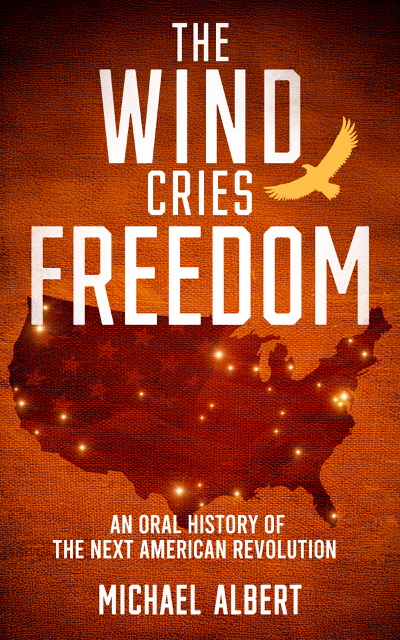
The Wind Cries Freedom, a new book from Michael Albert.
“Read it, argue with it, but don’t look away. The future it recalls is one we must still fight to deserve.”
– Yanis Varoufakis
“The most unusual and intriguing combination of prophecy, manifesto, and movement building manual that I have ever encountered.”
– Bill Fletcher Jr.
“This work fills a huge gap in our social movement literature.”
– Cynthia Peters
Jeremy Brecher’s newest report addresses the increased authoritarian threat under Trump and the MAGA movement.
Brecher asserts that we must look beyond conventional means and consider social strikes — large-scale, nonviolent withdrawal of cooperation, which has brought down authoritarian regimes around the world.
A podcast that asks what do we want & how do we get it.
31 authors & 6 orgs invite you to consider 20 Theses for Liberation, a living document to engage with in a collective process.
Join & share
Comrade Programme director, thank you for welcoming me to Aotearoa once again. May I express my sincere gratitude to the New…
A few weeks ago, during a trip to the Philippines, I…
Since the triumph of the Revolution in 1959, Cuba has made…
We are living in unprecedented times. The world as we know…
The recent election victories of left candidates in New York and…

Over the last year, more than 5 million people lost SNAP benefits–often…
Nearly every country in the world has acknowledged that climate change is…
A longtime friend of Z. Music and storytelling rooted in liberation, solidarity, and resistance.
Learn more
The Wind Cries Freedom, a new book from Michael Albert.
“Read it, argue with it, but don’t look away. The future it recalls is one we must still fight to deserve.”
– Yanis Varoufakis
“The most unusual and intriguing combination of prophecy, manifesto, and movement building manual that I have ever encountered.”
– Bill Fletcher Jr.
“This work fills a huge gap in our social movement literature.”
– Cynthia Peters
Jeremy Brecher’s newest report addresses the increased authoritarian threat under Trump and the MAGA movement.
Brecher asserts that we must look beyond conventional means and consider social strikes — large-scale, nonviolent withdrawal of cooperation, which has brought down authoritarian regimes around the world.
A podcast that asks what do we want & how do we get it.
31 authors & 6 orgs invite you to consider 20 Theses for Liberation, a living document to engage with in a collective process.
Just as hard physical work may build muscles, it may also be debilitating. So too may be the case for emotional labor
We should not ignore the past. We should not make believe it was without flaws. We should not make believe it was nothing but flaws. We should pay attention, and think
This is an excerpt — the last two chapters — from Seventeen Contradictions and the End of Capitalism by David Harvey, out now from Profile Books
Coining alternatives to capitalism
Before expressing our solidarity, we should be clear who it is we are supporting
Once we stop Shunning Venezuela and we start broadly Understanding Venezuela, what can we do to aid Venezuela?
How does the fact that people differ from one another tell us that a corporate division of labor will be doable, but a division of labor that eliminates class difference won’t be?