


Human activity has grown to challenge planetary limits, yet the official solution to any problem that arises is to grow more. Like fish unable to live anywhere but in water, our leaders find it hard to imagine any way of life outside the Growth paradigm. Production and consumption, income and expenditure define our lives. Measured as GDP and Standard of Living, we aspire to ever greater numbers. Numbers, which unfortunately, can grow endlessly without ever reaching “enough”. Andrew Welch writes that “*if we give the numeric value system total dominance, we use math (instead of reality) to pursue numeric ‘success’ to infinity, and fail . . .*”
In the effort to keep GDP growing, many products are made to be used only once, to go out of style, or to break after minimal use. Even the solutions proposed for climate change are conceived within the Growth paradigm. Solar panels, electric cars, heat pumps, and the like help reduce CO2 emissions but they are all firmly rooted in the Growth economy. They require extensive mining, manufacture, distribution and eventually disposal. Renewable energy will be very helpful in the decades ahead, but it cannot provide for the successive doublings of activity fantasized by the Growth paradigm.
There has to be another way for humans to be well on this bountiful planet. Suggested here is shifting to a life-based paradigm. As a gentle nudge, the meme “More Fun, Less Stuff” helps visualize that perspective. Friendly, short, easily remembered, and easy to share, “More Fun, Less Stuff” offers a toehold for instituting change as Growth has become impractical.
Before citizens were encouraged to became consumers to absorb industry’s overproduction, people spent their spare time relating with each other, learning things, appreciating the world, playing sports and music, making art, and engaging in all manner of other life-based activities. Life-based activities require little or no physical material. Their primary component is personal attention. The more time one spends gaining satisfaction from living, the less time one has for, or interest in, material consumption.
The closest that the materialist system comes to addressing the enormous waste of consumer culture, is to suggest cutting back on consumption. Not an appealing approach when hundreds of billions of advertising dollars are spent every year telling us that we need things to be happy.
**If advertising stopped, what would people want?** Chances are, after reliable access to food and shelter, we would want good friends, interests that catch our imaginations, and meaningful things to do that have us waking up in the morning keen for the day.
We value what we measure. GDP combines everything money is spent on, whether it be food and education or cleaning up after car crashes and natural disasters. A Genuine Progress Index (GPI) at least differentiates between positive expenditures and regrettable ones. As well, a GPI would track whether various environmental and social circumstances are improving or degrading. Such a measuring system would give a better sense of what needs attention.
In a life-based system, necessary products would be made to last. With the repetitive production of garbage eliminated and with people’s attention turned away from accumulation and toward living, there would be less conventional work. What remained would produce quality and people could be proud of what they do. In addition, there are always possibilities to care for each other. Doing things for others, after all, is one of life’s pleasures. If there isn’t enough work to keep everyone busy all the time, we can share what work there is and explore possibilities for enjoying ourselves. Rest assured that needs will arise again, providing new opportunities to help.
As for the material substances of our bodies, the 8-minute video “To Be Alive and Well; It’s Easier Than You Think” shows how those can be maintained indefinitely by integrating with common, naturally occurring cycles.
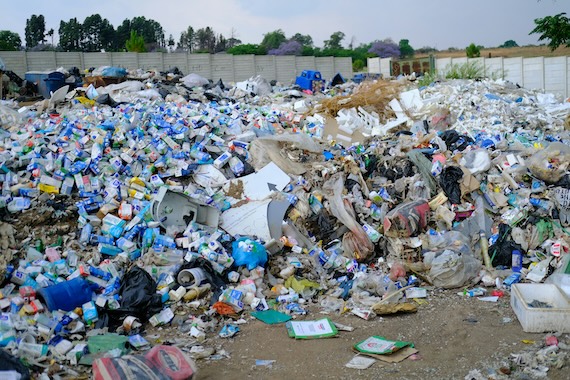
Photo by Calvin Sihongo on Unsplash

How could such a society be possible? Surely it is more possible than for the conventional system to double and double again within the lifetimes of today’s youth.
Our best hope of success is to engage young adults. As easily as the very young learn language, young minds, from late teens to mid twenties, can absorb the nature of the world they are growing into. A large proportion of humanity’s greatest inventions were conceived by young adults, some of whom then spent their entire lives refining the original spark of inspiration. Share “More Fun, Less Stuff” and *To Be Alive and Well* with young adults and they will find ways to make their world work.
In preparation, we can all consider “More Fun, Less Stuff”. While the direction can reduce pressure on Earth, it legitimizes a life-based world, and it can enable us to find common ground with each other. As the resonance spreads, we can ask:
*Do we want our collective labour (the economy) to aim for perpetual expansion, or for the long-term well-being of people and Earth?*
“More Fun, Less Stuff”. Share it with your people.
When we are of one mind, shift will happen.
ZNetwork is funded solely through the generosity of its readers.
Donate




