

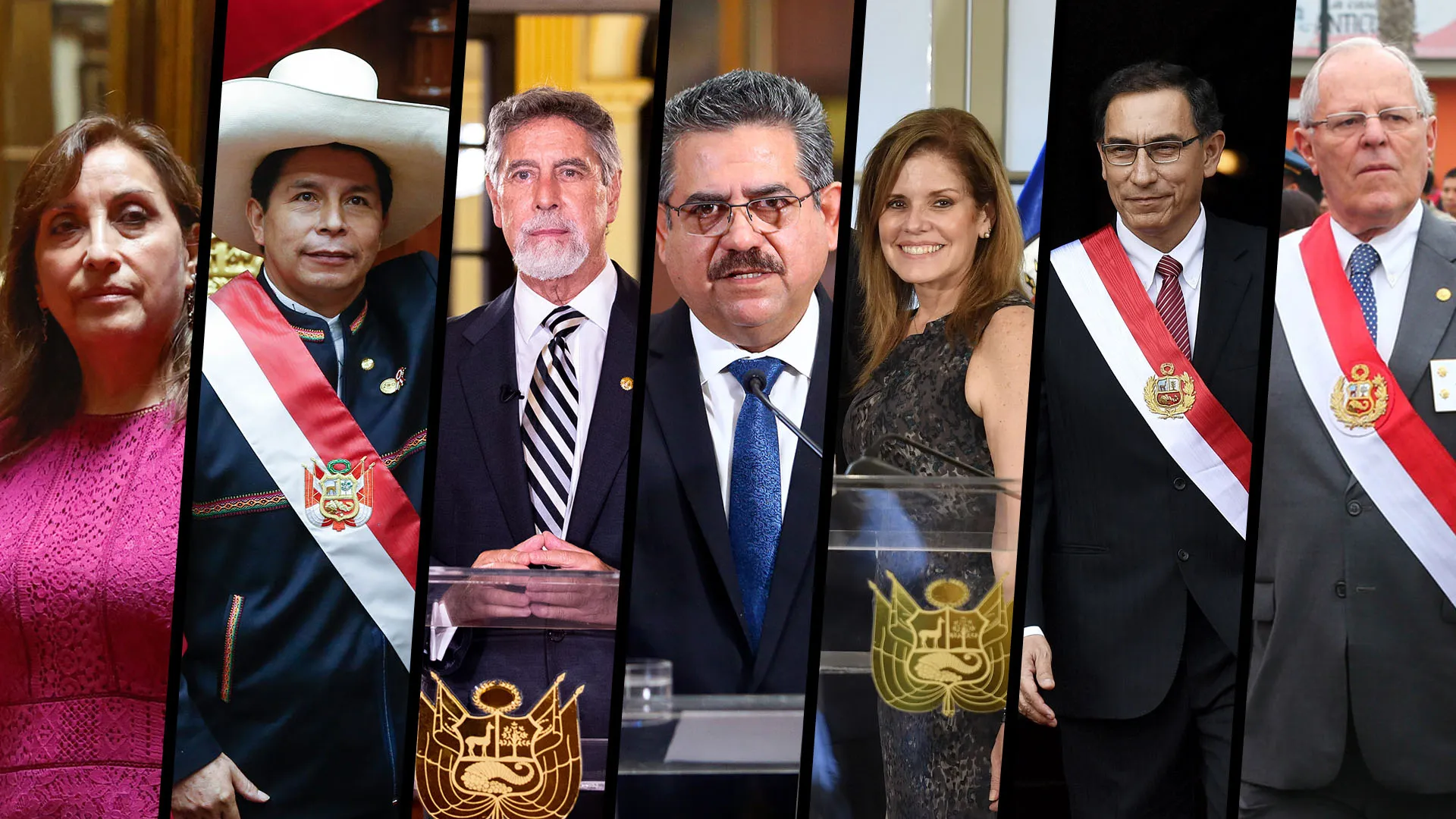
In just over six years, Peru has had seven different presidents. The period between July 2016 and December 2022 has been a time of deep political instability.
This chaos is largely due to Peru’s deeply undemocratic constitution, which was inherited from the far-right US-backed dictator Alberto Fujimori, who governed the country with an iron fist from 1990 until 2000, committing genocide against the Indigenous population and killing, torturing, and disappearing thousands of dissidents.
Article 113 of Peru’s constitution gives the unicameral congress the ability to remove presidents if two-thirds of members vote to declare that they have a “moral incapacity.”
Fujimori wrote this constitution in 1993, after launching a self-coup against Peru’s democratic institutions the year before. Peruvian journalist, scholar, and former lawmaker Manuel Benza Pflücker explained that the Fujimori constitution was largely created by the United States in order to make neoliberal economic policies a mandatory part of the state structure:
The proximity between the coup d’état and the convocation of a constituent assembly shows us that the main reason for the 1992 coup d’état (Alberto Fujimori’s self-coup) was the drafting of a new constitution according to the ‘Washington Consensus’ (WC), a document that was delivered in New York to Fujimori by authorities of the International Monetary Fund (IMF), the Department of the Treasury of the United States of America and the World Bank, institutions controlled by said country, days before take an oath to the presidency of Peru. The WC had been prepared a few months before by the aforementioned organizations, under the responsibility of John Williamson and representatives of the establishment.
The following timeline shows how quickly Peruvian heads of state have changed, and provides a brief summary of why.


Pedro Pablo Kuczynski
President Pedro Pablo Kuczynski Godard (1)
Term
July 28, 2016 to March 23, 2018
Background
Kuczynski attended elite universities – Oxford University in England and Ivy League Princeton University in New Jersey.
He worked at the World Bank, which has trapped countries across Latin America in debt. He also worked at New York-based investment banks and U.S. mining corporations.
Kuczynski was a U.S. national who renounced his citizenship in November 2015, in order to make himself eligible to become president of Peru.
Why was their presidential term so short?
Leaked video showed supporters of Kuczynski apparently attempting to bribe members of Congress to cast their votes in Kuczynski’s favor, in the infamous “Mamanivideos” scandal.
After serving 20 months, Kuczynski resigned on March 23, 2018.

Martín Vizcarra
President Martín Vizcarra (2)
Term
March 23, 2018 to November 9, 2020
Background
Vizcarra was Kuczynski’s protégé, vice president, and close ally. He became wealthy through several family companies and made his name as a conservative governor of Moquegua.
Why was their presidential term so short?
Allegations of corruption during his term as the governor of Moquegua brought Vizcarra down.
After a congressional debate on November 9, 2020, the congress approved the removal of Vizcarra (in his second impeachment) due to “moral incapacity,” with 105 votes in favor – surpassing the 87 out of 130 vote supermajority threshold (67%) required to remove a political official.
He served as president for two years and eight months, with a temporary disruption in September to October 2019.

Mercedes Aráoz (right) with Kuczynski and coup-plotting OAS chief Luis Almagro
President Mercedes Aráoz (3)
Term
September 30 to October 1, 2019
Background
Aráoz is a neoliberal economist who received her Master’s and PhD degrees from the University of Miami. She subsequently worked with U.S.-based organizations like the World Bank, the Organization of American States (OAS), and Inter-American Development Bank.
Why was their presidential term so short?
Vizcarra dissolved the congress on September 30, 2019. In response, the congress suspended Vizcarra as president, making his second vice president, Aráoz, temporary president.
With just one day in office, Aráoz never actually came to govern, and resigned the very next day. Vizcarra was quickly returned as president.

Manuel Merino
President Manuel Merino (4)
Term
November 10 to 15, 2020
Background
Merino is from the city of Tumbes, the most right-wing region of Peru, and is a lifelong conservative.
As president of congress, Merino was criticized regarding how hastily he pushed for impeachment proceedings against Vizcarra, who didn’t have a vice president at the time, which would have made Merino next in line to become president.
Two months later, Merino succeeded in his quest and ousted Vizcarra.
Why was their presidential term so short?
Merino lasted only five days as president, before resigning due to mass protests against him, which left two young Peruvians dead.

Francisco Sagasti
President Francisco Sagasti Hochhausler (5)
Term
November 17, 2020 to July 28, 2021
Background
Sagasti Hochhausler established close connections to the United States while attaining a Master’s degree in industrial engineering at Penn State University and a PhD in operational research and social systems science at the Wharton Business School, at the elite Ivy League University of Pennsylvania.
He went on to work at the World Bank.
Why was their presidential term so short?
Sagasti was named as interim president to serve until Peru’s next election in July 2021, which was the end of the five-year term begun by Kuczynski back in 2016.

Pedro Castillo
President Pedro Castillo (6)
Term
July 28, 2021 to December 7, 2022
Background
Castillo is a farmer and teacher who represents the indigenous Andinos, who have had virtually no power in the government in the modern history of Peru.
After becoming well known for leading a teachers’ strike, Castillo ran for president with the Marxist-Leninist party Peru Libre, and he won the 2021 elections.
Why was their presidential term so short?
After stating his intention to dissolve congress – which he was legally entitled to do according to article 134 of Peru’s constitution – Castillo was impeached, removed by the military, and imprisoned without trial on December 7.
Castillo’s five-year term was cut short to less than 17 months. Mass national protests ensued, demanding his release from prison, fresh elections, and a constituent assembly to write a new constitution.
Castillo supporters have blocked major highways all over Peru, impeding national transportation and bringing the country to a virtual standstill.
Without any due process, the unelected Peruvian government subsequently sentenced Castillo to 18 months of “preventative prison.”
President Dina Boluarte (7)
Term
December 7, 2022 until now
Background
The neoliberal-appointed “interim” president, who had previously been expelled from the leftist Peru Libre party, was sworn in by congress in order to serve out the last three-and-a-half years of Castillo’s term.
Mass protests across Peru led Boluarte’s unelected government to suspend civil liberties, declaring a nation-wide “state of emergency.”
Boluarte’s unelected government unleashed large numbers of violent police and deployed soldiers into the streets. They shot protesters with live ammunition, even using helicopters to shoot at demonstrators and drop tear gas bombs on them.
Dozens of protesters were killed and hundreds were wounded in the first week of Boluarte’s rule.
While Peruvian civil society organizations accused Boluarte of “state terrorism,” the US government strongly supported her, claiming her unelected government was “democratic.”


ZNetwork is funded solely through the generosity of its readers.
Donate




