


In September 2018, Venezuelan president Nicolás Maduro visited China, where he met with China’s President Xi Jinping and signed a series of important agreements on trade and culture. Toward the end of his stay, Maduro said that the two countries had built “a relationship of mutual benefit, of shared gain.”
Among these agreements was one that highlights the depth of the collaboration: this was for China to participate with the Great Venezuela Housing Mission (GMVV) to build more than 13,000 homes in the El Valle parish in Caracas. The focus of the international media has been on the oil trade between China and Venezuela, and in the aid from China to Venezuela; but the connections go deeper, into the social life of the people who are struggling to emerge from deprivation.
When I recently asked Jorge Arreaza, Venezuela’s foreign minister, about the relationship between his country and China, he mentioned these thousands of homes. It was the well-being of the Venezuelan people that held his interest, not merely the grand themes of oil and industry. China has invested and lent billions of dollars to Venezuela, which has been a necessary infusion of capital for a range of developments. China, Arreaza told me, “has been important in guaranteeing Venezuela’s sovereignty as United States aggressions have increased over the years.”
Pandemic Solidarity
In March, the Chinese government sent two shipments of essential equipment to assist the Venezuelan authorities in tackling the pandemic. These were followed by subsequent shipments of test kits and ventilators, medicines and protective equipment.
When 55 tons of goods were being unloaded in late March, China’s ambassador to Venezuela, Li Baorong, said, “In difficult times, the Chinese and Venezuelan people are together.” The arrival of this aid was along the grain of the strategic association between China and Venezuela. A month later, Li told El Universal that “China strongly supports the efforts made by the Venezuelan government to guarantee health and save lives despite the most severe and criminal unilateral sanctions.”
That last phrase is key—“severe and criminal unilateral sanctions.” It refers to the harsh policy prosecuted by the United States government against Venezuela; this is a policy that began under George W. Bush, was deepened by Barack Obama, and then was further tightened by Donald Trump, with no indication of loosening by Joe Biden. During the pandemic, in fact, the United States has increased its pressure on Venezuela, including preventing the government from accessing financial assistance and conducting its normal trade, not to speak of using military threats to overthrow the government.
China Continues to Trade
The United States, Arreaza told me, “has gone to the extent of carrying out modern acts of piracy, stopping ships in the middle of the ocean and stealing cargo that was paid for by the Venezuelan people.” Not only has the United States tried to blockade Venezuela, but it continues to interfere in Venezuela’s political affairs; this includes trying to undermine the legislative elections that will be held on December 6.
China has largely disregarded the U.S. sanctions against Venezuela, which is the largest recipient of Chinese loans. “When China states that it will continue to trade with Venezuela,” Arreaza told me, “it is standing against the illegality of the U.S. coercive measures that are placed on Venezuela.” Venezuela’s difficulty in servicing the debt to China is seen in Beijing as the fault of the illegal sanctions regime, which has made normal economic activity impossible; China’s “patient capital” strategy and its understanding of the geopolitical pressure on Venezuela are key to understanding its relationship.
U.S. Welcome to Trade
Last year, the United States developed a new program called América Crece, which is a government initiative to assist U.S. private corporations from investing in the Caribbean and Latin America; the express purpose of the program is to prevent Chinese investment in the region.
“The United States is welcome to offer a program to increase the presence of its companies in our country,” Arreaza told me, “but it does not have the right to prevent us from trading and partnering with whoever we see as most beneficial for our own interests.” It is not China or Venezuela who is using political pressure to block U.S. private sector investment—if the investment is beneficial to the country—but it is the U.S. government that has explicitly said that it would like to prevent Chinese investment in the hemisphere.
U.S. Secretary of State Mike Pompeo was in Guyana to push for ExxonMobil’s investment in the country; during his brief visit there, Pompeo asked the Guyanese government of Irfaan Ali to shun China. “Guyana, like Venezuela, and any other country in the world, for that matter, has a right to choose whom to partner with,” Arreaza told me. “But what is clear is that the United States cannot impose its programs on our continent or pretend that it has any exclusive rights as a commercial partner.”
The development of América Crece by the U.S. government, Arreaza suggested, is a “Monroe Doctrine 2.0,” referring to the 1823 Monroe Doctrine that the United States used to claim territorial influence along the length of the American hemisphere. “Colonialism is out of date in this region,” Arreaza said. “We cannot allow for a new Cold War scenario to be imposed on our region.”
Non-Interference From China
Governments in Latin America and the Caribbean with close ties to the United States have struggled during this pandemic to manage their ties with China. Brazil’s health minister announced in October that the country would buy COVID-19 vaccines from China; President Jair Bolsonaro, a staunch ally of Trump and Pompeo, wrote aggressively on Twitter, “The Brazilian people will not be anyone’s guinea pig,” as he rejected the purchase of these vaccines merely on geopolitical grounds.
Nonetheless, many of these governments have had to continue to trade with China, the only major economy in the world that has been able to emerge out of the coronavirus recession. China, Arreaza says, trades with countries without interference in their internal affairs. This is quite different from the Western model, notably that overseen by the International Monetary Fund (IMF), which pushes for structural adjustment alongside loans. Because China respects the sovereign choices of a country, Arreaza told me, “China has proven to be a reliable partner for the region and it can continue to play a key role in our development for many years to come.”

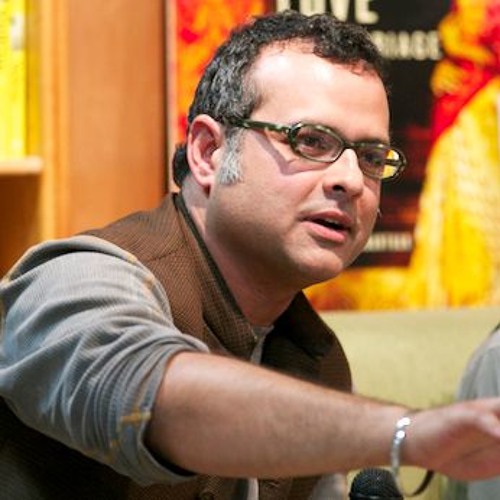
Vijay Prashad is an Indian historian, editor, and journalist. He is a writing fellow and chief correspondent at Globetrotter. He is an editor of LeftWord Books and the director of Tricontinental: Institute for Social Research. He is a senior non-resident fellow at Chongyang Institute for Financial Studies, Renmin University of China. He has written more than 20 books, including The Darker Nations and The Poorer Nations. His latest books are Struggle Makes Us Human: Learning from Movements for Socialism and (with Noam Chomsky) The Withdrawal: Iraq, Libya, Afghanistan, and the Fragility of U.S. Power. Tings Chak is the art director and a researcher at Tricontinental: Institute for Social Research and lead author of the study “Serve the People: The Eradication of Extreme Poverty in China.” She is also a member of Dongsheng, an international collective of researchers interested in Chinese politics and society.
ZNetwork is funded solely through the generosity of its readers.
Donate




