


In the political world, this was the week of the healthcare ruling: reporters hovered around the supreme court, pundits pundited, politicians "braced" for the ruling, "reeled" in its aftermath. It provoked a "firestorm" of interest, according to one magazine; it was, said another, a "category 10 hurricane".
But in the world world, there was news at least as big, but without the cliched metaphors. News that can be boiled down to a sentence or two:
You ever wonder what global warming is going to look like? In its early stages, exactly like this.
Global warming is underway. Are we waiting for someone to hold up a sign that says "Here's climate change"? Because, this week, we got everything but that:
• In the Gulf, tropical storm Debby dropped what one meteorologist described as "unthinkable amounts" of rain on Florida. Debby marked the first time in history that we'd reached the fourth-named storm of the year in June; normally it takes till August to reach that mark.
• In the west, of course, firestorms raged: the biggest fire in New Mexicohistory, and the most destructive in Colorado's annals. (That would be the Colorado Springs blaze: the old record had been set the week before, in Fort Collins.) One resident described escaping across suburban soccer fields in his car, with "hell in the rearview mirror".
• The record-setting temperatures (it had never been warmer in Colorado) that fueled those blazes drifted east across the continent as the week wore on: across the Plains, there were places where the mercury reached levels it hadn't touched even in the Dust Bowl years, America's previous all-time highs.
• That heatwave was coming at just the wrong time, as farmers were watching their corn crops get ready to pollinate, a task that gets much harder at temperatures outside the norms with which those crops evolved. "You only get one chance to pollinate over 1 quadrillion kernels," said Bill Lapp, president of Advanced Economic Solutions, a Omaha-based commodity consulting firm:
"There's always some level of angst at this time of year, but it's significantly greater now and with good reason. We've had extended periods of drought."
In the markets, all this news was taking its toll: prices for corn and wheat were spiking upwards, rising almost a third on global markets as forecasters suggested grain stockpiles could shrink by as much as 50% as the summer wears on. But in the political world, there wasn't much reaction at all.
The Obama administration said it would grant Shell leases to drill for more oil in the Arctic, and they auctioned off a vast new tract of federal coal land at giveaway prices – even though it's the carbon in that coal and oil that drives the droughts and fires. Even that didn't satisfy the GOP, as Mitt Romney demanded yet more pipelines and wells.
Amid it all, the CEO of the biggest oil company in the world, Exxon, gave what may go down in the annals as the most poorly timed – not to mention, arrogant – speech in the firm's history: Rex Tillerson, speaking to the Council on Foreign Relations, admitted what his company spent many years denying, that humans were heating the planet. But then he added:
"We have spent our entire existence adapting, OK? So we will adapt to this. Changes to weather patterns that move crop production areas around – we'll adapt to that. It's an engineering problem, and it has engineering solutions. And so I don't … the fear factor that people want to throw out there and say, 'We just have to stop this,' I do not accept."
Against the backdrop of the burning Rockies, it's pretty clear this is not an engineering problem. Engineers, in fact, have performed admirably. One day last month, Germany generated more than half its electricity from solar panels. We've got the technical chops to solve our troubles.
No, this is a greed problem. In the last five years, Exxon has made more money than any company in history. For the moment, Exxon and other's desire to keep minting money – and our politicians' desire for a share of that cash – has conspired to keep our government, and most others, from doing anything to head off the crisis.
And unlike the healthcare predicament, this crisis comes with a time limit. If we play politics for a generation, then weeks like the one we've just come through will be normal, and all we'll be doing as a nation is responding to emergencies. As one scientist put it at week's end, the current heatwave is "bad by our current definition of bad, but our definition of bad changes."
Another way of saying that is: there are disaster areas declared across the country right now, but the biggest one is in DC.

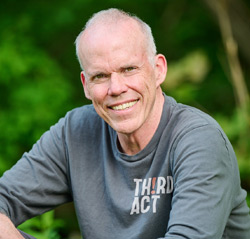
Bill McKibben is an author, environmentalist, and activist. In 1988 he wrote The End of Nature, the first book for a common audience about global warming. He is a co-founder and Senior Advisor at 350.org, an international climate campaign that works in 188 countries around the world.
ZNetwork is funded solely through the generosity of its readers.
Donate




