


Written for teleSUR English, which will launch on July 24
Since 2010 the UN has been dodging responsibility for a cholera outbreak that has killed 8,500 Haitians and sickened more than 700,000. Nepalese soldiers with the UN “peacekeeping” forces caused the outbreak by allowing their sewage to leak into Haiti’s largest river. According to the UN itself, cholera could kill 2,000 more people in 2014. The UN now faces a lawsuit in US courts that was brought by some of the victims. The Obama administration is trying to have the suit dismissed but, this May, amicus briefs filed by prominent international law experts refuted the US governments’ arguments for dismissal. Scientific evidence of the UN’s guilt is so conclusive that Bill Clinton, a UN special envoy to Haiti, acknowledged in 2012 that UN soldiers brought cholera to Haiti but he made the UN’s demented excuse that
“…what really caused it is that you don’t have a sanitation system, you don’t have a comprehensive water system.”
By this logic, if I kill a gravely ill person by knocking them off their hospital bed, my defense should be that a healthy person would have survived the fall. In a civilized legal setting, where the victim cannot be dismissed as irrelevant, making such a repulsive argument might provoke a judge to hand down the harshest sentence allowable. Unfortunately, international law has always been the plaything of the most powerful and Haitians have long endured the consequences of that fact. Criminal negligence is one of many crimes in Haiti for which UN officials should answer.
On February 29, 2004 – at about 6:15am – US troops flew Haiti’s democratically elected president, Jean Bertrand Aristide, out of Haiti. In fact, they flew him out of the Western Hemisphere – all the way to the Central Africa Republic. According to the Bush administration’s comically implausible story, Aristide simply asked the US to save him from a small group of insurgents led by a convicted death squad leader, Jodel Chamblain. The public face of the insurgents was a crooked ex-police chief named Guy Philippe who had long standing ties with local elites and the U.S. Chamblain was responsible for thousands of murders and rapes under a military junta that ruled Haiti from 1991 to 1994, after the first coup that ousted Aristide. It made sense to put the far younger Guy Philippe in front of cameras, but nobody with any knowledge of the 1991 coup had any excuse for failing to see what was coming in 2004.
The insurgents had been launching hit and run attacks into Haiti for years (since 2000) from the safe haven offered by the Dominican Republic, a US client. Jeb Sprague’s book “Paramilitarism and the Assault on Democracy in Haiti” documents how key players among Aristides’ “peaceful opponents” in Haiti, along with military and government officials from the Dominican Republic, closely supported the insurgents who killed dozens of people while the international press (and the human rights industry) ignored it and depicted some of the financiers as victims of a “crackdown on dissent”. The “crackdown” was one of the excuses the Bush administration used to starve the Aristide government of funds for years with the help of the OAS. US led sanctions, among other things, blocked funds for projects to improve Haiti’s water supply to protect against the spread of diseases like cholera. At the same time, tens of millions of US government dollars flowed to Aristide’s political rivals.
Sprague’s book reveals that, after Aristide was overthrown in 2004, hundreds of former rightist paramilitaries were incorporated into Haiti’s police force under the UN and US Embassy’s close supervision. Anyone familiar with the 1991 coup will find this as unsurprising as it is disgusting. When the Clinton Administration ordered the Cedras military junta to stand down in 1994 (and permit Aristide to serve out what little was left of his first term in office) it did so only after guaranteeing impunity for the junta’s leaders and arranging for some of its henchmen to remain within Haiti’s security forces. Aristide, to some extent, countered those maneuvers by disbanding the Haitian army over strong US objections. The re-constructed Haitian police remained infiltrated by officers close to the US and local rightwing forces. Nevertheless, the US and its allies were forced to a play a far more direct role in the 2004 coup because Haiti lacked its own army, the force traditionally used by the U.S. to bring down governments it dislikes.
A few months after the 2004 coup, UN troops (known by the French acronym MINUSTAH) took over the task of consolidating Gerard Latortue’s post-coup dictatorship. Roughly 4,000 thousand of Aristide’s supporters were murdered under Latortue according to a scientific survey published in the Lancet medical journal [1]. Hundreds more, by conservative estimates, became political prisoners. Most of the killing was done by the police and death squads allied with them. MINUSTAH generally provided tactical support but also perpetrated its own atrocities. On July 5, 2005 MINUTAH went on a shooting spree in the shantytown of Cite Soleil that was so murderous (and so well documented) that a MINUSTAH spokesman felt obliged to promptly state that it “deeply regrets any injuries or loss of life during its operation”. In 2012, MINUSTAH found some of its troops guilty of rape and sexual abuse. The actual perpetrators, to say nothing their commanding officers, have evaded serious consequences even when found guilty. Over a hundred MINUSTAH troops have been sent out of Haiti to “face justice” at home for sex crimes. Little wonder that abusers have been undeterred.
Thanks to Wikileaks, we need not speculate about exactly what the US government wanted to get out of MINUSTAH in Haiti. In a 2008 cable, the US Ambassador to Haiti predicted that the “security dividend the U.S. reaps from this hemispheric cooperation not only benefits the immediate Caribbean, but also is developing habits of security cooperation in the hemisphere…” She identified “resurgent populist and anti-market economy political forces” in Haiti as a threat to the entire hemisphere. She highlighted the importance of having other countries contribute towards neutralizing the threat:
“This regionally-coordinated Latin American commitment to Haiti would not be possible without the UN umbrella. That same umbrella helps other major donors — led by Canada and followed up by the EU, France, Spain, Japan and others — justify their bilateral assistance domestically.”
It won’t do for allies to explain to their own people that they are doing the USA’s dirty work in Haiti – helping it contain the political threat posed by “populist and anti-market forces” or, in other words, sacrificing Haiti as a pawn on a regional chessboard imagined by US officials.
After two years of terrorizing Aristide’s supporters – murdering, imprisoning and driving them into exile -the US and its allies allowed Haitians to elect a government to replace Latortue’s dictatorship. The presidency was won by Rene Preval – a former president and Aristide protégé who had played no role at all in the 2004 coup. It was a stunning refutation of the propaganda used to justify the coup. Preval won the election in the first round despite barely being able to campaign. Candidates who had been prominent leaders of the coup (Charles Baker, Guy Philippe) received single digit percentages of the vote.
The cables released by Wikileaks show that Preval worried about being given the Aristide treatment while in office and treaded very carefully around US officials. Former Brazilian diplomat, Ricardo Seitenfus, says that in 2010 MINUSTAH chief Edmond Mulet explicitly threatened Preval with a coup and exile for opposing US interference with Haitian elections. Preval supposedly responded to Mulet’s threat by saying “I am not Aristide. I am Salvador Allende”. Preval and Colin Granderson, head of the CARICOM-OAS Electoral Mission in Haiti in 2010-2011, have backed up the claim that Preval had been “asked” to step down.
Seitenfus has also strongly denounced the corruption and hypocrisy of the key governments that sustain MINUSTAH – in particular the infamous “core group”: the USA, Canada, France, Spain and Brazil. Commenting on the impact of the 2010 earthquake that may have killed 200,000 people, Seitenfus remarked
Traditionally in Haiti, the “goods” such as hospitals, schools and humanitarian aid are delivered by the private sector, while the “bads” — that is, police enforcement — is the state’s responsibility. The earthquake further deepened this terrible dichotomy
An “aid” sector made up of foreign NGOs that are not accountable to the vast majority of Haitians breeds corruption and inefficiency as Timothy Schwartz has also pointed out. It gives many NGOs, with some honorable exceptions, a strong incentive to thwart the development of democratic institutions in Haiti that would hold them accountable and take over many of their functions.
Brazil stepped up to play a leading role in MINUSTAH. Today, despite various MINUSTAH related scandals, Brazil continues to supply the largest contingent of troops. Uruguay supplies the second largest contingent though President Mujica has pledged to withdraw them. Bolivia and Ecuador also supply troops. Venezuela’s Chavista governments, on the other hand, always recognized the 2004 coup for what it was and never contributed to MINUSTAH. Thankfully, the backlash from Latin American governments was fierce when the USA and Canada maneuvered at the OAS to weaken a strong regional response against the 2009 coup in Honduras. Sanderson’s dream of “hemispheric cooperation” with the US to defeat “populist and anti-market economy political forces” quickly became more of a fantasy. Edward Snowden’s revelations of extensive US spying on the Brazilian government also poured cold water on the USA’s imperial dreamers. This year’s upper class revolt in Venezuela – an undisguised attempt at “regime change” – was strongly opposed by the OAS much to the Obama Administration’s dismay.
Rejecting coups and coup attempts is very important step in the right direction. However, Latin American governments should move beyond that. They should call for the prosecution of MINUSTAH officials like Edmond Mulet. Eventually, the prosecution of his bosses in Washington, Ottawa and Paris might become a realistic option.
***
[1] Athena R. Kolbe and Royce A. Hutson, “Human rights abuse and other criminal violations in Port-au-Prince, Haiti: a random survey of households,” The Lancet, Vol. 368, No. 9538, September 2, 2006

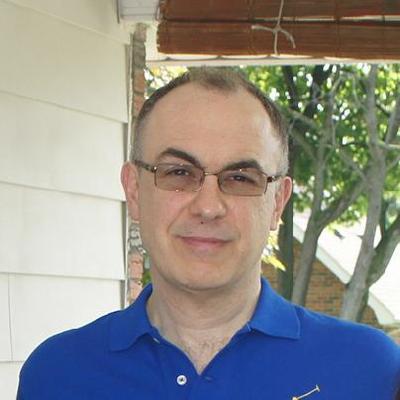
Joe Emersberger is co-author of “Extraordinary Threat: The US Empire, the Media, and Twenty Years of Coup Attempts in Venezuela.”
ZNetwork is funded solely through the generosity of its readers.
Donate




