


One of the principal difficulties facing the Democratic Party establishment and most leaders of organized labor is a failure to accept a fundamental reality: there is no normality. The failure to grasp this state of affairs has led to strategic paralysis and a tendency to believe that by being the “adults in the room,” the Democrats — or the trade union leadership — can embarrass the Republicans and force them to engage in good faith behavior. That is not the case.
The rise of President Trump’s Make America Great Again (MAGA) movement has represented the morphing of a broad, rightwing populist movement into a fascist movement that seeks to destroy constitutional democracy. The current purging of the federal government, through Elon Musk’s Department of Government Efficiency (DOGE), aims at both opening the doors to a kleptocracy as well as ensuring loyalty to the MAGA vision and its retrograde goals.
Yet while MAGA can be defined as fascist (or postfascist), what we do not yet see is full fascism in power. Rather what we are now witnessing appears to be something along the lines of Viktor Orbán’s regime in Hungary and, ultimately, a Putinesque regime, i.e., increased rightwing authoritarianism. Still, the aim of the Trump regime remains to destabilize all real and potential opposition.
MAGA, as a movement, has converged with the objectives of that segment of the capitalist class often referenced as “oligarchs.” Particularly situated in high tech, this group of capitalists has become very influential through their control over critical online and communications systems. Initially aligned, for the most part, with Democrats, the oligarchs appear to have decided that they are nothing short of superior beings that must seize the reins of government in order to operate it much like a business, and for their own ends. This includes expanding their wealth, but also for those, such as Musk, who have a quasi-science fiction vision of a future where the elite abandon Earth and settle Mars or some artificial satellite, there is the need for direct governmental involvement in such projects. Along with the oligarchs are those in the business class who simply wish to ravage the federal kitty, leading to the emergence of kleptocracy.
In earlier eras the expression “offensive of capital” would be used for moments when the capitalist class would move to reverse the victories that working people had won. We are now experiencing something more dramatic than that. This is a ‘blitzkrieg’ of segments of capital in alignment with a mass rightwing movement, making the current attack especially dangerous. To put it another way, the millions of diehard MAGA supporters are not just observers but have become the foot-soldiers for Trump even when they may have an ambivalence about the objectives of the oligarchs.
Organized labor has been divided over whether and how to respond to this offensive. Roughly speaking, there are three general categories: the collaborators, the ostriches and the resisters. The “collaborators” are those unions that are going along with Trump’s agenda. The “ostriches” are those that are attempting to avoid conflict and hoping to simply last out the next four years. The “resisters” are those that seek to reject MAGA and the current offensive. Each of these categories are quite uneven and their approaches have their own limits. The resisters, for instance, are prepared to ally with other groups to a certain extent, but have a tendency to work on their own. The federal sector unions that are being forced to resist are mainly relying on litigation and lobbying, for instance, appearing to be largely uncomfortable with, or unprepared for, more mass actions, such as work stoppages. This dynamic may soon shift as a result of Trump attempting to obliterate collective bargaining for nearly one million federal workers.
The difference in approach among sections of organized labor is not, primarily, a disagreement over tactics. Rather, it reflects differences over how to understand the nature of the moment and, as a result, the question of what is the necessary strategy. The reality is that we are living through a time when forces of fascism are on the march. This means that confronting MAGA solely on the grounds of deteriorating working (or living) conditions is insufficient. The Trump regime is aiming to roll back all of the progress made throughout the 20th century, and is targeting political opposition wherever it arises. This requires an all-hands-on-deck response. This is not a moment for faux bipartisanship; it is a moment for resistance and obstruction to block the Trump administration from carrying out its far-right objectives.
Rank-and-file members of our unions should be won over to fully appreciate the nature of the danger facing us, and all that it implies. This begins with a major education effort among the membership coinciding with mobilizing against the specific attacks workers are facing, be they loss of jobs, loss of union recognition, moves against migrants, further attacks on the social safety net, failure to respond to increasing natural disasters or a dragnet on political speech. The job of working-class leaders is to link these threats together into a story about how Trump’s allies and the oligarchs are conspiring to steal from the majority, and institute a white, Christian nationalist authoritarian state, i.e., minority rule.
Workers must be convinced of the possibility of beating back the darkness and winning.
Taking on MAGA will need to involve, but not be limited to, labor militancy. Accompanying shrewd and creative tactical actions must be a proactive vision regarding an alternative to rightwing authoritarianism, an alternative many of us summarize as the fight for a “Third Reconstruction” — a political realignment carried out through a multiracial democratic movement from below. This is a challenging but essential task since many in this country have not only lost faith in constitutional democracy, but they have lost faith in the ability to bring about lasting progressive change.
Reversing this sense of pessimism is key to the survival of the labor movement, both among established trade unions as well as more nontraditional forms of labor organizing. Workers must be convinced of the possibility of beating back the darkness and winning. Indeed, our work must be guided by the notion that we are fighting for a future without fear.

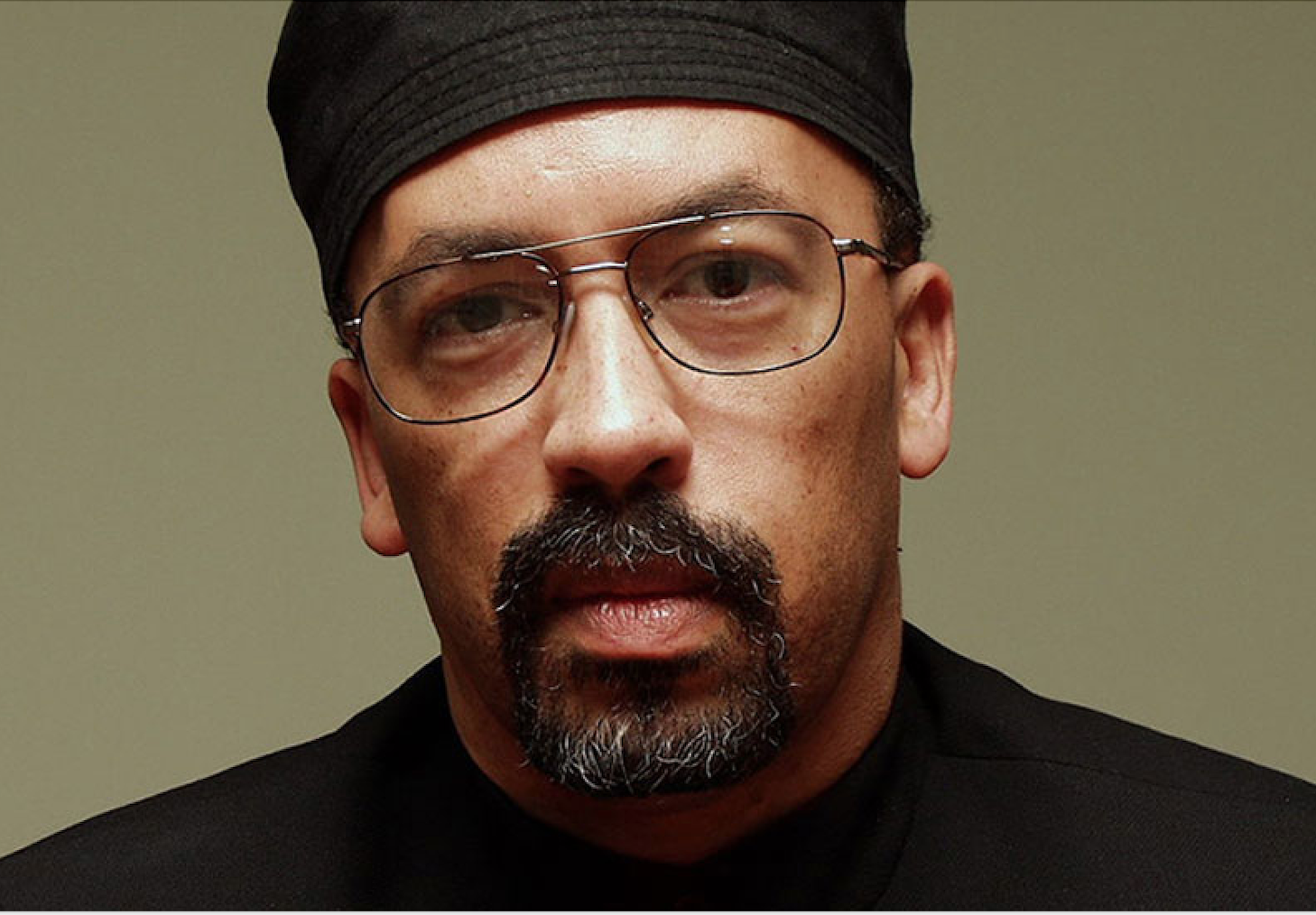
Bill Fletcher Jr (born 1954) has been an activist since his teen years. Upon graduating from college he went to work as a welder in a shipyard, thereby entering the labor movement. Over the years he has been active in workplace and community struggles as well as electoral campaigns. He has worked for several labor unions in addition to serving as a senior staffperson in the national AFL-CIO. Fletcher is the former president of TransAfrica Forum; a Senior Scholar with the Institute for Policy Studies; and in the leadership of several other projects. Fletcher is the co-author (with Peter Agard) of “The Indispensable Ally: Black Workers and the Formation of the Congress of Industrial Organizations, 1934-1941”; the co-author (with Dr. Fernando Gapasin) of “Solidarity Divided: The crisis in organized labor and a new path toward social justice“; and the author of “‘They’re Bankrupting Us’ – And Twenty other myths about unions.” Fletcher is a syndicated columnist and a regular media commentator on television, radio and the Web.
ZNetwork is funded solely through the generosity of its readers.
Donate




