


I was struck by the audacity of both House Speaker and Israeli Prime Minister Netanyahu in contriving to undermine the Iran nuclear negotiations through arranging for the Prime Minister to speak before Congress. While I should not have been surprised by their actions, the audacity was even a bit much for me to believe.
There are two issues here that should be addressed: the act itself and, separately, the implications. Starting with the act, as has been repeated now on many occasions, Boehner’s invitation – and Netanyahu’s acceptance – constituted a basic violation of international protocol. A head of state visits another country after being invited by another head of state, in this case in consultation with Congress. A head of state, in other words, does not just go wandering around unless, and this is an exception, they are visiting the United Nations. An example of this was when Venezuelan President Maduro spoke at the United Nations, for which he needed no one’s permission. There were people who wanted him to visit Washington, DC but it was pointed out that without an invitation from President Obama it was a no/no.
The Venezuelan government, in other words, ‘got it.’ Why would the Israeli government not? The simple answer is that they do not care.
The act was an in-your-face insult to President Obama and perpetuated the condescending relationship Prime Minister Netanyahu’s has had with President Obama. Netanyahu has consistently acted as if he can treat Obama as something close to an underling. There are probably two reasons why he believes this to be the case: (1) there are no negative consequences given the strength of the anti-Palestinian lobby in the USA, and (2) Obama is black.
With regard to point #1, what is most fascinating to watch is that no matter how insulting the Israelis may be, if the Administration ever speaks out, it is lambasted by opponents in Congress (Democratic and Republican) for undermining the historic alliance between the USA and Israel. The Administration cannot demand respect from Israel, despite the fact that Israel is politically and economically in tremendous debt to the USA for its very existence. Instead, the Administration – and, apparently all administrations – are supposed to grovel in front of the Israelis as if they are above international law, precedent and, indeed, protocol.
With regard to point #2, the Israeli political establishment has never been excited about a black man in the White House. Despite the fact that Obama has been an overly generous friend of Israel’s in terms of the provisions of support, using its veto in the United Nations, etc., the Israeli political establishment continues to mock Obama. They also came very close to interfering in the U.S. Presidential elections in 2012, making it abundantly clear that they were hoping for a change in administrations. But what runs throughout much of the Israeli press is something that approaches contempt for Obama, a contempt that has very clear racial overtones.
None of this should surprise us, actually, given the hostility that the Republicans have had toward this administration since 2009, even when the administration does what they want, or otherwise capitulates to their agenda. The antipathy is not only or mainly ideological. Yes, there are political differences, but such differences have an underlying racial, and in some cases neo-Confederate ring to them. This became evident in the manner in which the Netanyahu invitation was handled.
Then, of course, there is the substance of the invitation and its implications. It is not only that the Prime Minister is interfering in the internal affairs of the USA through such an address. The USA can certainly not complain about other countries interfering in its internal affairs given the predilection of the USA toward such activities internationally. The Republican majority, some Democrats and Netanyahu seek to derail the negotiations currently underway with Iran regarding the latter’s nuclear program. The USA and Israel have alleged – without a shred of evidence – that Iran seeks to build nuclear weapons, despite its being a signatory to the Nuclear Non-Proliferation Treaty. Iran denies this, pointing out that the only nuclear power in the Middle East is Israel which, by the way, is not a signatory to the Nuclear Non-Proliferation Treaty and which is very coy about possessing more than one hundred nuclear weapons (and, by the way, having collaborated with the apartheid South African government in the creation of weapons of mass destruction).
The Netanyahu administration has been trying to encourage the USA to take military action against Iran for years, albeit with no success. Along with Republican war hawks in the USA, Netanyahu, apparently against the advice of his own security service (Mossad), wishes to see war break out with Iran. The impact of such a conflict would, more than likely, be nothing less than catastrophic. Iran is not a small country and is very well armed. It also is on one side of the Straits of Hormuz, the gateway into the Persian/Arabian Gulf from which much of the world’s oil travels. Should Iran be attacked by the USA and Israel, there is a fairly good chance that the Iranians will block the Straits. If you have any memory of the oil crises of the 1970s, think of them and then multiply that several times over.
There is an obvious additional problem. The USA is currently engaged in several military conflicts, including allegedly withdrawing from Afghanistan, engaging ISIL in Syria and Iraq, monitoring the deteriorating situation in Libya, and anxiously awaiting a resolution of the crisis in Yemen. To this should be added U.S. military provocations in Asia aimed at China. To put it simply, the USA is not in any position to go to war with Iran, a fact with which the Pentagon is more than familiar.
Despite the irrational nature of provocations against Iran and the promotion of war, there are forces in the USA who want to see it happen. For that reason there is very much the need for a broader and re-formed anti-war movement. Such a movement must go well beyond the demand for the “…USA out of _____”, and instead turn its attention to more profound alterations in U.S. foreign policy.
When President Obama was first elected the question of the day was whether he hoped to alter U.S. foreign policy or, instead, to change its appearance. Overall his administration has chosen the latter course and, while there have been important changes, e.g., opening up relations with Cuba, the smell of the empire continues to permeate most actions of the USA. Thus, an anti-war movement worthy of its name must be fighting for a more comprehensive shift, a shift in the direction of a democratic foreign policy rather than the foreign policy of the bully. While we should have no illusions as to the Obama administration’s interests in moving in that direction, that must, however, be the direction of our fight. It is the only way to consistently fight against policies of war and belligerence that are rooted in imperial might, corporate greed, and a profound fear of the global South; a fear that the global South may someday seek revenge for all that has been done to it over these last several hundred years by the global North (including but not limited to the USA).
Bill Fletcher, Jr. is the host of The Global African on Telesur-English. He is a racial justice, labor and global justice activist and writer. Follow him on Twitter, Facebook and at www.billfletcherjr.com.

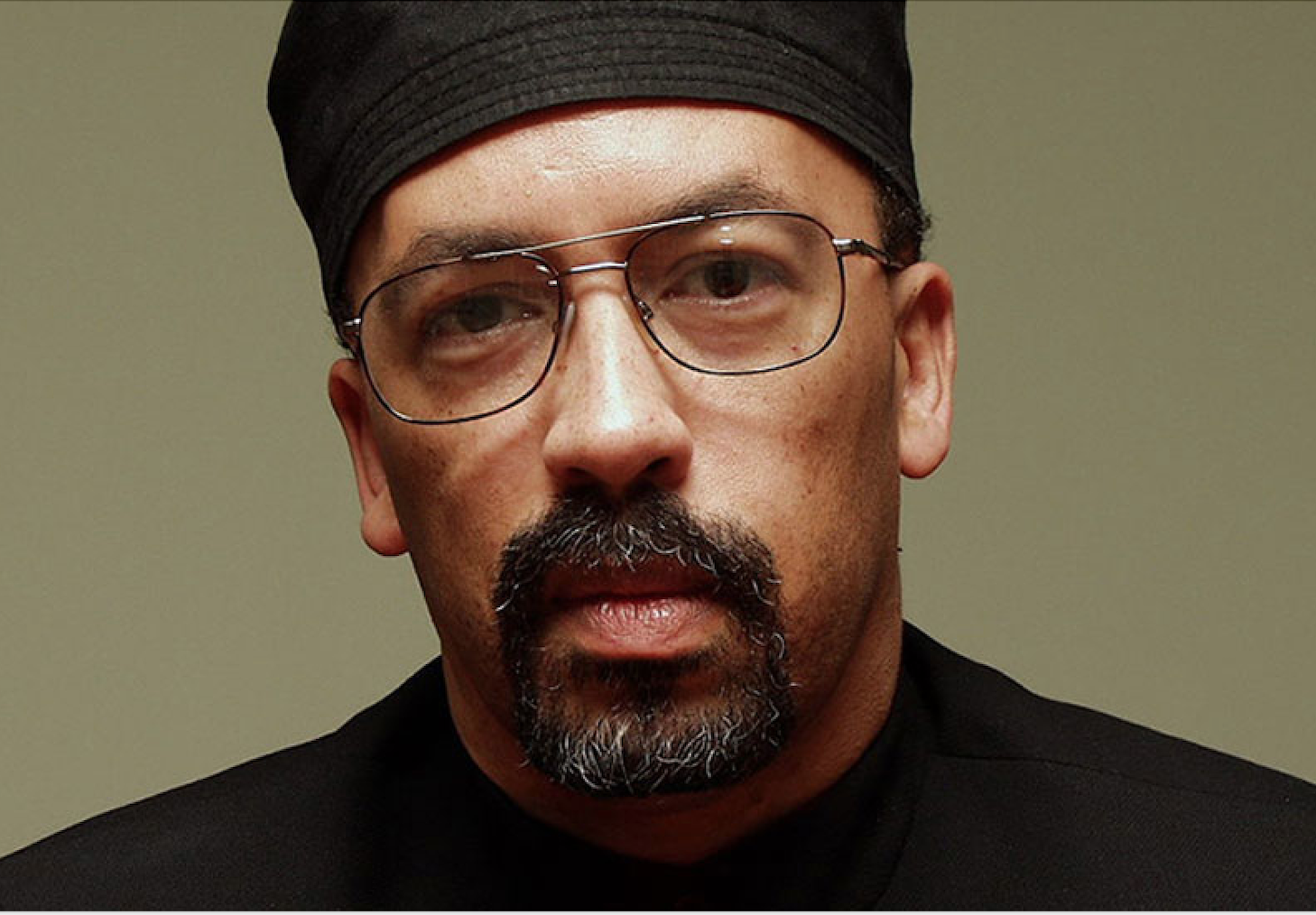
Bill Fletcher Jr (born 1954) has been an activist since his teen years. Upon graduating from college he went to work as a welder in a shipyard, thereby entering the labor movement. Over the years he has been active in workplace and community struggles as well as electoral campaigns. He has worked for several labor unions in addition to serving as a senior staffperson in the national AFL-CIO. Fletcher is the former president of TransAfrica Forum; a Senior Scholar with the Institute for Policy Studies; and in the leadership of several other projects. Fletcher is the co-author (with Peter Agard) of “The Indispensable Ally: Black Workers and the Formation of the Congress of Industrial Organizations, 1934-1941”; the co-author (with Dr. Fernando Gapasin) of “Solidarity Divided: The crisis in organized labor and a new path toward social justice“; and the author of “‘They’re Bankrupting Us’ – And Twenty other myths about unions.” Fletcher is a syndicated columnist and a regular media commentator on television, radio and the Web.
ZNetwork is funded solely through the generosity of its readers.
Donate





1 Comment
Yes, Bill Fletcher, Jr. is absolutely right that it is imperative that “an anti-war movement worthy of its name must be fighting for a more comprehensive shift, a shift in the direction of a democratic foreign policy rather than the foreign policy of the bully.” There is absolutely no alternative to this since to do so would be at our own peril in which the consequences would be catastrophic. Furthermore, he has cogently articulated in a very eloquent way that “While we should have no illusions as to the Obama administration’s interests in moving in that direction, that must, however, be the direction of our fight.” It is absolutely crucial that we must be resolute in pursuing our fight with the utmost vigor and stamina no matter what the price. In addition, he has eloquently stated that it is vital that we must recognize the point “that It is the only way to consistently fight against policies of war and belligerence that are rooted in imperial might, corporate greed, and a profound fear of the global South; a fear that the global South may someday seek revenge for all that has been done to it over these last several hundred years by the global North (including but not limited to the USA).” In conclusion, we must do this as soon as possible before it is too late. We are at a crossroads in history; so, we must meet the challenge with courage and wisdom in order to achieve a viable global culture of peace and justice. It is imperative that we realize this since the very survival of humankind, flora, fauna, and our planet is at stake.