


As I watch the Trump White House and its orbiting debris field of oddballs and charlatans, a single long-ago movie scene keeps returning to my mind. In “Annie Hall,” waiting in line in a movie theatre, Woody Allen’s character becomes irritated by a guy behind him, an academic blowhard pontificating to his date about the culture. When he mentions the Canadian media guru Marshall McLuhan, Allen erupts and then, in a delightful spectacle of comeuppance, produces McLuhan himself, who tells the man, “I heard what you were saying. You know nothing of my work. . . . How you ever got to teach a course in anything is totally amazing.” Allen then says, to the camera, “Boy, if life were only like this.”
Every so often, it is. On Tuesday, eighty-six climate scientists delivered a four-hundred-page response to a Department of Energy report from July which had attempted to show that global warming is no big deal. That report was the scientific equivalent of a bespoke suit. Given that President Trump had declared climate change to be a “hoax,” and given that Energy Secretary Christopher Wright had previously declared it to be a “side effect of building the modern world,” it stands to reason that Wright’s department picked to conduct its report exactly five climate researchers, all notable for careers in which they’ve stood conspicuously outside the overwhelming scientific consensus that global warming is a grave and immediate danger. These five duly concluded, among other things, that “CO2-induced warming might be less damaging economically than commonly believed, and excessively aggressive mitigation policies could prove more detrimental than beneficial.”
The rest of the Trumpian apparatus then swung into motion. Lee Zeldin, the former congressman and failed gubernatorial candidate from New York who somehow ended up as the administrator of the Environmental Protection Agency and who had declared that his goal is to drive “a dagger straight into the heart of the climate-change religion,” embraced the findings, and quickly moved to use them in his effort to overturn the “endangerment finding” that the E.P.A. had previously relied on to regulate greenhouse gases.
The D.O.E report, however, had to be opened up for public comment, and so a climate scientist at Texas A. & M. University, Andrew Dessler, used the social-media platform Bluesky (which has largely replaced X for scientific conversation) to start assembling a global team of eighty-six researchers from all the relevant disciplines who, in a matter of a few weeks, subjected the report’s findings to peer review. Their “comment” is two and a half times as long as the report, and it is almost painfully hilarious to read. For instance, the five skeptics contended that “meteorological drought” was not increasing in the United States; as the researchers point out in their response, this is cherry-picked nonsense. In the first place, “meteorological drought” is only a measure of how much rain falls; the hotter temperatures associated with climate change have been increasing evaporation, which dries up more of that rain. And, in any event, the contrarians used the entire continental U.S. as the statistical basis for their finding, which makes no sense: as global warming increases evaporation in the arid West, it also increases rainfall in the moist East, producing the flooding rains that have caused so much damage in regions like the Appalachians. As the comment archly points out, “taking an average across the CONUS runs the risk of averaging out these trends.” Indeed, the authors note, with all the scientific citations, that “research has indicated that recent droughts in the WUS were more severe than droughts over the past 1000+ years: while megadroughts have occurred in the paleoclimatic record, the western US megadrought of 2000-2018 was the worst since the mid-1500 (Williams et al.2020) and from 2000-2021 was the worst since 800 (Williams et al. 2022) as defined using soil moisture anomalies. Similarly, climate change made the 2012-2014 period in CA the driest period in 1200 years (Griffin and Anchukaitis 2014; Williams et al. 2015).”
The comment has sections like this on every topic raised by the D.O.E. report; it’s a blitzkrieg of studies, observations, and data which makes clear that the authors were miles out of their depth, and further still out of the mainstream. But, of course, that doesn’t necessarily count for much in the current dispensation, where reality is becoming a Choose Your Own Adventure story. In the wake of the resignations of four officials at the Centers for Disease Control and Prevention last week, some early-summer remarks from the Health and Human Services Secretary, Robert F. Kennedy, Jr., started popping up again on social media. He’d told Tucker Carlson that “trusting the experts is not a feature of science. It’s not a feature of democracy. It’s a feature of religion and it’s a feature of totalitarianism. In democracies, we have the obligation—and it’s one of the burdens of citizenship—to do our own research and make our own determinations about things.”
That’s clearly not true about vaccines—we’ve trusted the experts for a century, and it’s worked out pretty well, including during the COVID pandemic, when vaccines saved millions of lives. And it’s a clearly absurd thing to say about global warming: Are we planning to “do our own research” on, to pick a topic covered at length in Tuesday’s response by the eighty-six researchers, the “hemispheric symmetry of the planetary albedo”?
The American scientific enterprise, the source of so much wealth and national prestige, is being unravelled before our eyes—research grants are being cut off, satellites disconnected, reports cooked up to meet the needs of particular industries and ideologies. It is as sad as any of the other dismal effects of the past election. But the scientific method will not, perhaps, go quietly. With hundreds of years of patient work behind it, with some educational institutions willing to protect their scientists, and with researchers hard at work in less-benighted nations, the human desire to know and to understand will continue to produce results. Many of those findings will be contrary to the interests of the blowhards who, at least temporarily, control our nation, and so they may be suppressed for the moment. But whether or not they are heeded, in the end, the truth will out. If it’s not in the form of enlightened policy, it will be in the form of pandemics and wildfires, of untreated disease and rising sea level. Because life really is like this.

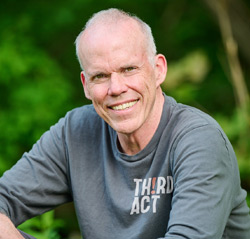
Bill McKibben is an author, environmentalist, and activist. In 1988 he wrote The End of Nature, the first book for a common audience about global warming. He is a co-founder and Senior Advisor at 350.org, an international climate campaign that works in 188 countries around the world.
ZNetwork is funded solely through the generosity of its readers.
Donate




