


By now, the whole world knows that in one of the most conservative states in the United States, a Democrat, Doug Jones, defeated Judge Roy Moore, the Republican candidate, in a special election for a vacant seat.
In the analyses almost everyone is making of the election result, it is being called “stunning,” “a surprise,” and “a miracle,” among a long list of similar summary judgments.
In almost all of these analyses, the big loser is said to be Donald Trump. The only dissent to these views is coming from a few Trump ultra-loyalists, but their words are generally seen as a not very convincing case to limit the damages.
Of course, everyone in the United States and in the rest of the world wants to know what the largely unexpected Democratic victory changes in the prospects of the forthcoming U.S. elections in 2018 and 2020, as well as in the geopolitical strength of the United States. In short, how important was this so-called stunning surprise?
Let us review what major U.S. actors had favored doing before the Alabama election and what they had anticipated would be the consequences if Roy Moore was or was not elected. It is no secret that the Republican Establishment, incarnated by Mitch McConnell, the Republican Majority Leader in the U.S. Senate, tried in every way to defeat Moore in the primary and, once Moore had won the primary, to distance the Republican Party from association with Moore’s campaign.
McConnell’s motive was clear. For one thing, the Moore campaign was intended to be a major boost to an effort to oust McConnell as Majority Leader. The hope of the Moore supporters was to push the Republican Party far to the right and eliminate any so-called moderate Republicans from political power.
In this Alabama election, President Donald Trump intruded himself twice. First, in the primary election he supported (albeit somewhat weakly) Luther Strange against Roy Moore. Secondly, when Moore won the primary, he called upon voters (and this with force) to vote for him against the Democrat. He intruded twice and each time his candidate lost – not exactly a brilliant achievement.
From the point of view of McConnell and his allies, the outcome was the worst possible they could imagine. The Republicans are now the underdog in the 2018 Congressional elections and have a good chance of losing control of both Houses of Congress.
Worse yet, the partisan divide in the United States has deepened and the Republicans are unlikely to regain their strength in the suburban zones they had previously counted upon to win elections.
This seems to be explained by the reaction of educated women to the identification of the Republican Party with the rightward swing of the party and the misogynous rhetorical tweets of Donald Trump. It is not just Alabama. This has been going on for some time. In the last years, Republicans have lost votes in suburban zones in every single election that took place across the country.
So, while the Republican Party will be struggling defensively against a Democratic swing, the Democrats will be struggling to maintain their unity between their traditionally centrist leaders and their newly-empowered aggressively leftward camp.
What made the difference in Alabama was that the Democrats got out the vote – of African-Americans, young people, Latin@s, and independent women voters, while too many normally Republican voters stayed home – because of Moore and because of Trump. This is a scenario that the Democrats need to repeat in all the forthcoming elections. The general consensus is that they can do this, with one major doubt. Can they do it by a margin wide enough to overcome the gerrymandering that is stacked against them?
It could well be that what might decide the next U.S. elections is the geopolitical stance of the United States – primarily in northeast Asia and in the largely Islamic southwest Asia. Here Donald Trump is the key actor. He fancies himself powerful enough to alter the situation via blustering rhetoric and deliberate military menace. This is entirely an illusion, but that won’t stop Trump from acting in very dangerous ways. Trump frightens almost all the actors in both arenas because they fear, correctly, that Trump refuses to acknowledge the decline of U.S. geopolitical power and his own derived power.
To the degree that Trump’s arrogant misreading of the real rapport de forces frightens enough people in the United States, it is more likely that this will affect internal elections in the United States.
The present U.S. position on world affairs did not originate with Trump. It is the continuation of long-standing U.S. policies from Nixon to Bush to Obama. However, there is one crucial difference. Trump is sure of his illusory power. His predecessors were at least worried that they actually had as much power as they wanted. This is what led them to make the deal with Iran. This is what led them to renew relations with Cuba. This is what led them to refrain from recognizing publicly Jerusalem as the capital of Israel. All these decisions Trump is seeking to undo. Whether he can be restrained by anyone anywhere is totally unsure.
I asked how important is the Alabama election. In the short run, I think it is very important. In the longer run, however, it is a mere bump in terms of the world’s ability to survive amidst the structural decline of the modern world-system.

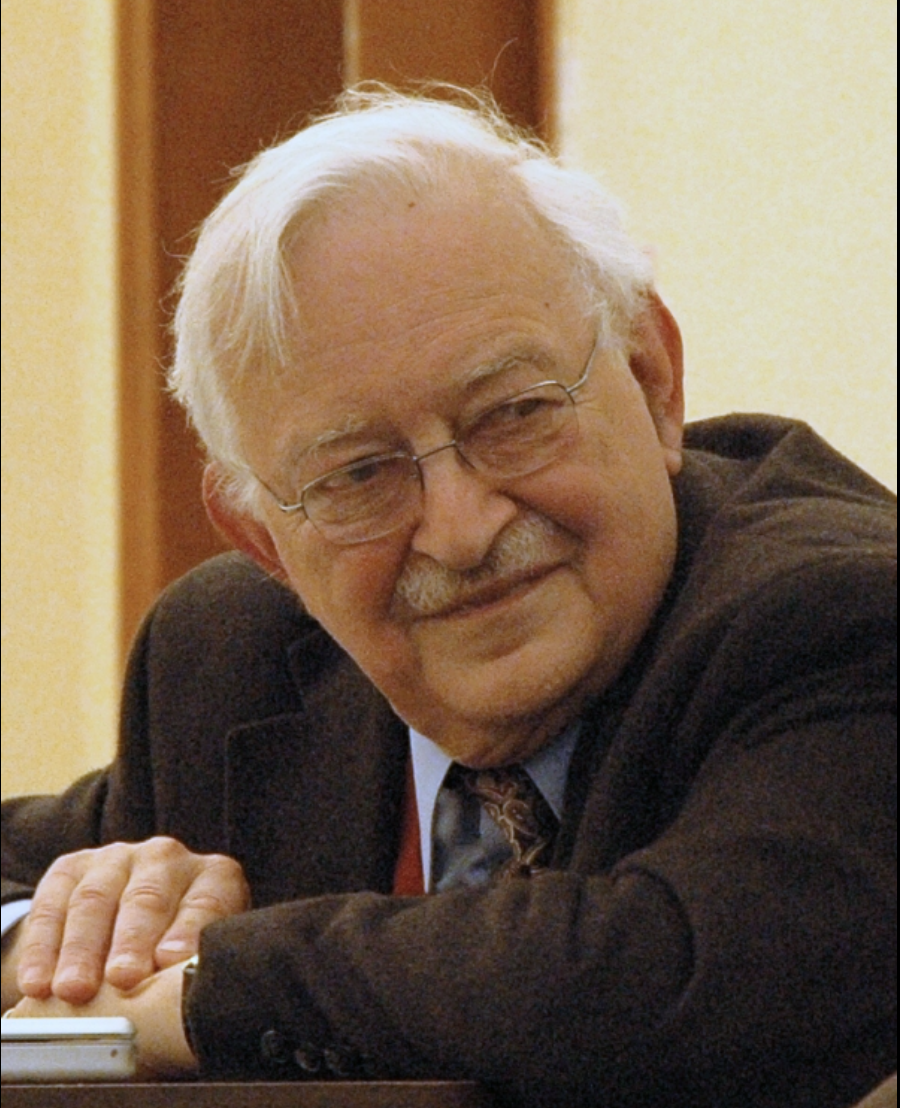
Immanuel Wallerstein (September 28, 1930 – August 31, 2019) was an American sociologist and economic historian. He is perhaps best known for his development of the general approach in sociology which led to the emergence of his world-systems approach. He was a Senior Research Scholar at Yale University from 2000 until his death in 2019, and published bimonthly syndicated commentaries through Agence Global on world affairs from October 1998 to July 2019. He was the 13th president of International Sociological Association (1994–1998). Politically, he considered himself on the "independent left" and was active in a variety of organizations. He argued that we are in the transition from our existing capitalist world-economy to some new system, and that the great political struggle of our time is about which new kind of systemic order will replace our existing one. A new systemic order could be better or worse, depending on our collective ability to push the worldwide decision in one direction or another. He believed that a crucial element in this is a vast debate about the kind of better system we wish to build, and saw the Reimagining Society Project as one of the ways to further this collective debate.
ZNetwork is funded solely through the generosity of its readers.
Donate




