


Baghdad, April 15 — Save us from the horrendous rumor mill of Baghdad. Yesterday we heard a good one: that the Mehdi militia is spreading leaflets around sections of Baghdad instructing people to inform them of any westerners residing in their area.
Almost everyone I know, including most of the NGOs, is leaving now the first chance they get. I’ve still been able to work yesterday and today, but when that becomes impossible, there is no use in my staying here any longer. The biggest threat is, of course, being kidnapped.
One can work around the fighting — just stay away from it. But the randomness of the kidnapping is another story. We are all completely powerless over that situation.
Fortunately I was able to work some today. Over in Adhamiya we had an interview with Professor Adnan Mohammed Salman al-Dulainy at the Diwan Wakfa-Sunni. He is the director of the board in charge of all of the Sunnis in Iraq, with over 10,000 Imams under his control, who also serve as the Friday prayer speakers in the mosques.
He has been a teacher for 51 years. His first words to us were, “Our situation is bad. We are struggling now.” He went on to tell us that in the past few days, three mosques in Baghdad have been attacked by the Americans: Abu Hanifa, which I reported on yesterday, and two others on Palestine Street.
He discussed the obviousness of the problems: high unemployment and the dissolving of the Iraqi Army by Bremer as being two huge problems caused by the American occupation that need to be resolved promptly if there is to be any stability here.
He went on to say, “Mr. Bush declared Iraq will be the example of democracy for the Middle East. What has happened here does not give that impression.”
His deep frustration with the fact that so many Sunni Imams have been killed, as well as many detained by the Americans, is obvious.
Afterwards I was at an internet cafe run by the son of a good friend. Ali speaks English well, and walked up to me with a leaflet he said had just been passed to him by a car that was distributing them throughout Baghdad. It read:
“To our people of Baghdad. Please do not leave your houses. Do not go to schools, colleges, offices or markets. Close all commercial shops. This is in effect from April 15-April 23.
Because your brothers of the mujahedeen from Ramadi, Khaldia and Falluja will bring the resistance to the capital of Baghdad, to help their brothers the mujahedeen from the Mehdi Army to liberate you from the occupation.
We told you.
Signed, Mujahedeen Troops”
Threatening leaflets similar to these were distributed around Baghdad last fall, causing a three-day rest in the city when the majority of people followed its instructions. While there were some attacks, it ended up being not too big of a departure from the usual resistance to the occupation.
While this leaflet is quite disturbing, it does seem a bit hard to believe that any of the mujahedeen from Falluja would decide to leave there to come fight in Baghdad as they more than have there hands full at home for the time being.
Nevertheless, in Baghdad today chaos, uncertainty, fear and anxiety reign. Everyone is on pins and needles awaiting the outcome in Falluja and Najaf. Everyone I’ve spoken with here feels that if the U.S. launches an attack on either city, this already horrendous situation will explode in a way most don’t want to even think about.
Yet Mr. Bush has discussed that America cannot fail here, and that he will use any means necessary to bring “democracy” to Iraq.
Does anyone else feel like the Bush Administration is pushing us as fast it can towards the abyss of unbridled violence and chaos in Iraq and beyond?
As the purported “ceasefire” in Falluja continues, U.S. war planes are bombing homes, and the bodies of women, children and other unarmed civilians are reported by hospitals there to be piling up.
I recently wrote another version of my Falluja story for The Nation’s website. The piece has since been attacked by a couple of right-wingers, one questioning my credibility and even insinuating that I may have not have even gone to Falluja. Amazing that someone sitting behind a desk in America would have the gall to even suggest this of anyone who is willing to work in this mayhem of Iraq.
It feels like the calm before the storm today. Aside from the Sheriton Hotel being hit by another rocket not long ago, it’s been strangely quiet in Baghdad today.
Dahr Jamail is Baghdad correspondent for The NewStandard. He is an Alaskan devoted to covering the untold stories from occupied Iraq. You can help Dahr continue his crucial work in Iraq by making donations. For more information or to donate to Dahr, visit http://newstandardnews.net/iraqdispatches .
The Iraq Dispatches list exists to keep readers of The NewStandard updated on reports by Baghdad correspondent Dahr Jamail. To manage subscriptions, or for more information and an archive of Dahr’s writings and photographs: http://newstandardnews.net/iraqdispatches
To contribute to The NewStandard and support Dahr Jamail’s crucial work in Iraq, go to: https:/secure.peoplesnetworks.net/estore/?action=show_donation_registration
The above message is Copyright 2004 Dahr Jamail and The NewStandard. Reprinting for commercial purposes is strictly prohibited. Permission is readily granted for nonprofit purposes as long as (1) adequate credit is provided, (2) a link back to http://newstandardnews.net/iraqdispatches is prominently posted along with the text and (3) the journalist’s bio at the end of the text is kept in tact.

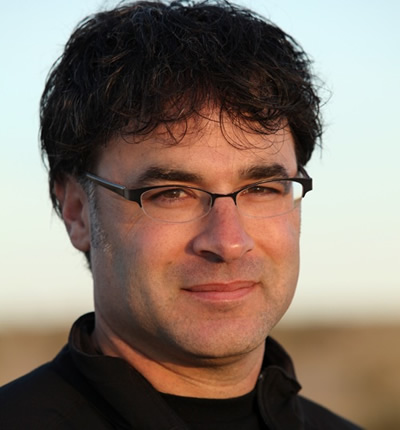
Dahr Jamail is the Baghdad correspondent for The NewStandard. Jamail, a political activist from Anchorage, Alaska, first traveled to Iraq in November 2003 to write about the effects of the US occupation on the Iraqi people. After nine weeks covering Iraq under occupation, he returned to the US and addressed audiences in Alaska and the Northeast about his experience. He has recently returned to Iraq in order to continue reporting on US occupation and privatization. You can view his dispatches and articles at http://newstandardnews.net/iraq.
ZNetwork is funded solely through the generosity of its readers.
Donate




