


With warfare escalating in Iraq, syndicated columnist George Will has just explained the logic of the occupation. “In the war against the militias,†he wrote, “every door American troops crash through, every civilian bystander shot — there will be many — will make matters worse, for a while. Nevertheless, the first task of the occupation remains the first task of government: to establish a monopoly on violence.â€
A year ago, when a Saddam statue famously collapsed in Baghdad, top officials in Washington preened themselves as liberators. Now, some of the tyrant’s bitterest enemies are firing rocket-propelled grenades at American troops.
Hypocrisy about press freedom has a lot to do with the current Shiite insurrection. Donald Rumsfeld had an easy retort seven months ago when antiwar protesters interrupted his speech at the National Press Club in Washington. “You know, I just came in from Baghdad,†he said, “and there are now over 100 newspapers in the free press in Iraq, in a free Iraq, where people are able to say whatever they wish.†But actually, Iraq’s newspapers “are able to say whatever they wish†only if they wish to say what the occupiers accept.
A week before a militia loyal to Moktada al-Sadr began to assault U.S. soldiers, the American occupation authorities ordered a 60-day shutdown of Sadr’s newspaper Al Hawza. The New York Times reported near the end of an April 5 article: “Although the paper did not print any calls for attacks, the American authorities said false reporting, including articles that ascribed suicide bombings to Americans, could touch off violence.â€
There’s an idea — closing a newspaper for “false reporting†that could “touch off violence.†By that standard, most of the daily papers in the United States (beginning with the New York Times) could have been shut down in late 2002 and early 2003 as they engaged in “false reporting†about purported weapons of mass destruction in Iraq.
That false reporting certainly touched off violence. Thanks to the invasion and occupation of Iraq, the number of dead is in the tens of thousands, and rising by the hour. True to form — as was the case during the Vietnam War — the president certainly knows how to keep ordering the use of violence on a massive scale.
“We took space back quickly, expensively, with total panic and close to maximum brutality,†war correspondent Michael Herr recalled about the U.S. military in Vietnam. “Our machine was devastating. And versatile. It could do everything but stop.â€
Despite all the belated media exposure of the Bush administration’s prewar lies, we are now seeing a familiar spectrum of response in mainstream U.S. media — many liberals wringing their hands, many conservatives rubbing their hands — at the sight of military escalation.
Numerous commentators have criticized President Bush for policy flaws. The tactical critiques are profuse, as when an April 6 editorial by the New York Times lamented that Washington “and its occupation partners†are now “in real danger of handing over a meaningless badge of sovereignty to a government that is divided internally, is regarded as illegitimate by the people and has no means other than foreign armies in Iraq to enforce its authority.â€
Such carefully chosen language is notable for what it does not say: Get U.S. troops out of Iraq.
Year after year, of course, the White House and the editorialists insisted that complete withdrawal of GIs from Vietnam was an irresponsible notion, a bumper-sticker idea lacking in realism. But withdrawal had to happen. Sooner, with fewer deaths and less suffering? Or later?
In contrast to the wavering bugles of Bush’s circumspect critics, we hear the certain trumpets from the likes of George Will. “Regime change, occupation, nation-building — in a word, empire — are a bloody business,†he wrote at the end of April’s first week. “Now Americans must steel themselves for administering the violence necessary to disarm or defeat Iraq’s urban militias, which replicate the problem of modern terrorism — violence that has slipped the leash of states.â€
As for the carnage that results from unleashing the Pentagon’s violence, the rationales are inexhaustible. “There are thugs and terrorists in Iraq who are trying to shake our will,†White House spokesman Scott McClellan told reporters on April 6. “And the president is firmly committed to showing resolve and strength.â€
Martin Luther King Jr. said: “I never intend to adjust myself to the madness of militarism.â€
That madness is here.
__________________________________
Norman Solomon is co-author of “Target Iraq: What the News Media Didn’t Tell You.â€

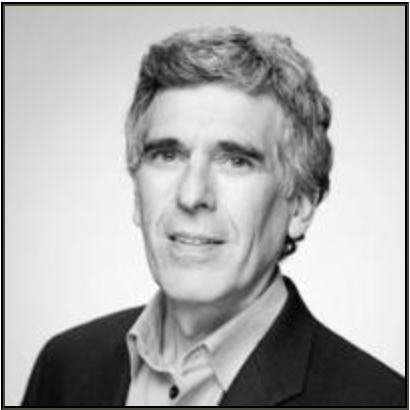
Norman Solomon is the national director of RootsAction.org and executive director of the Institute for Public Accuracy. The paperback edition of his latest book, War Made Invisible: How America Hides the Human Toll of Its Military Machine, includes an afterword about the Gaza war.
ZNetwork is funded solely through the generosity of its readers.
Donate




