


The Israeli ambassador to Spain, Raphael Schutz, has just finished his term in Madrid. In an op-ed in Haaretz’s Hebrew edition he summarized what he termed as a very dismal stay and seemed genuinely relieved to leave.
This kind of complaint now seems to be the standard farewell letter of all Israeli ambassadors in Western Europe. Schutz was preceded by the Israeli ambassador to London, Ron Prosor, on his way to his new posting at the United Nations in New York, complaining very much in the same tone about his inability to speak in campuses in the United Kingdom and whining about the overall hostile atmosphere. Before him the ambassador in Dublin expressed similar relief when he ended his term in office in Ireland.
All three grumblers were pathetic but the last one from Spain topped them all. Like his colleagues in Dublin and in London he blamed his dismal time on local and ancient anti-Semitism. His two friends in the other capitals were very vague about the source of the new anti-Semitism as both in British and Irish history it is difficult to single out, after medieval times, a particular period of anti-Semitism.
But the ambassador in Madrid without any hesitation laid the blame for his trials and tribulations on the fifteenth century Spanish Inquisition. Thus the people of Spain (his article was entitled “Why the Spanish hate us”) are anti-Israeli because they are either unable to accept their responsibility for the Inquisition or they still endorse it by other means in our times.
This idea that young Spaniards should be moved by atrocities committed more than 500 years ago and not by criminal policies that take place today, or the notion that one could single out the Spanish Inquisition as sole explanation for the wide public support for the Palestinian cause in Spain, can only be articulated by desperate Israeli diplomats who have long ago lost the moral battle in Europe.
But this new complaint — and I am confident that there are more to come — exposes something far more important. The civil society struggle in support of Palestinian rights in key European countries has been successful. With few resources, sometimes dependent on the work of very small groups of committed individuals, and aided lately by its biggest asset — the present government of Israel – this campaign has indeed made life quite hellish for every Israeli diplomat in that part of the world.
So when we come and assess what is ahead of us, we who have been active in the West are entitled to a short moment of satisfaction at a job well done.
The three grumpy ambassadors are also right in sensing that not only has Israeli policy in the occupied West Bank and Gaza Strip come under attack, but also the very racist nature of the Jewish state has galvanized decent and conscientious citizens — many of them Jewish — around the campaign for peace and justice in Palestine.
Outside the realm of occupation and the daily reality of oppression all over Israel and Palestine, one can see more clearly that history’s greatest lesson will eventually reveal itself in Palestine as well: evil regimes do not survive forever and democracy, equality and peace will reach the Holy Land, as it will the rest of the Arab world.
But before this happens we have to extricate ourselves from the politicians’ grip on our lives. In particular we should not be misled by the power game of politicians. The move to declare Palestine, within 22 percent of its original being, as an independent state at the UN is a charade whether it succeeds or not.
A voluntary Palestinian appeal to the international community to recognize Palestine as a West Bank enclave and with a fraction of the Palestinian people in it, may intimidate a Likud-led Israeli government, but it does not constitute a defining moment in the struggle for the liberation of Palestine. It would either be a non-event or merely provide the Israelis a pretext for further annexation and dispossession.
This is another gambit in the power game politicians play which has led us nowhere. When Palestinians solve the issue of representation and the international community exposes Israel for what it is — namely the only racist country in the Middle East — then politics and reality can fuse again.
And slowly and surely we will be able to put back the pieces and create the jigsaw of reconciliation and truth. This must be based on the twofold recognition that a solution has to include all the Palestinians (in the occupied territories, in exile and inside Israel) and has to be based on the construction of a new regime for the whole land of historical Palestine, offering equality and prosperity for all the people who live there now or were expelled from it by force in the last 63 years of Israel’s existence.
The obvious discomfort the three diplomats felt and expressed is not due to any cold shoulder shown to them in local foreign ministries or governments. And therefore while many Europeans can make their lives miserable, their respective governments can still look the other way.
Whether it is financial desperation and external Israeli and American pressure that bought Greece’s collaboration against the Gaza Freedom Flotilla or it is the power of intimidation that silences even progressive newspapers like the Guardian in the West, Israel’s immunity is still granted despite its diplomats’ misery.
This is why we should ensure that not only Israeli ambassadors feel uncomfortable in European capitals, but also all those who support them or are too afraid to confront Israel and hold it to account.
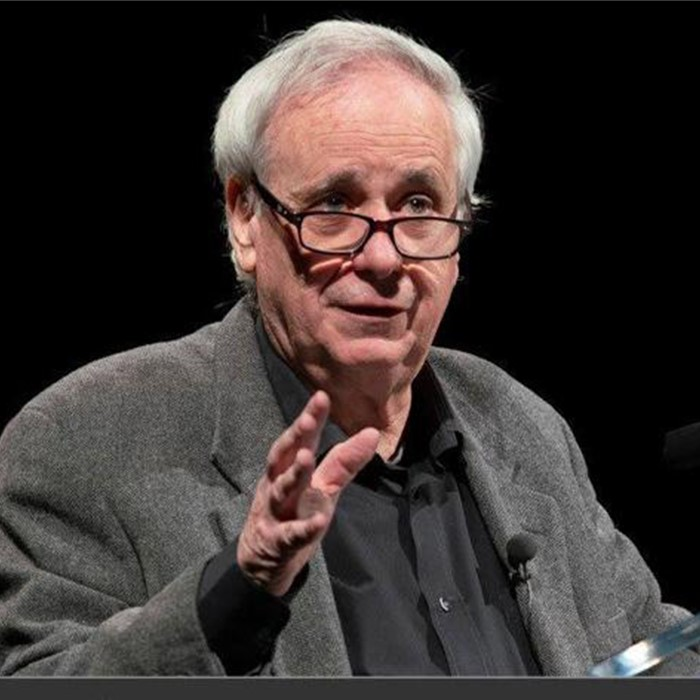
Ilan Pappe is Professor of History and Director of the European Centre for Palestine Studies at the University of Exeter. His most recent book is Out of the Frame: The Struggle for Academic Freedom in Israel (Pluto Press, 2010).
ZNetwork is funded solely through the generosity of its readers.
Donate

