


I have long argued that U.S. decline as a hegemonic power began circa 1970, and that a slow decline became a precipitate one during the presidency of George W. Bush. I first started writing about this in 1980 or so. At that time, the reaction to this argument, from all political camps, was to reject it as absurd. In the 1990s, quite to the contrary, it was widely believed, again on all sides of the political spectrum, that the United States had reached the height of unipolar dominance.
However, after the burst bubble of 2008, opinion of politicians, pundits and the general public began to change. Today, a large percentage of people (albeit not everyone) accepts the reality of at least some relative decline of U.S. power, prestige and influence. In the United States, this is accepted quite reluctantly. Politicians and pundits rival each other in recommending how this decline can still be reversed. I believe it is irreversible.
The real question is what the consequences of this decline are. The first is the manifest reduction of U.S. ability to control the world situation, and in particular the loss of trust by the erstwhile closest allies of the United States in its behavior. In the last month, because of the evidence released by Edward Snowden, it has become public knowledge that the U.S. National Security Agency (NSA) has been directly spying on the top political leadership of Germany, France, Mexico and Brazil among others (as well, of course, on countless citizens of these countries).
I am sure the United States engaged in similar activities in 1950. But in 1950, none of these countries would have dared to make a public scandal of their anger, and demand that the United States stop doing this. If they do it today, it is because today the United States needs them more than they need the United States. These present leaders know that the United States has no choice but to promise, as President Obama just did, to cease these practices (even if the United States doesn't mean it). And the leaders of these four countries all know that their internal position will be strengthened, not weakened, by publically tweaking the nose of the United States.
Insofar as the media discuss U.S. decline, most attention is placed on China as a potential successor hegemon. This too misses the point. China is undoubtedly a country growing in geopolitical strength. But accession to the role of the hegemonic power is a long, arduous process. It would normally take at least another half-century for any country to reach the position where it could exercise hegemonic power. And this is a long time, during which much may happen.
Initially, there is no immediate successor to the role. Rather, what happens when the much lessened power of the erstwhile hegemonic power seems clear to other countries is that relative order in the world-system is replaced by a chaotic struggle among multiple poles of power, none of which can control the situation. The United States does remain a giant, but a giant with clay feet. It continues for the moment to have the strongest military force, but it finds itself unable to make much good use of it. The United States has tried to minimize its risks by concentrating on drone warfare. Former Secretary of Defense Robert Gates has just denounced this view as totally unrealistic militarily. He reminds us that one wins wars only by ground warfare, and the U.S. president is presently under enormous pressure by both politicians and popular sentiment not to use ground forces.
The problem for everyone in a situation of geopolitical chaos is the high level of anxiety it breeds and the opportunities it offers for destructive folly to prevail. The United States, for example, may no longer be able to win wars, but it can unleash enormous damage to itself and others by imprudent actions. Whatever the United States tries to do in the Middle East today, it loses. At present none of the strong actors in the Middle East (and I do mean none) take their cues from the United States any longer. This includes Egypt, Israel, Turkey, Syria, Saudi Arabia, Iraq, Iran and Pakistan (not to mention Russia and China). The policy dilemmas this poses for the United States has been recorded in great detail in The New York Times. The conclusion of the internal debate in the Obama administration has been a super-ambiguous compromise, in which President Obama seems vacillating rather than forceful.
Finally, there are two real consequences of which we can be fairly sure in the decade to come. The first is the end of the U.S. dollar as the currency of last resort. When this happens, the United States will have lost a major protection for its national budget and for the cost of its economic operations. The second is the decline, probably a serious decline, in the relative standard of living of U.S. citizens and residents. The political consequences of this latter development are hard to predict in detail but will not be insubstantial.

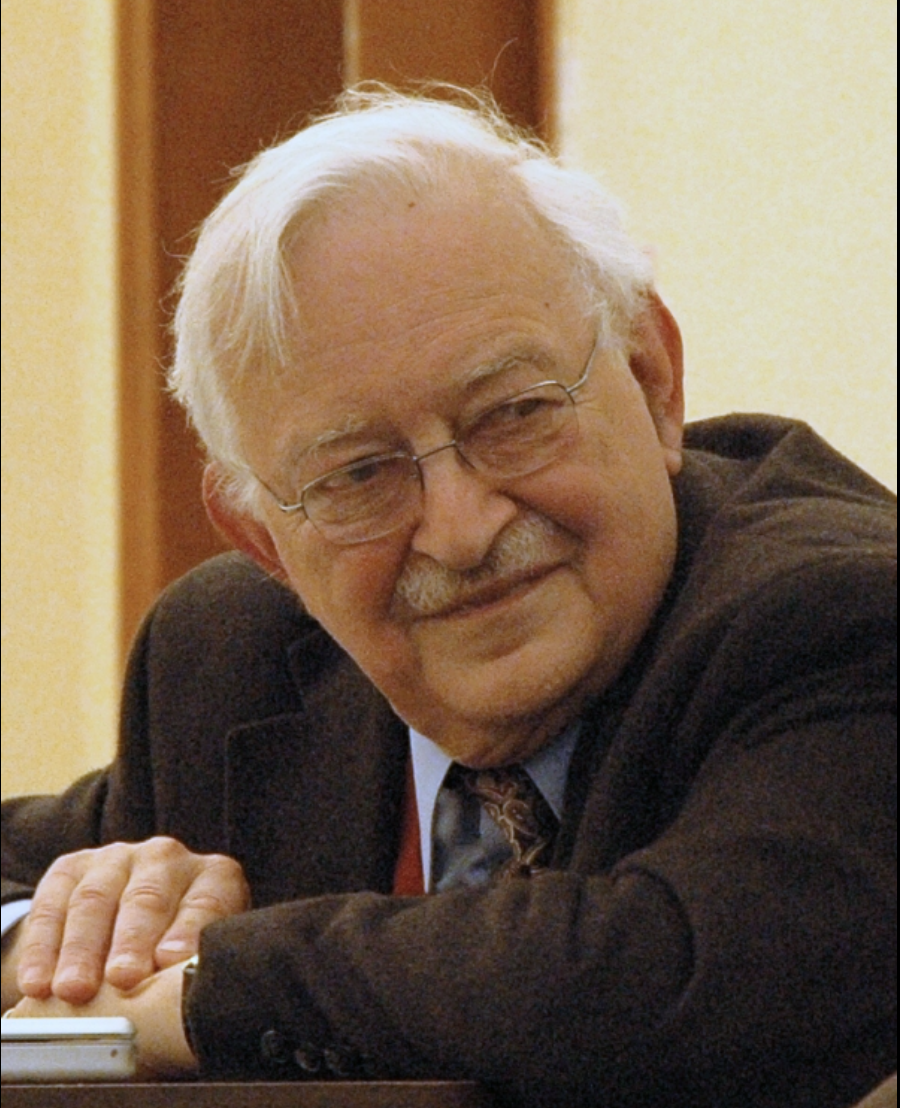
Immanuel Wallerstein (September 28, 1930 – August 31, 2019) was an American sociologist and economic historian. He is perhaps best known for his development of the general approach in sociology which led to the emergence of his world-systems approach. He was a Senior Research Scholar at Yale University from 2000 until his death in 2019, and published bimonthly syndicated commentaries through Agence Global on world affairs from October 1998 to July 2019. He was the 13th president of International Sociological Association (1994–1998). Politically, he considered himself on the "independent left" and was active in a variety of organizations. He argued that we are in the transition from our existing capitalist world-economy to some new system, and that the great political struggle of our time is about which new kind of systemic order will replace our existing one. A new systemic order could be better or worse, depending on our collective ability to push the worldwide decision in one direction or another. He believed that a crucial element in this is a vast debate about the kind of better system we wish to build, and saw the Reimagining Society Project as one of the ways to further this collective debate.
ZNetwork is funded solely through the generosity of its readers.
Donate




