


Looking at visual images from U.S.-run prisons in Iraq, news watchers now find themselves in the midst of a jolting experience that roughly resembles a process described by Donald Rumsfeld: “It is the photographs that gives one the vivid realization of what actually took place. Words don’t do it. … You see the photographs, and you get a sense of it, and you cannot help but be outraged.”
Yet, unlike most of us, the defense secretary has a vested interest in claiming that the grotesque real-life images have nothing to do with U.S. policies. In Iraq, Rumsfeld has reaffirmed, “I am convinced that we are doing exactly what ought to be done.” Under the circumstances, it would be astonishing if he said anything different. But hopefully most Americans are more willing to consider implications of the fact that the U.S. government has been operating chambers of horrors that run directly counter to America’s self-image as a righteous military force.
In the weeks ahead, we’ll be encouraged to turn away from information surfacing about imprisonment and interrogation techniques that have held sway under U.S. authority in Iraq. Atrocities will be discounted, excuses made, messengers blamed.
Keynotes of preemptive denial have already been sounded. “In view of Mr. Rumsfeld’s significant contribution to our security, this incident will be but a footnote,” former House Speaker Newt Gingrich wrote in a Wall Street Journal piece that appeared the same day as the Pentagon chief’s congressional testimony. Gingrich added that “we should angrily reject anyone who would smear the 200,000-plus courageous decent men and women who have risked — and are risking daily — their lives for a free Iraq, and for a safe America.”
Four days later, on May 11, at a Senate Armed Services Committee hearing, Republican Senator James Inhofe was on the counterattack: “As I watch this outrage — this outrage everyone seems to have about the treatment of these prisoners — I have to say … I’m probably not the only one up at this table that is more outraged by the outrage than we are by the treatment. … I’m also outraged by the press and the politicians and the political agendas that are being served by this. … I am also outraged that we have so many humanitarian do-gooders right now crawling all over these prisons looking for human rights violations while our troops, our heroes, are fighting and dying.”
But pseudo-patriotic smokescreens should not be allowed to impede our vision, or prevent us from challenging the policies that sent those troops to Iraq and keep them there.
While pressure builds on Secretary Rumsfeld and President Bush, it will also heighten for media outlets. Major American news organizations will increasingly come under attack as the next rounds of visual documentation emerge from U.S. prison facilities in Iraq. Messengers will be charged with relishing the awful graphic evidence. When the bad news gets bad enough, appreciable political energy will go into fueling an anti-media backlash.
The temptation will be to turn our heads or to blame the media outlets that put the horrifying pictures on our breakfast tables and on the TV news. But George Orwell had it right when he commented: “If liberty means anything at all, it means the right to tell people what they do not want to hear.” And liberty also means the right to show people what they would rather not see.
Many critics of the Bush administration have already lapsed into portraying the issue as primarily a horrendous public-relations failure. At the Capitol, even while she lectured the secretary of defense, Senator Susan Collins of Maine described her greatest concern this way: “Worst of all, our nation — a nation that, to a degree unprecedented in human history, has sacrificed its blood and treasure to secure liberty and human rights around the world — now must try to convince the world that the horrific images on their TV screens and front pages are not the real America, that what they see is not who we are.”
Many politicians and pundits are saying the worst aspect of this crisis is that it presents a colossal PR problem for the United States. That kind of verbiage tells us a lot. Such an extreme self-focus represents the promotion of national megalomania over genuine decency.
At the same time, for now, we’re witnessing an overall upsurge of some healthy introspection in American news media. But if we succumb to defining the biggest problem as the fact that we look bad, the solution may appear to involve dimming the lights or closing our eyes.
_________________________________
Norman Solomon is co-author, with foreign correspondent Reese Erlich, of “Target Iraq: What the News Media Didn’t Tell You.”

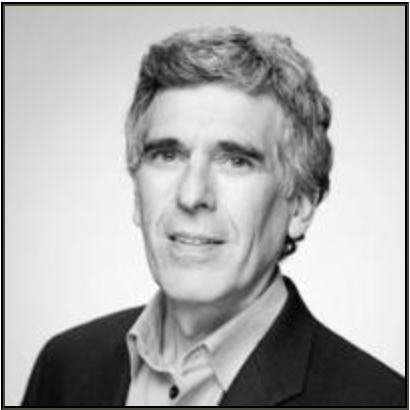
Norman Solomon is the national director of RootsAction.org and executive director of the Institute for Public Accuracy. The paperback edition of his latest book, War Made Invisible: How America Hides the Human Toll of Its Military Machine, includes an afterword about the Gaza war.
ZNetwork is funded solely through the generosity of its readers.
Donate




