


Here’s a thought: hundreds of local climate activists around the country running for federal, state and local offices in 2014, doing so in a connected way and with solutions to the climate crisis at the top of the list of issues they consistently talk about.
Given the urgency of the crisis, this seems to me to be something we should begin to seriously consider. The use of this tactic has the potential to broaden out and strengthen the movement; running for office is an effective way to reach and interact with large numbers of people. And it is definitely to be desired that more and more people are elected to office who appreciate the seriousness of our situation.
An initiative like this should in no way be seen as an alternative to the absolutely essential work of grassroots organizing and the organization of visible, demonstrative actions. All of these different tactics, if done well, are complementary and mutually reinforcing.
I’ve heard no discussion of this idea within the climate activist circles I’m part of. Instead, the two main approaches to elections are either to reject electoral activity as essentially a waste of energy and resources, or to support, directly or indirectly, a Democrat, even if that Democrat rarely speaks about the climate issue—e.g., Barack Obama in 2012—or is weak when it comes to support of action commensurate to the seriousness of the problem.
There is also some support for Green Party or other independent candidates who have very progressive positions on the climate issue and have won local elections in a number of places but have had few victories on state or federal levels.
What I’m proposing is NOT an alternative political party, although I can see that some of the people who might decide to run for office would want to do so as independents. After all, roughly a third of the U.S. electorate see themselves as independents.
My expectation is that most of the people who would run for office as climate candidates would do so as part of a Democratic Party primary election, with perhaps a much smaller number doing so within a Republican Party primary. This would be the case since the main purpose of this electoral project would be to raise up and educate broadly about the climate crisis and the need to rapidly move from fossil fuels to renewables and efficiency. This would both build the movement and lead to more people elected to office with strong climate action positions, either because climate candidates win or because their running and the support they build pushes the eventual winners to be stronger than they would have been otherwise.
Running as a third party candidate for state or federal office would add a political burden that very few independents have been able to overcome as far as electoral victories, or even respectable vote totals, on these levels over the last half-century or so.
Electoral victories in 2014 by climate candidates would likely be minimal, but I don’t consider this to be a problem. What would be a problem would be if the climate candidates, overall, did a poor job of campaigning. They would need to do a good job talking about the issues, explaining how action on climate is connected to other major issues like job creation, economic development, clean air and water and healthier communities, especially for low-income and people of color communities most often impacted by the polluting ways of the fossil fuel industry.
Let’s talk about these ideas!
Ted Glick has been a climate activist and organizer since 2003 and a progressive activist and organizer since 1968. Past writings and other information can be found at http://tedglick.com, and he can be followed on Twitter at http://twitter.com/jtglick.

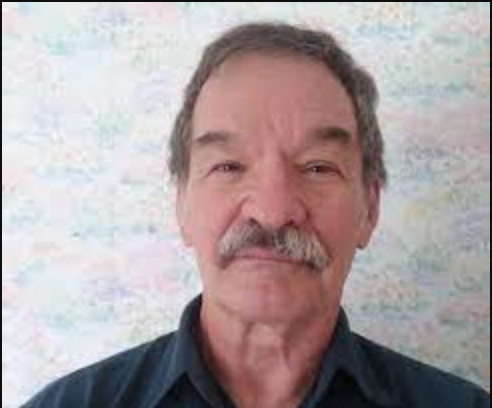
Ted Glick has devoted his life to the progressive social change movement. After a year of student activism as a sophomore at Grinnell College in Iowa, he left college in 1969 to work full time against the Vietnam War. As a Selective Service draft resister, he spent 11 months in prison. In 1973, he co-founded the National Committee to Impeach Nixon and worked as a national coordinator on grassroots street actions around the country, keeping the heat on Nixon until his August 1974 resignation. Since late 2003, Ted has played a national leadership role in the effort to stabilize our climate and for a renewable energy revolution. He was a co-founder in 2004 of the Climate Crisis Coalition and in 2005 coordinated the USA Join the World effort leading up to December actions during the United Nations Climate Change conference in Montreal. In May 2006, he began working with the Chesapeake Climate Action Network and was CCAN National Campaign Coordinator until his retirement in October 2015. He is a co-founder (2014) and one of the leaders of the group Beyond Extreme Energy. He is President of the group 350NJ/Rockland, on the steering committee of the DivestNJ Coalition and on the leadership group of the Climate Reality Check network.
ZNetwork is funded solely through the generosity of its readers.
Donate




