


On February 18, I asked the Indian ambassador to the United Nations, Hardeep Singh Puri, why there was no appetite for a strong UN resolution on Syria.
After all, the violence in Syria seemed to have already exceeded that in Libya. If the UN could pass Resolution 1973 (on Libya), why was it reticent to pass a similar resolution on Syria? Puri pointed his finger directly at the North Atlantic Treaty Organization (NATO) states.
They had exceeded the mandate of Resolution 1973, moving for regime change using immense violence. All attempts to find a peaceful solution were blocked. The African Union's high-level panel was prevented from entering Libya as the NATO barrage began. Any UN resolution that was sharply worded and that was not explicitly against a humanitarian intervention would open the door to a NATO-style attack. That seems to be the fear.
If there is a sense that NATO exceeded the mandate of 1973, I asked, would the UN now consider an evaluation of how it was used in the Libya war? "Russia has asked for the Security Council to undertake an evaluation of protection of civilians, because Resolution 1973 is about protecting civilians," Puri said. "So what kind of damage was there, collateral damage to civilians, etc? There is great reluctance to undertake that."
A report by independent Arab human-rights groups in January 2012 and a report by the UN Human Rights Council (March 2, 2012) have been largely ignored. Both showed that the proposition that Muammar Gaddafi's forces were conducting genocide was grossly exaggerated, and both called for an open investigation of NATO's aerial bombardment.
The point of the second call is simple: if NATO went into the conflict with its "responsibility to protect" (R2P) civilians, what was the civilian casualty rate as a result of NATO's bombardment? Would the UN Security Council sanction further NATO "humanitarian interventions" if the kill rate from the saviors is higher than or equals that of the violence in the first place?
Puri indicates that the NATO states in the Security Council have not warmed up to the idea of an evaluation. When the Human Rights Council began its investigations, NATO's legal adviser Peter Olson wrote a sharp letter to the commission's chair:
We would be concerned if "NATO incidents" were included in the commission's report as on a par with those which the commission may ultimately conclude did violate law or constitute crimes. We note in this regard that the commission's mandate is to discuss "the facts and circumstance of … violations [of law] and … crimes perpetrated". We would accordingly request that, in the event the commission elects to include a discussion of NATO actions in Libya, its report clearly state that NATO did not deliberately target civilians and did not commit war crimes in Libya.
In other words, NATO was eager to prejudge the investigation – it would not allow the investigation to even take up issues of war crimes by NATO. That was to be stopped at the door.
On March 25, The New York Times' C J Chivers wrote a strongly worded essay "NATO's Secrecy Stance", which revisited a story that Chivers had written about the August 8 NATO bombardment of Majer (a village between Misrata and Tripoli). It is clear that at 34 civilians died in that attack. It is a test case for NATO's refusal to allow any public scrutiny.
NATO claims that it has already carried out a review of this case. Chivers is right to note that this raises an issue fundamental to democratic societies; namely, civilian control over the military. If the public and the political authorities are not allowed access to the evidence and provide oversight over the NATO command, the idea of civilian control of the military is violated.
Five days later, The New York Times editorial ("NATO's Duty") followed Chivers, noting that NATO "has shown little interest in investigating credible independent claims of civilian fatalities". This is strong language from an editorial board that has otherwise been quite comfortable with the idea of humanitarian intervention by NATO.
The next day (March 31), NATO's spokesperson Oana Langescu responded that NATO has already done its investigation, and if the Libyan authorities decide to open an inquiry then "NATO will cooperate". There is no indication that the threadbare Libyan government is going to question its saviors. NATO is safe from scrutiny.
Suspicion around NATO's operations is now general among the BRICS states (Brazil, India, China and South Africa). In the Delhi Declaration of March 29, the BRICS noted regarding Syria, "Global interests would best be served by dealing with the crisis through peaceful means that encourage broad national dialogues that reflect the legitimate aspirations of all sections of Syrian society and respect Syrian independence, territorial integrity and sovereignty."
Additionally, the BRICS states championed their "strong commitment to multilateral diplomacy with the United Nations playing a central role in dealing with global challenges and threats".
The threat of NATO intervention in the name of human rights is on the minds of the leadership of the BRICS. No longer will NATO be given a long leash with UN authorization. As Ambassador Puri put it, "Because of the Libyan experience other members of the Security Council, such as China and Russia, will not hesitate in exercising a veto if a resolution – and this is the big if – contains actions under Chapter 7 of the UN Charter, which permits the use of force and punitive and coercive measures."
Vijay Prashad has just published Arab Spring, Libyan Winter (AK Press, 2012).

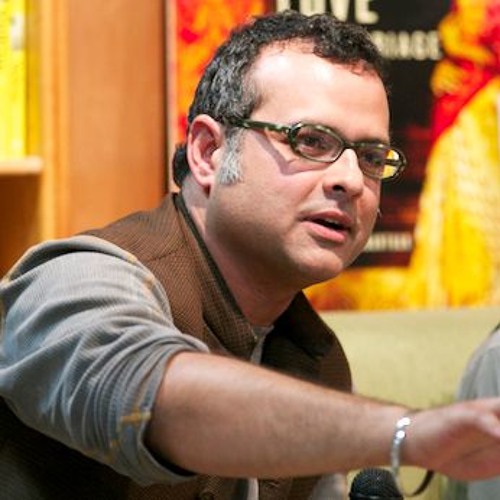
Vijay Prashad is an Indian historian, editor, and journalist. He is a writing fellow and chief correspondent at Globetrotter. He is an editor of LeftWord Books and the director of Tricontinental: Institute for Social Research. He is a senior non-resident fellow at Chongyang Institute for Financial Studies, Renmin University of China. He has written more than 20 books, including The Darker Nations and The Poorer Nations. His latest books are Struggle Makes Us Human: Learning from Movements for Socialism and (with Noam Chomsky) The Withdrawal: Iraq, Libya, Afghanistan, and the Fragility of U.S. Power. Tings Chak is the art director and a researcher at Tricontinental: Institute for Social Research and lead author of the study “Serve the People: The Eradication of Extreme Poverty in China.” She is also a member of Dongsheng, an international collective of researchers interested in Chinese politics and society.
ZNetwork is funded solely through the generosity of its readers.
Donate




