


“Sticks and stones may break my bones, but words will never hurt me.” So goes the nursery rhyme. But we all know it’s not true. “Words,” especially when they are used against marginalized or oppressed people help us internalize our own oppression. At worst, the effect of “words” does cause physical harm, such as stress, as well as bullying us into accepting that we deserve the abuse, the violence of poverty and powerlessness, etc. thus extending the reach and efficacy of the “sticks” and “stones.” At best, internalizing the words and having to engage in a personal battle against them creates barriers to our full participation — in society and in our social justice movements. Words can be exhausting.
When I was 17, I went skinny-dipping with my boyfriend. As I ran ahead of him into the water, he commented, “What is it about girls’ bodies that they jiggle so much?” Before that moment, I don’t remember ever thinking about jiggling. I certainly never thought to evaluate myself or anyone else in terms of jiggling. For 17 years before that moment, I had dedicated zero energy to jiggling. Not so for the subsequent 37 years.
On that day at the lake, I picture myself speeding up in order to more quickly submerge the jiggling parts. And ever since then, the question of managing/submerging/disguising the jiggle has hung out in my consciousness, unbidden and frustratingly energy-consuming. Of course I work not to bow to it, but what a draining enterprise that is — constantly working against the notion that there’s something wrong with me, specifically my female-ness.
I told this story to my 19-year-old daughter, and she responded, “I have a story like that for every part of my body.”
Which is a crushing, heartbreaking statement. It means that from an early age (she thinks around 11), she started seeing her body parts in terms of other people’s judgements. Some of the judgements were seemed innocuous, even well-meaning. One of them, she remembered, was about how she had “nice long legs.” Her outward response: “Oh, thanks.” Her inner response was “Oh. I didn’t know that was a thing,” and then to catalog it along with the growing list of body parts that require featuring or taming or simply managing your shame in relation to.
Women are obviously not the only people who have to manage such words. People of color, disabled people, LGBTQ people – anyone marginalized by systems of oppression has to manage a barrage of comments, media messages, and even innocuous-seeming compliments that frame us – in one way or another – as not whole, as not fully human. Literally.
At the mall with my daughter, we walk by a torso of a female mannequin. No head. No legs. Clad in lacy bra and panties. My reaction is visceral. I want to smash it. Why do we have to see this stuff? It doesn’t break my bones, but it feels like a form of low-intensity warfare against me, my daughter, my other daughter, and all the daughters in the whole wide world. It breaks my heart, pisses me off, and makes me want to distance myself from anything that might be perceived as stereotypically feminine, while at the same time makes me wonder if I should update my underwear collection. (I told you this was exhausting!)
The work isn’t simply to hide the jiggle, you see, it’s to promote the jiggle or rather certain kinds of jiggle, so long as the jiggle comes in the proper dimensions and is adorned to look naughty and virginal at the same time.
Men’s bodies are used to sell products as well, of course, but not in the same way. They’re not chopped up into parts like women’s bodies are, and in any case men (especially white men) have access to a huge spectrum of other messages about themselves. White men are regularly portrayed as full humans, whatever their looks, who matter for a huge variety of reasons. As we walk by the lace-clad torso mannequin, my daughter and I exchange glances and simultaneously roll our eyes. This small gesture reminds me what actually helps in these situations, and that is solidarity. True connections with people who insist on seeing us as whole people and who won’t leave us alone to ward off the low-intensity warfare – these are the best antidotes to internalized oppression, and they are not add-ons to our fight against external oppressions, but essential elements of it.

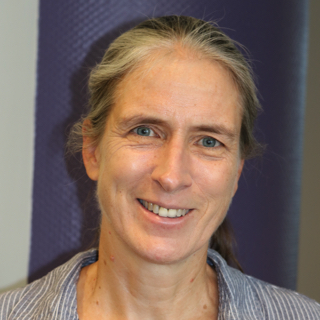
Cynthia Peters is the editor of The Change Agent magazine, an adult education teacher, and a nationally known professional development provider. She creates social-justice-oriented materials that feature student voices, along with standards-aligned, classroom-ready activities that teach basic skills and civic engagement. As a professional development provider, Cynthia supports teachers to apply evidence-based strategies to improve student persistence and develop curriculum and program norms that promote racial equity. Cynthia has a BA in social thought and political economy from UMass/Amherst. She is a long-time editor, writer, and community organizer in Boston.
ZNetwork is funded solely through the generosity of its readers.
Donate




