


After a long struggle, the system of apartheid in South Africa was overcome. Elections based on universal suffrage were held. The chief architect of this transformation was the African National Congress (ANC). And the principal hero of the struggle was the leader of the ANC, Nelson Mandela. Mandela was elected the first president of a post-apartheid government in 1994 by an overwhelming margin. The ANC won a commanding majority in the National Assembly.
Mandela declined to run for reelection in 1999 and he was succeeded for two terms by Thabo Mbeki. Two terms is the maximum allowable. Jacob Zuma was first elected in 2009 and re-elected in 2014. The first two presidents were Xhosa, one of the two major ethnic groups in South Africa. Zuma however was Zulu, and he reflected and enjoyed ethnic pride.
The major opposition party was the Democratic Alliance (DA). It was a party derived from the White liberal groups that existed during the apartheid regime. Initially, it received little support outside the White community, still about 20% of the population. It sought however to attract Black middle class voters and in recent years chose Black politicians as their leaders.
The other significant opposition party to emerge in the last few years is called The Economic Freedom Fighters (EFF). It is led by Julius Malema, formerly the head of the ANC Youth League. Malema centered his appeal on the unresolved land question. He proposed confiscating the land of White farmers, who still control most of the best arable land. His provocative views led to his expulsion from the ANC, after which he created the EFF to pursue these objectives.
This year on August 3, municipal elections were held. Up to now, the ANC was the governing party in three of the four largest cities and the provinces of which they were a part. The one exception was Cape Town where Blacks were in a minority. The largest group were those of mixed heritage, who were known as Coloureds under the apartheid regime. This year, however, they lost two additional large cities to the DA (Tswane and Nelson Mandela Bay) and only narrowly retained the lead in Johannesburg. The EFF performed better than expected, obtaining more than 10% in several cities. The municipal elections have been widely appraised as a major electoral setback for the ANC.
Why did this happen, and what next? The weakness of the ANC has several causes. One is the very widespread charge of corruption of ANC leaders in general and President Zuma in particular. The second is the fact that twenty years after the end of apartheid, no significant program of return of Blacks to land ownership has been enacted, and the ANC did not seem to seek to move forward on this issue. The third is the increased economic difficulties of South Africa, caused by the worldwide increase in economic inequality.
However, the most important factor in the decline of the ANC is generational change. In 2016, the majority of the voters were born after the end of apartheid. They have no personal memory of life under apartheid and therefore no longer reward the ANC for its accomplishments, or perhaps even understand what the struggle under apartheid was like. One can say that the ANC is slipping away in the same way as did other national liberation movements, such as the Congress Party in India. Such slippage can only increase as the years go by.
The problem for South Africa is what next. At the moment, if the DA hopes to govern at the provincial or national level, it does not have enough support to do it on its own. It would have to consider seeking the support of the EFF. But the DA and the EFF support virtually opposing programs. The DA is basically a conservative neoliberal party. The EFF asserts a left program in the economic sphere – renationalization of basic industries in particular. The DA seeks to be a multiethnic party. The EFF is aggressively xenophobic.
And the ANC? In practice, although not in verbiage, its program is not that different from that of the DA – neoliberal economics and multiethnicity. The ANC risks falling apart entirely. The EFF is likely to continue to grow in strength. Its combination of left language and xenophobic pressures has been successful in several former Communist countries in East and Central Europe. Why not in South Africa?
South Africa however is not just any African country. It has been the solid base of stability in Southern Africa and beyond. Its loss of power will have a ripple effect on a large number of states. And what will be the response of the other members of the BRICS who have counted on South Africa to be their evidence that the BRICS are truly concerned with Africa, the poorest continent?
The last consideration is whether there could be the emergence of a true left movement from the bottom up. Could there be the equivalent of Podemos or Syriza? Possibly, but such a movement has not emerged, despite the valiant attempts of small groups of activists.
South Africa has now shifted from a democratic model that it has claimed to be, to being a center of internal turmoil of a sort that might be difficult to label as democratic.

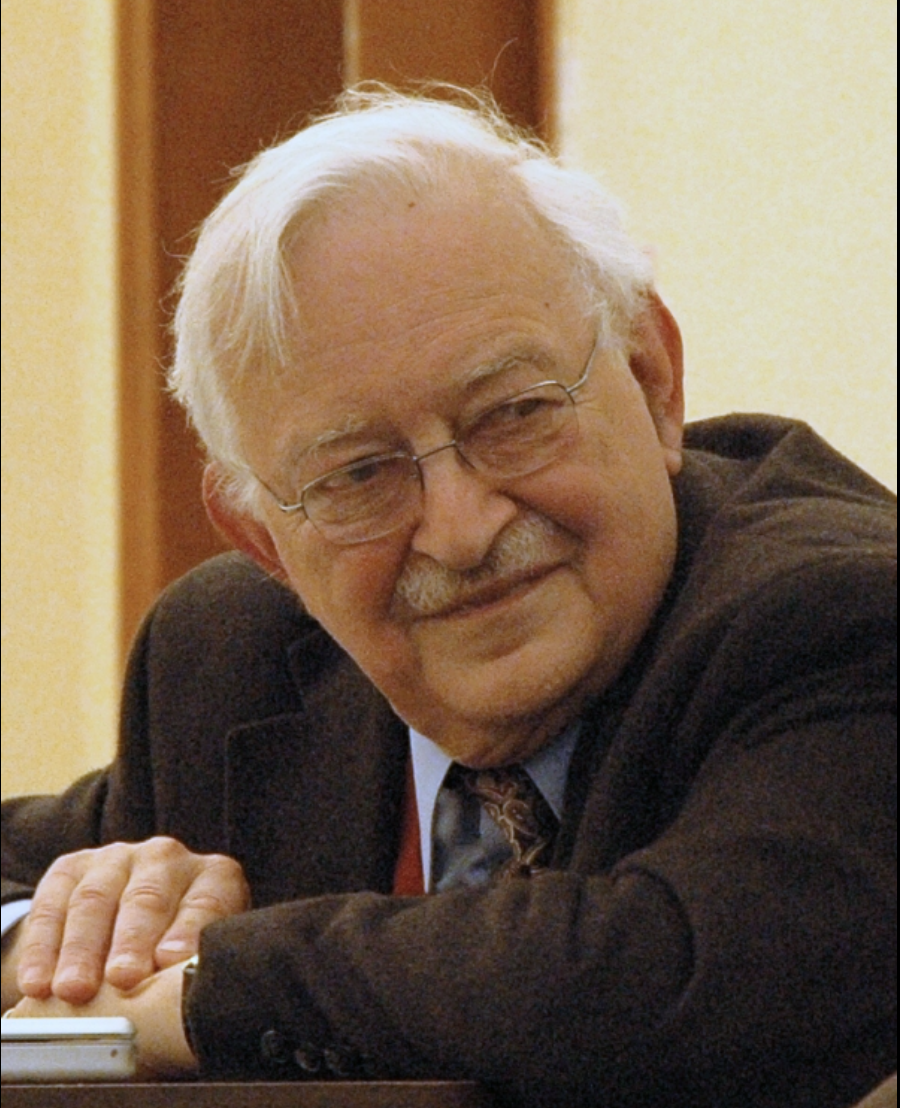
Immanuel Wallerstein (September 28, 1930 – August 31, 2019) was an American sociologist and economic historian. He is perhaps best known for his development of the general approach in sociology which led to the emergence of his world-systems approach. He was a Senior Research Scholar at Yale University from 2000 until his death in 2019, and published bimonthly syndicated commentaries through Agence Global on world affairs from October 1998 to July 2019. He was the 13th president of International Sociological Association (1994–1998). Politically, he considered himself on the "independent left" and was active in a variety of organizations. He argued that we are in the transition from our existing capitalist world-economy to some new system, and that the great political struggle of our time is about which new kind of systemic order will replace our existing one. A new systemic order could be better or worse, depending on our collective ability to push the worldwide decision in one direction or another. He believed that a crucial element in this is a vast debate about the kind of better system we wish to build, and saw the Reimagining Society Project as one of the ways to further this collective debate.
ZNetwork is funded solely through the generosity of its readers.
Donate




