


It’s football season and I feel the same way I do every autumn. Perhaps it is just that I want to have a team that I can follow and root for. I don’t know, but my stomach turns each year with both anger and disappointment.
I am not going to repeat all of the reasons that the name of the ‘Washington Redskins’ is so offensive to Native Americans and anyone else who believes in respecting human beings. I am not going to remind an audience of African-Americans what it would feel like if the team were known as the Washington Niggers, or if there were the New York Coons, or if a WNBA team had been known as the Chicago Aunt Jemima’s. These points have all been made time and again. What is striking is that despite these points being made that there is not a broader cry for the altering of the Washington Redskins’ name, and for that matter, the elimination of other names insulting to Native Americans. I am struck that, even among African- Americans, there is not a widespread cry that we have had enough of such language, and of such insults.
Consider for a moment the outcry from Black America about the continued use of the Confederate flag in many Southern states. Consider for a moment your reaction when you drive past a truck, car or motorcycle displaying a Confederate flag? For most of us of African descent, a Confederate flag is equivalent to the displaying of a Nazi flag. In response, some White people say that the flag is nothing of the kind, but a symbol of the heritage of the South. I don’t know one thinking African-American who accepts such an explanation.
Yet, when it comes to displays insulting to Native American, many of us are willing to take a pass. We act as if it were a small thing; at best a minor scratch, not to be addressed. I will remember that the next time I hear someone talk about the Confederate flag.
The explanations – actually excuses – offered for why the Redskins cannot change their name are disingenuous to be the point of being absurd. Teams regularly change their names, and not just when they change cities. It is not that difficult.
So, then, why no outcry? It feels as if we have become hardened, or perhaps cynical, about the implications of genocide. Perhaps were there many more Native Americans protesting, we would sense that something is absolutely wrong with these insults. Given their relatively small numbers, and the press blackout or, frequently, press marginalization of Native American protests, many of us can sit back comfortably and believe that such outbursts are of little consequence.
Yet, when I hear the name ‘Redskins,’ I not only think of the insults regularly and historically thrown at African-Americans, but I also think about the demonization of the current ‘enemy’ –Arabs and Muslims. In much the same way that Native Americans are not treated as genuine human beings – either romanticized, now that millions of them are dead, or demonized as savages and alcoholics – so, too, have been Arabs and Muslims. Idiotic statements and caricatures can be made of Arabs and Muslims and too many of us don’t bat an eyelid. Jokes are regularly made, turning Arabs and Muslims into something other than human beings; jokes about a religion with more than 1 billion followers.
So, when I insist that something needs to be done about the name of the ‘Washington Redskins,’ it is not just that I believe that it is an insult to Native Americans, though that would be enough to demand a change. Rather it is in addition a demand against the continuous and racist demonization of the enemy of the month, or in the case of Native Americans, the enemy of the last five centuries. This is demanding a lot of the United States, I realize, since it is a demand for settling accounts with the actual history of the U.S.A., a history that involved massive genocide against the original inhabitants of this land, the theft of their land and the destruction of their civilizations. For African- Americans it should not be too big a leap for us to realize which side we should be on. So, if you want to do something other than simply shake your head, I hope you are in agreement with my suggestions:
* If you are a resident of the Washington, D.C.
metropolitan area, don’t go to Washington Redskins games until and unless they change the name of the team.
* No matter where you live, don’t purchase anything connected with the Washington Redskins.
* Send an e-mail comment to the team by going to their site at www.redskins.com and clicking ‘Locker Room,’
where you can send a personal message. Tell them what you really think.
* Have your community organization, school, labor union, or religious institution send an e-mail note or hard copy letter to the Washington Redskins insisting that they change their name.
* Contact opinion makers, including but not limited to elected leaders, asking them to speak out on this issue.
The time has come to draw the line.
Bill Fletcher Jr. is president of TransAfrica Forum, a Washington, D.C.-based non-profit educational and organizing center formed to raise awareness in the United States about issues facing the nations and peoples of Africa, the Caribbean and Latin America. He also is co-chair of the anti-war coalition, United for Peace and Justice (www.unitedforpeace.org). He can be reached at bfletcher@transafricaforum.org.

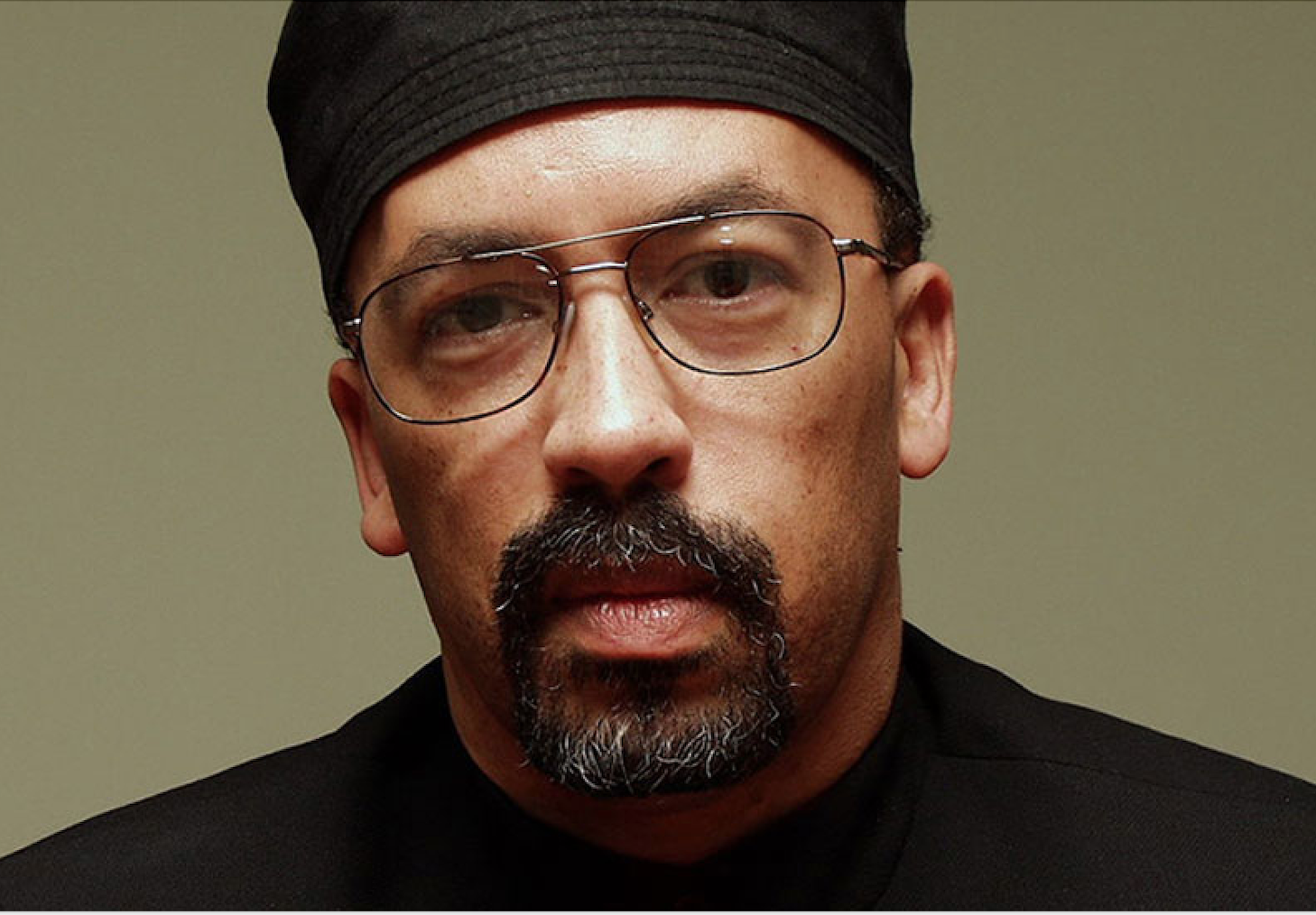
Bill Fletcher Jr (born 1954) has been an activist since his teen years. Upon graduating from college he went to work as a welder in a shipyard, thereby entering the labor movement. Over the years he has been active in workplace and community struggles as well as electoral campaigns. He has worked for several labor unions in addition to serving as a senior staffperson in the national AFL-CIO. Fletcher is the former president of TransAfrica Forum; a Senior Scholar with the Institute for Policy Studies; and in the leadership of several other projects. Fletcher is the co-author (with Peter Agard) of “The Indispensable Ally: Black Workers and the Formation of the Congress of Industrial Organizations, 1934-1941”; the co-author (with Dr. Fernando Gapasin) of “Solidarity Divided: The crisis in organized labor and a new path toward social justice“; and the author of “‘They’re Bankrupting Us’ – And Twenty other myths about unions.” Fletcher is a syndicated columnist and a regular media commentator on television, radio and the Web.
ZNetwork is funded solely through the generosity of its readers.
Donate




