


Falluja, Iraq, a low-rise, mostly Sunni city of about 200,000, has become this war’s Sarajevo. I was there on Saturday and Sunday during what was supposed to be a cease-fire. Instead of calm, I found a city under siege from American artillery and snipers.
At one of the city’s clinics I saw dozens of freshly wounded women and children, victims of US Marine Corps munitions. Hospital officials report that more than 600 Iraqis have now been killed, most of them civilians. Two soccer fields in Falluja have been converted to graveyards. I went to Falluja with a small group of international journalists and NGO workers. We traveled in a large bus full of medical supplies; our plan was to unload our cargo, take a look around, then leave with as many wounded as we could take out with us.
When we left Baghdad, the road was desolate and littered with the scorched and smoldering shells of vehicles. At the first US checkpoint, the soldiers said they’d been there for thirty hours straight. They looked exhausted and scared. After being searched, we continued along bumpy dirt roads, winding our way through parts of Abu Ghraib, steadily but slowly making our way toward besieged Falluja. At one point we passed a supply truck that had been hit and was being looted by people from a nearby village. Men and boys were running from the wreck carrying boxes. A small child yelled at our bus, “We will be mujahedeen until we die!”
At one overpass we rolled by an M-1 tank that resistance fighters had destroyed. Smoke and flames still billowed from its burning guts. Down the road were more fires–the whole thirty kilometers to Falluja was strewn with burned-out fuel tankers, trucks, armored personnel carriers (APCs) and tanks. As we approached Falluja we started running into mujahedeen checkpoints. Seeing our supplies and hearing that we were headed for Falluja, the guerrillas let us pass.
Entering the city we saw a huge cloud from a US bomb. To our horror we realized there was no cease-fire. Falluja itself was virtually empty, aside from groups of mujahedeen fighters positioned on every other street corner, their faces covered by kaffiyehs. Many were armed with Kalashnikov assault rifles; some had rocket propelled grenade launchers. In all, I saw hundreds of Iraqi fighters.
The Marines have occupied the northeastern edge of Falluja, but most of the town is occupied by mujahedeen–both local Sunni as well as Shiite members of Muqtada al-Sadr’s Mahdi, Army who have come in from the south. There seem to be separate groups of Mujahadeen in charge of different parts of Falluja and the various roads in and out. Between the mujahedeen and the Marines’ lines is a no man’s land.
The streets were empty except for a rare ambulance racing to pick up wounded, or the odd family car, usually laden with wounded. We rolled toward one small clinic behind mujahedeen lines, where we delivered our medical supplies from INTERSOS, an Italian NGO.
The clinic building was small, dirty and packed with wounded Iraqis. The Americans have bombed one hospital, and were sniping at people who attempted to enter and exit the other major medical facility. So there were effectively only two small clinics that were safe to care for the hundreds of wounded. (Along with the one we visited, there is one set up in a mechanic’s garage.)
As we unloaded our supplies, in came a stream of wounded women and children. Civilian cars sped up to the clinic and over the curb out front, their drivers desperate to unload their wailing family members.
One woman, shot in the gut, was making rasping, gurgling noises as the doctors worked frantically to extract a bullet and patch the wound. All around were the sounds of muffled moaning. The clinic was running low on crucial supplies. The woman’s small son had a bullet wound in the neck; his eyes glazed, he vomited continually as other doctors raced to save his life. The desperate work in the clinic continued, off and on, into the night as more victims arrived. From outside came the sound of occasional mortar explosions and sporadic bursts of gunfire.
After we delivered the aid, three of my friends agreed to ride out on the clinic’s remaining ambulance to no man’s land to retrieve the wounded. The ambulance–the only one left in this part of town, all the others having been destroyed by the Marines–already had three bullet holes from a US sniper through the front windshield on the driver’s side. The previous driver was out of action; a US sniper’s bullets had grazed his head not long ago. The clinic staff hoped that having English-speaking Westerners on board would allow the vehicle to retrieve more wounded.
My friends made several trips in and out of no man’s land, and even spoke to the Marines. But on the last trip US sharpshooters blew out the vehicle’s tires. My friends were forced to retreat, leaving a pregnant woman trapped in her house.
As evening approached, a nearby mosque announced through its loudspeakers that the mujahedeen had completely destroyed a US convoy. Gunfire and jubilation filled the streets. The celebration fell silent when the mosque’s prayer calls began.
As it grew dark, we made our way to the home of a local man who offered us shelter. Above us we heard the buzzing sound of slow-moving unmanned aerial surveillance drones circling the sky. Then a plane above us began dropping flares. We ran for the cover of a nearby wall, afraid the plane was dropping cluster bombs. There had been reports of this, and two of the most recent victims who arrived at the clinic were said to have been hit by cluster bombs, which badly burned them.
The next morning we walked back to the clinic, and the mujahedeen in the area were extremely edgy, expecting an invasion anytime. They were taking up positions to fight, running to different streets carrying their Kalashnikovs.
One of my friends who’d done another ambulance run to collect two bodies said that a Marine she encountered had told them to leave, because the military was about to use air support to begin “clearing the city.” One of the bodies they brought to the clinic was that of a 55-year-old man shot in the back by a sniper outside his home, while his wife and children huddled wailing inside.
The family could not retrieve his body, for fear of being shot themselves. His stiff corpse was carried into the clinic, flies swarming above it. One of his arms was half-raised by rigor mortis.
We loaded our bus with wounded from the clinic and headed out. Everyone felt a renewed US assault was imminent. Fighter jets roared overhead, circling the outskirts of the city. American bombs continued to fall not far from us, and sporadic gunfire continued.
We left the city as part of a long convoy of civilian vehicles loaded with families. On the way, we passed groups of mujahedeen at their posts, among them defiant armed boys as young as 11. Coming from the opposite direction were US military vehicles, leaving huge dust plumes behind them. The new troops seemed to be taking up positions on the outskirts of town. We passed several more smoking shells of vehicles destroyed by the resistance–more fuel tankers, more blasted APCs.
We are now in Baghdad, afraid to walk the streets. The Mahdi Army is rumored to be hunting down journalists. The NGOs are pulling out. Everyone knows the “cease-fire” was a lie. If this is a truce, what does war look like?

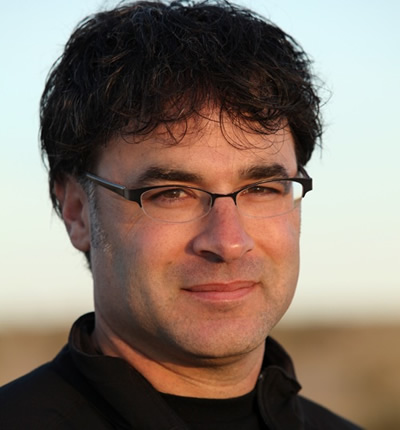
Dahr Jamail is the Baghdad correspondent for The NewStandard. Jamail, a political activist from Anchorage, Alaska, first traveled to Iraq in November 2003 to write about the effects of the US occupation on the Iraqi people. After nine weeks covering Iraq under occupation, he returned to the US and addressed audiences in Alaska and the Northeast about his experience. He has recently returned to Iraq in order to continue reporting on US occupation and privatization. You can view his dispatches and articles at http://newstandardnews.net/iraq.
ZNetwork is funded solely through the generosity of its readers.
Donate




