


Dear Yotam,
I am sorry it took me such a long time to respond, i was not aware of the letter.
Thank you for your kind words and let me try to respond to all the points you have made.
I think we differ mainly in our understanding of the Zionist mindset. For me that internal debates inside Zionism are crucial for the Jewish community in Israel provided it succeeded in carrying on living while ignoring totally the Palestine reality around it. Within that mindset there are indeed two basic ideas: we can have a supramacist ethnic state without much of the areas the state occupied in 1967 and with a submissive Palestinian minority (as long as it does not constitute more than 25% of the population). The second idea, which is the one to which most members of the Israeli political and military elite subscribe – and the majority of the electorate if it bothers to think about these issues – is that the Palestinian existence can be managed by a complex matrix of power: bantunstanization of the West Bank, the enclavement of Gaza, the fragmentation of the Greater Jerusalem area into non viable reservations and the subjection of the Palestinians inside Israel to similar policies in the future.
This is not a battlefield nor is it a war of ideas. The only crucial battle is in those parts of the West Bank which the official Israel designated as Bantustans or reservation which the extreme right want to Judaize. This is akin to the mobsters taking care of the loose canon in their gangs.
From the perspective of the Palestinian wherever they are: there is no plethora of ideas or a heterogeneous society. What they faced, and still are facing, is a political project now a state that does not leave room for a decent existance or normal life to any Palestinian. This is a perception of reality and a policy that are not imposed or coerced on the society by the various governments. This approach is fully endorsed and if to judge by the public Jewish reaction to the Gaza massacre, the vast majority would have liked to see the government take even a tougher attitude towards the Palestinians wherever they are.
It is indeed a call for boycott not only of the government but of anyone who has no qualms at representing it at home and abroad.
It is indeed because I am in Israeli tthat his reality is only too familiar to me. The attempt to portray Israel as a pluralist society painfully torn between a peace camp and a war camp has served Israel well, because very few people who knew Hebrew and lived in Israel knew the nature of the charade. Now in the age of visits and internet, the foul play is over, the nature of the beast is exposed and therefore the readiness of decent people to cry: "enough is enough".
There are as you say film makers who protest; there are academics who resist and two journalists who boldly challenge the common wisdom: but they are a drop in the sea of consensus. Whether you want to assess their number in absolute or relative terms. The only condemning analysis as you call it came from very few schoalrs: most of them left or became renegade Zionists once more.
So the voices who oppose are minimal and the consensus is wide and tight and is not likely to be transformed from within.
As for your three challenge:
First, America is indeed not such an inspiring example. By and large American academics stood by in the awful Bush years and this is why in the rest of the world, not in the West, they were but welcomed by outraged populations world wide. But to their credit and to that of the anti-war movement in America, both in the case of Vietnam and in the present wars, they are able to take to the streets masses of people to demonstrate against the war. Did you ever see such a demonstration in Israel in the last twenty years?
The British academic spearhead the campaign against the wars in Iraq and Afghanistan and the anti war movement brings at time a million demonstrators and would undoubtedly succeeded in getting the British forces out of the occupied countries (unlike Israel the vast majority of the British population objects to the British military presence in Iraq and Afghanistan). I promise you: a million demonstrators in Tel-Aviv and a majority of Israeli Jews calling for the unconditional unilateral withdrawal of Israel from the territories it occupied in 1967 and I suspend my call for boycott.
Mirmar and Sudan are boycotted as was Serbia. Moreover, I would endorse the boycott of any regime that violates human and civil rights, but I will be active on the one that concerns me most: Palestine. Israel is the only ‘western’ country that is boycotted, because it the only ‘western country’ that violates human and civil rights on such a scale and for such a long time. And unlike the other Western countries you mention, there is are not significant voices of dissent or hope to change from within.
Secondly, there is uniformity, a Zionist one, in the Israel Jewish society. The very essence of Zionism – soft or hard, left or right – is such that it negates every basic human and civil right. And as long as Israeli Jews directly or indirectly subscribe to this ideology and do not oppose it they will first not resist the occupation and the further destruction of Palestine and secondly they would be accountable to the crimes committed by their governments.
Thirdly, if anything the cultural boycott proves to be most productive to the Palestinians. It offers alternative to the futile armed resistance, it has re-ignited the discussion about the occupation in the West and inside Israel and it moves the world public opinion in the right direction. The counter Israeli attacks is solely based on hysterical accusations of anti-Semitism that outrun their date of sale long time ago and in a country after country, including the USA, fail to deliver.
As for the people who would suffer, according to the terms and objectives declared by the Palestinian campaign, it will include only those who do not dare to resist the temptation to be the ambassadors of Israel abroad. If they pay – they deserve it.
And yes we should work with all the groups you mentioned in your response, but this is a long term project and we do not have the time. The pace of the destruction on the ground quickens by the day and the only way to stop it is by pressure from the outside.
yours in friendship
Ilan

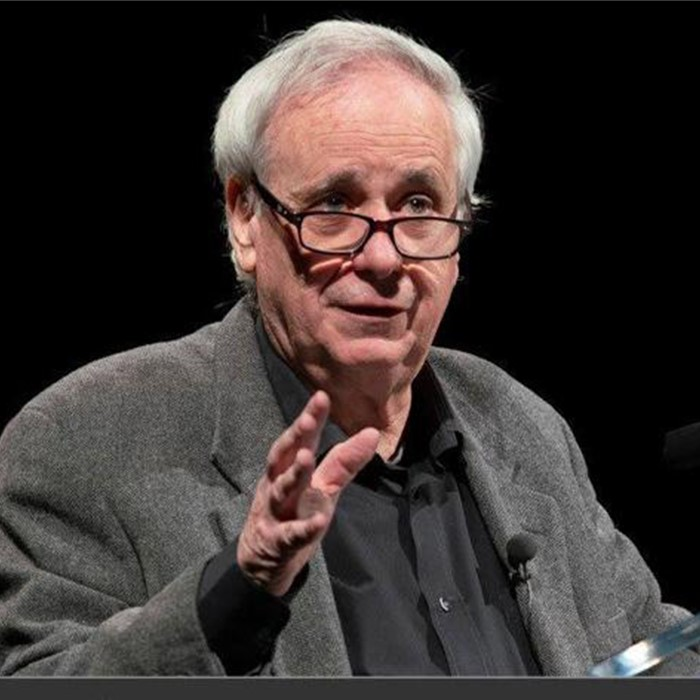
Ilan Pappé is an Israeli historian and socialist activist. He is a professor of history at the College of Social Sciences and International Studies at the University of Exeter in the United Kingdom, director of the university's European Centre for Palestine Studies, and co-director of the Exeter Centre for Ethno-Political Studies. He is also the author of the bestselling The Ethnic Cleansing of Palestine (Oneworld), A History of Modern Palestine (Cambridge), The Modern Middle East (Routledge), The Israel/Palestine Question (Routledge), The Forgotten Palestinians: A History of the Palestinians in Israel (Yale), The Idea of Israel: A History of Power and Knowledge (Verso) and with Noam Chomsky, Gaza in Crisis: Reflections on Israel's War Against the Palestinians (Penguin). He writes for, among others, the Guardian and the London Review of Books.
ZNetwork is funded solely through the generosity of its readers.
Donate




