


Condoleezza Rice made headlines when she testified Thursday at the leak trial of former CIA officer Jeffrey Sterling — underscoring that powerful people in the Bush administration went to great lengths a dozen years ago to prevent disclosure of a classified operation. But as The Associated Press noted, “While Rice’s testimony helped establish the importance of the classified program in question, her testimony did not implicate Sterling in any way as the leaker.”
Few pixels and little ink went to the witness just before Rice — former CIA spokesman William Harlow — whose testimony stumbled into indicating why he thought of Sterling early on in connection with the leak, which ultimately resulted in a ten-count indictment.
Harlow, who ran the CIA press office, testified that Sterling came to mind soon after New York Times reporter James Risen first called him, on April 3, 2003, about the highly secret Operation Merlin, a CIA program that provided faulty nuclear weapon design information to Iran.
Harlow testified that he tried to dissuade Risen without confirming the existence of Operation Merlin, first telling the reporter “that if there was such a program, I didn’t think a respectable newspaper should be writing about it.” The next day, when Risen called back, “I said that such a story would jeopardize national security.”
Not until cross-examination by a defense attorney did Harlow acknowledge something that he’d failed to mention when describing his initial conversation with Risen: In fact, Harlow had told Risen that only Al Jazeera would be willing to cover the story he was pursuing.
As a prosecution witness, Harlow volunteered some information that may come back to haunt the prosecutors. With alarm spreading among CIA officials, Harlow testified, someone at the agency mentioned to him that Sterling had worked on the Operation Merlin program. In his testimony, Harlow went on to say that Sterling’s name was familiar to him because Sterling, who is African American, had filed a race discrimination lawsuit against the CIA.
Left dangling in the air was the indication that Harlow thought of Sterling as a possible leaker because he’d gone through channels to claim that he had been a victim of racial bias at the CIA. Sterling’s complaint had received substantial coverage in several major news outlets. (The CIA eventually got the suit thrown out of court on the grounds of state secrets.)
According to Harlow’s testimony, everything he heard about Operation Merlin at the CIA was that it was going swimmingly. The only words otherwise came from Risen, who told him the Iranians were already aware of the flaws in the nuclear weapons design that the CIA had arranged to be passed along to them. Harlow testified that it was the first time he’d heard any assertion that Operation Merlin was not well run.
Along the way, on the witness stand Thursday afternoon, the veteran PR operative for the CIA let some paternalism slip: “I did think there was a way to dumb the story down so it would be appropriate to put in the paper,” Harlow said.
But his hopes to block the story or water it down enough to render it insignificant were clearly failing. Risen showed no sign of backing off. So the CIA called in big guns. Twenty-seven days after Risen’s first call on the subject to Harlow, national security adviser Rice hosted a meeting that included CIA Director George Tenet and other government officials as well as Risen and Times Washington bureau chief Jill Abramson.
The pressure worked. Within 10 days, the Times told the National Security Council that it would not publish the story. “I was relieved when I learned the story was not running,” Rice testified on Thursday, “and I was grateful to the Times.”
Her relief lasted almost three years, until Risen included a chapter about Operation Merlin in his 2006 book State of War. But Rice has never had a reason to rescind her gratitude to the New York Times; the newspaper never published the story. Information about the dangerous CIA program only reached the public because Risen took the risk of putting it in a book.
Norman Solomon is the executive director of the Institute for Public Accuracy and the author of War Made Easy: How Presidents and Pundits Keep Spinning Us to Death. He is a co-founder of RootsAction.org.

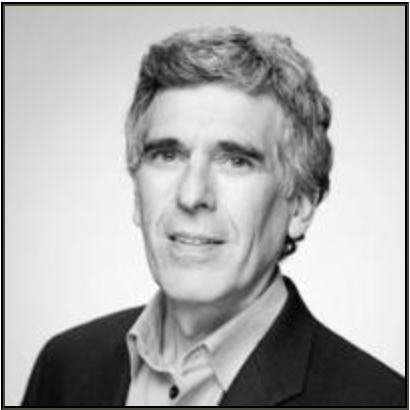
Norman Solomon is the national director of RootsAction.org and executive director of the Institute for Public Accuracy. The paperback edition of his latest book, War Made Invisible: How America Hides the Human Toll of Its Military Machine, includes an afterword about the Gaza war.
ZNetwork is funded solely through the generosity of its readers.
Donate




