


It’s a late morning start today…as I’m waiting for Abu Talat, who calls to tell me he is snarled in traffic and will be late once again, huge explosions shake my hotel. Shortly thereafter mortars are exploding in the “green zone” as the loud warning sirens there begin to blare across Baghdad.
Automatic weapon fire cracks down the street.
The good news is that interim prime minister Ayad Allawi has announced a shortening of the curfew that most of Iraq is under. So now rather than having to be off the streets by 10:30pm, we can stay out until 11pm before we are shot on sight.
This past Sunday a small Iraqi Red Crescent aid convoy was allowed into Fallujah at 4:30pm. I interviewed a member of the convoy today. Speaking on condition of anonymity, (so I’ll call her Suthir), the first thing she said to me was, “I need another heart and eyes to bear it because my own are not enough to bear what I saw. Nothing justifies what was done to this city. I didn’t see a house or mosque that wasn’t destroyed.”
Suthir paused often to collect herself, but then as usual with those of us who have witnessed atrocities first hand, when she started to talk, she barely stopped to breath.
“There were families with nothing. I met a family with three daughters and two sons. One of their sons, Mustafa who was 16 years old, was killed by American snipers. Then their house was burned. They had nothing to eat. Just rice and cold water-dirty water…they put the rice in the dirty water, let it sit for one or two hours, then they ate the rice. Fatma, the 17 year-old daughter, said she was praying for God to take her soul because she couldn’t bear the horrors anymore.”
The families’ 12 year old boy told Suthir he used to want to be a doctor or a journalist. She paused then added, “He said that now he has no more dreams. He could no longer even sleep.”
“I’m sure the Americans committed bad things there, but who can discover and say this,” she said, “They didn’t allow us to go to the Julan area or any of the others where there was heavy fighting, and I’m sure that is where the horrible things took place.”
She told me the military took civilian cars and used them, parked in groups, to block the streets.
Suthir described a scene of complete destruction. She said not one mosque, house or school was undamaged, and said the situation was so desperate for the few families left in the city that people were literally starving to death, surviving as the aforementioned family was.
Rather than burying full bodies, residents of Fallujah are burying legs and arms, and sometimes just skeletons as dogs had eaten the rest of the body.
She said that even the schools in Fallujah had been bombed. Suthir also reported that the oldest teacher in Fallujah, a 90 year-old man, while praying in a mosque was shot in the head by a US sniper.
The US military has not given a date when the hundreds of thousands of refugees from Fallujah would be allowed to return to their city, but estimated it would be 2 months.
The Minister of Education announced today that schools will reopen in Fallujah next week.
“There was no reconstruction there,” Suthir added, “I just saw more bombs falling and black smoke. There is not a house or school undamaged there. I went to a part of the city that someone said was not bombed, but it was completely destroyed.”
“The Americans didn’t let us in the places where everyone said there was napalm used,” she said, “Julan and those places where the heaviest fighting was, nobody is allowed to go there.”
She said that there were many military checkpoints, but most of the soldiers she saw were not doing much.
“It was quiet, but this wasn’t the quiet of peace,” she told me, “It was the quiet of destruction and death.”
As helicopters rumble overhead, she added with frustration and anger, “The military is doing nothing to help people. Only the Iraqi Red Crescent is trying to help-but nobody can help the traumatized people, even the IRC.”
Later this afternoon, back in my room one of my Iraqi friends stops by. We talk work until the sun sets, so she stands to prepare to leave as she doesn’t like to be out after dark.
Pulling her jacket on she tells me, “You know, it is only getting worse here. Everyday is worse than the last day. Today will be better than tomorrow. Right now is better than the next hour. This is our life in Iraq now.”

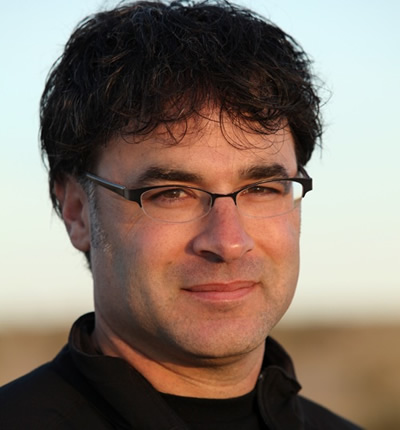
Dahr Jamail is the Baghdad correspondent for The NewStandard. Jamail, a political activist from Anchorage, Alaska, first traveled to Iraq in November 2003 to write about the effects of the US occupation on the Iraqi people. After nine weeks covering Iraq under occupation, he returned to the US and addressed audiences in Alaska and the Northeast about his experience. He has recently returned to Iraq in order to continue reporting on US occupation and privatization. You can view his dispatches and articles at http://newstandardnews.net/iraq.
ZNetwork is funded solely through the generosity of its readers.
Donate




