


CNN correspondent Jim Acosta returned to the White House on 17 November, a few days after a US judge had forced President Donald Trump to reverse the revocation of his press pass. Smiling before 50 or more photographers and cameramen, Acosta said triumphantly: ‘This was a test and I think we passed the test. Journalists need to know that in this country their First Amendment rights of freedom of the press are sacred, they’re protected in our constitution. Throughout all of this I was confident and I thought that … our rights would be protected as we continue to cover our government and hold our leaders accountable.’ Fade-out, happy ending.
Julian Assange probably did not watch the moving conclusion of this story live on CNN. He sought asylum in the Ecuadorian embassy in London six years ago, and his life there has become that of a prisoner: he cannot go outside for fear of being arrested by the British police, then probably extradited to the US; his access to communications is limited and he has been harassed repeatedly since Ecuador’s president, Lenín Moreno, decided to please the US and make conditions less comfortable for his ‘guest’ (see Ecuador veers to neoliberalism, in this issue).
The reason for his detention, and the threat of several decades in prison in the US (in 2010 Trump wanted him executed), is his WikiLeaks website which has been behind the major revelations that have inconvenienced the world’s powerful over the last decade: photographic evidence of US war crimes in Afghanistan and Iraq, US industrial espionage, secret bank accounts in the Cayman Islands. The dictatorship of former Tunisian president Zine al-Abidine Ben Ali was shaken by the leaking of a US State Department cable that referred to this kleptocracy, a US ally, as a ‘sclerotic regime’ and ‘quasi-mafia’. WikiLeaks also revealed that two senior figures in France’s Socialist Party, François Hollande and Pierre Moscovici, had visited the US embassy in Paris in June 2006 to say that they regretted the vigour of President Jacques Chirac’s opposition to the US invasion of Iraq.
What the ‘left’ cannot forgive Assange for is WikiLeaks’ publication of stolen emails from Hillary Clinton’s presidential campaign. They believe this favoured Russian designs and Trump’s election, and forget that, in this matter, WikiLeaks only unveiled her efforts to sabotage Bernie Sanders’s campaign during the Democratic primaries. In 2016 media around the world, especially in the United States, eagerly relayed the information, as they had done with previous leaks, without editors being called foreign spies or threatened with imprisonment.
The US authorities’ relentless pursuit of Assange is encouraged by the cowardice of many journalists who have abandoned him to his fate or even delight in his misfortune. MSNBC star anchor Christopher Matthews, formerly a Democratic Party bigwig, even suggested that the US secret service should ‘pull one of those Israeli numbers and just grab him.’
Please Help ZNet and Z Magazine
Due to problems with our programming that we have only now finally been able to fix, it has been over a year since our last fund raising. As a result, we need your help more than ever to continue to bring the alternative information you have been looking for for 30 years.
Z offers the most useful societal news we can, but in judging what is useful, unlike many other sources we emphasize vision, strategy, and activist relevance. When we address Trump, for example, it is to find ways beyond Trump, not to merely repeat, over and over, how terrible he is. And the same is true for our addressing global warming, poverty, inequality, racism, sexism, and war making. Our priority is always that what we provide has potential for aiding determining what to do, and how best to do it.
In fixing our programming problems, we have updated our system to make becoming a sustainer and giving donations easier. It has been a long process but we are hopeful it will make it more convenient for everyone to help us grow. If you have any trouble, please let us know right away. We need input on any problems to make sure the system can continue to be easy to use for everyone.
The best way to help, however, is to become a monthly or annual sustainer. Sustainers can comment, post blogs, and receive a nightly commentary by direct email.
You can also or alternatively make a one-time donation or get a print subscription to Z Magazine.
Subscribe to Z Magazine here.
Any aid will help greatly. And please email any suggestions for improvements, comments, or problems right away.

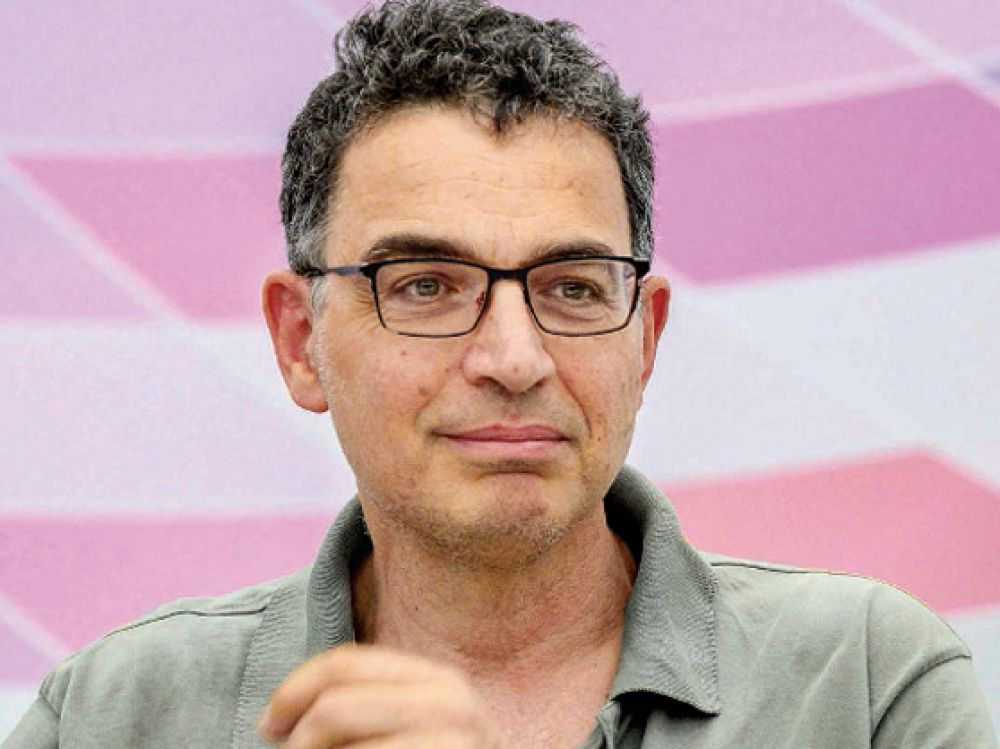
Serge Halimi writes for le Monde diplomatique (www.mondediplo.com) and is the author of Le Grand Bond en Arrière: Comment l'ordre libéral s'est imposé au monde (The Great Leap Backward: How the liberal order was imposed on the world)
ZNetwork is funded solely through the generosity of its readers.
Donate





1 Comment
I would disagree with one point about the Clinton emails. They should have been released much earlier if they were intended to help Sanders.
My understanding is that it was too late when they finally came out meaning they were intended to help Trump rather than Sanders.