


I found myself mulling over a column I read the other day about the November 2014 midterm elections. The writer expressed concern that President Obama seems to have, once again, disengaged and is, in effect, casting Democratic Party candidates to the wind. Perhaps I am being a bit melodramatic. The writer was deeply concerned that given how much is at stake in this election that the President should be more deeply involved in the lead up to November 4th.
Let me offer a different view. I frame this more as a question for you, the reader, to ponder. Perhaps it is better for Obama to stay out of the way. Consider, for a moment, that his poll numbers are not great; he is inconsistent in taking up national debates; and he is no longer a novelty.
The Republicans want to make the November 4th election about Obama. They had planned on making opposition to the Affordable Care Act (“Obamacare”) their rallying cry for this election cycle but as the Affordable Care Act has become more popular and millions have enrolled, this strategy has been called into question. But there are enough issues around which the Republicans can go after Obama, not the least being that he continues to be Black, as a way of inciting their base to turn out.
Democratic candidates have a choice. They can, of course, make the election about defending the legacy of President Obama. Such an approach would more than likely be self-defeating. In the alternative, they can choose to focus their campaigns on the future.
The military frequently speaks of winning campaigns, or wars, one battle at a time. Each battle is self-contained, though clearly exists in a larger context. One cannot defeat an opponent all at once—short of a nuclear exchange—but must take an opponent down one battle at a time until the opponent either implodes or is defeated. There are no easy solutions.
What has been missing in the lead up to the November 4th election are significant discussions emerging from Democratic Party candidates about the future. If you, like me, have been a recipient of wave after wave of fundraising requests from the Democratic Party establishment, and its various candidates, what has been the clarion call has been one of ‘fear of the alternative.’ Specifically, we are treated to horror tale after horror tale about what may very well happen if the Republicans take both houses of Congress. While such worries are not without reason, what is being misunderstood is that fear can both inspire as well as paralyze. If liberals and progressives conclude that the Republicans are too overwhelming to stop, much as the French military did in 1940 in the face of the German blitzkrieg, then people may, in effect, surrender. In this case surrender means staying at home and disengaging from electoral politics (and maybe disengaging from all politics).
Instead of fear-mongering, there is need for a robust counter-attack. Genuine progressive Democrats and Independents need to be leading that charge. The counter-attack needs to be framed in the context of a different vision for the future of the USA and, for that matter, for the world. This will necessitate not only criticism of the Caligula wing of the political elite—the Republican Party—but criticisms of the Democratic establishment itself. We need candidates who are prepared to challenge on matters of foreign policy, e.g., reintroduction of a military presence in Iraq; bullying in Latin America, and domestic policy, e.g., the need for real national healthcare reform, as in Medicare for all; a “Marshall Plan” of economic development and job creation in opposition to planetary environmental disaster and workforce redundancy in our cities.
Arguing for the future also involves speaking truth about the situation facing workers in the USA and speaking against the right-wing populist messages coming out of the Republican Party that play to the fear of so many white Americans. It is an argument about a different set of priorities.
Let’s look at the question of Ferguson, Missouri. In addition to the obvious issues of racial injustice and extra-judicial violence, Ferguson speaks to the crisis of our cities and the economy. It speaks to the increasing numbers of workers who have no permanent work and are not considered necessary in order for the economy to grow. This ‘redundant’ workforce is allowed to fend for itself until it becomes unruly, at which point physical force is introduced in the form of an increasingly militarized police.
We need political leaders who will offer a very different path for our cities. Containing the impoverished with sophisticated and brutal technology is not a winning strategy for a country that wishes to claim to be a democracy. Reclaiming the cities and introducing alternative economic development strategies is a compelling and realizable approach if there are political forces that are sufficiently courageous and visionary in order to advance along these lines.
Therefore, it is not clear that President Obama’s involvement in the 2014 campaign will necessarily add value. In some ways it may be more of a distraction. Progressive Democrats and Independents need to win in November on the basis of a vision that runs diametrically counter to the semi-barbaric thinking that permeates today’s Republican Party. There is no room for walking a fine line or ‘courting’ the center. There is no room for fruitless compromises when the political Right seeks to reverse the gains made in the 20th century. In that sense we do not need an ‘understanding’ Obama attempting to walk the middle of the road in support of this or that Democratic candidate. We need candidates who are prepared to dig-in, fight and win, one district at a time.
It not only can be done but must be done. Yet the absence of sufficient numbers of progressive political organizations to push such an approach frequently ends up meaning that we are appealing to individual Democratic and Independent candidates to do the right thing, rather than their feeling the heat of a mobilized and organized constituency that truly understands that the Republicans cannot be allowed to pass “GO”.
I have never felt so strongly that the future is there for us to win. While I tip my hat to the historic significance of Obama’s two elections, I believe that it may be better for him to simply…do no harm.
——————————————–
Bill Fletcher, Jr. is a racial justice, labor and global justice activist and writer. He is a contributor to Telesur-English’s op-eds and is the host of The Global African which appears on Telesur-English.

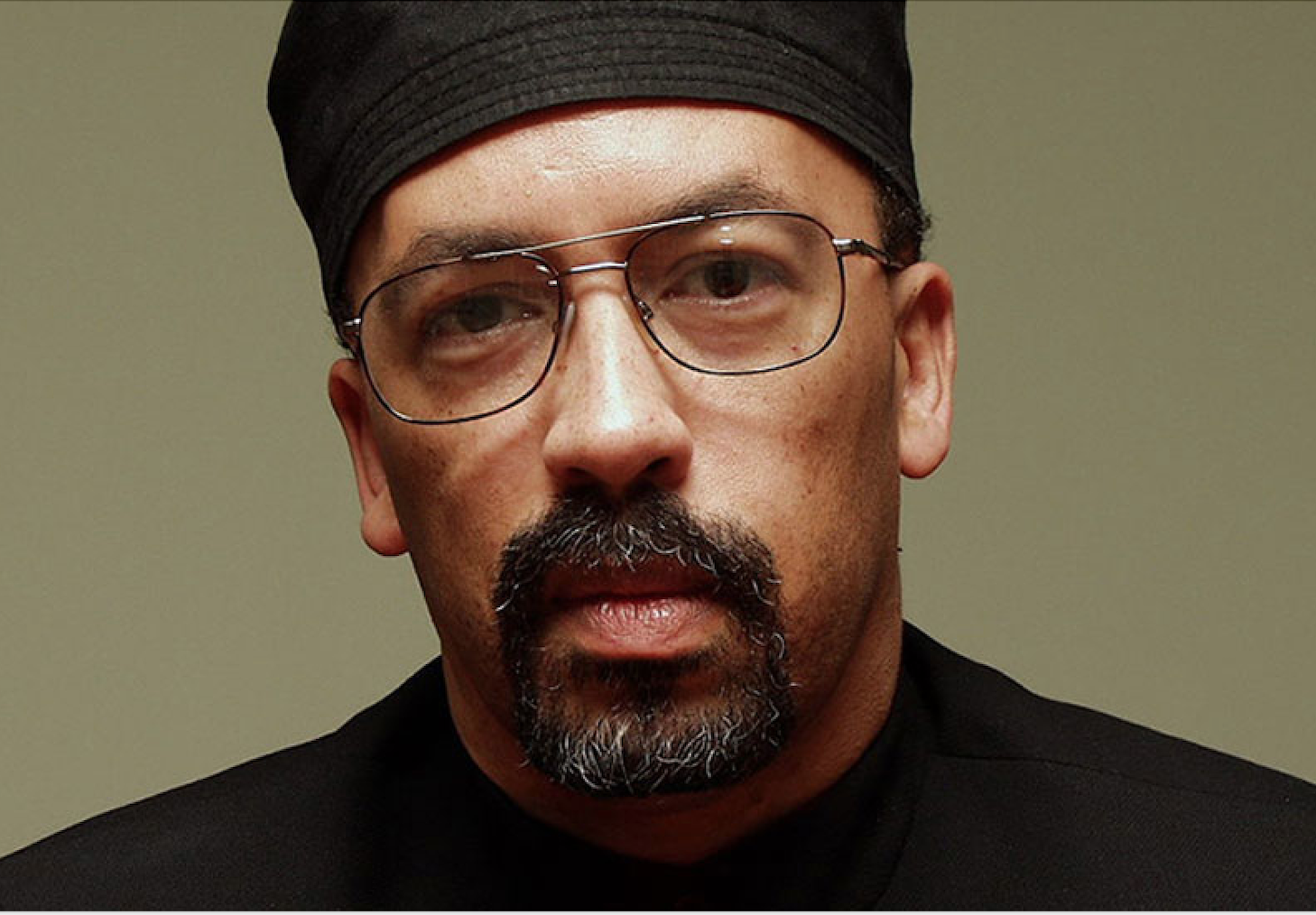
Bill Fletcher Jr (born 1954) has been an activist since his teen years. Upon graduating from college he went to work as a welder in a shipyard, thereby entering the labor movement. Over the years he has been active in workplace and community struggles as well as electoral campaigns. He has worked for several labor unions in addition to serving as a senior staffperson in the national AFL-CIO. Fletcher is the former president of TransAfrica Forum; a Senior Scholar with the Institute for Policy Studies; and in the leadership of several other projects. Fletcher is the co-author (with Peter Agard) of “The Indispensable Ally: Black Workers and the Formation of the Congress of Industrial Organizations, 1934-1941”; the co-author (with Dr. Fernando Gapasin) of “Solidarity Divided: The crisis in organized labor and a new path toward social justice“; and the author of “‘They’re Bankrupting Us’ – And Twenty other myths about unions.” Fletcher is a syndicated columnist and a regular media commentator on television, radio and the Web.
ZNetwork is funded solely through the generosity of its readers.
Donate




