

If there was ever any doubt that Donald Trump has this thing in the bag, it was removed by last night’s results in New Hampshire. It was the state where Nikki Haley’s chances were the best. From here, if she stays in the race at all, it’ll be on the desperate hope that something happens to take Trump out of the race and she’ll be the last candidate standing.
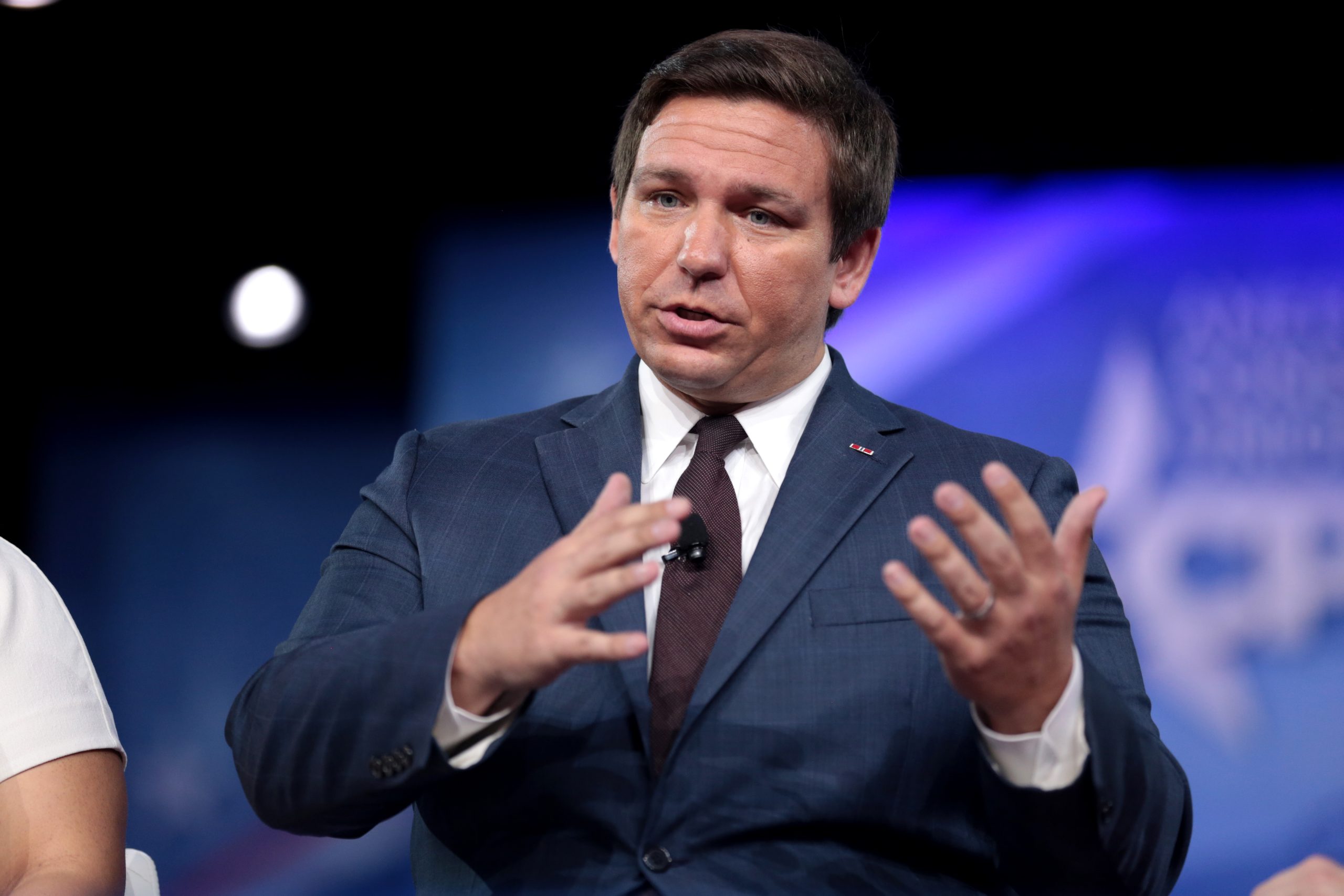
The chances of that strategy paying off are slim. But at least Haley made it through the first two contests. Florida governor Ron DeSantis barely made it to Iowa. The candidate, who Trump called “Ron DeSanctimonious,” spent well over $53 million and got a grand total 23,420 votes in Iowa.
If you’re glued to the daily news cycle, you saw DeSantis’s campaign hit the wall in slow motion and were not surprised by the ending. But though his campaign had been obviously doomed for months, this wasn’t how the story was originally supposed to go.
At the beginning of 2022, 65 percent of Republicans said they wanted DeSantis to run for president. Fifty-six percent preferred him to Trump. By June, Jonathan Chait was writing about the “coronation” of DeSantis in New York magazine and saying that anyone who didn’t believe the Florida governor could “beat Trump straight-up in 2024” wasn’t “paying attention to conservative media.”
So what happened?
Part of the answer is that the gravitational force of Trump was too powerful. The politics of Trumpism and anti-Trumpism have defined much of what goes on in both parties since 2015, and it was always going to be hard to convince Republican voters not to rally around the Donald. Another factor at play is surely that DeSantis has a deeply unappealing personality, with increased media exposure dulling his original luster.
But a factor we shouldn’t underestimate is that what DeSantis’s campaign was selling just didn’t excite voters — not even Republican primary voters. As conservative writer Sohrab Ahmari points out:
[DeSantis] made everything about wokeness. The Sunshine State, he boasted, is where “woke goes to die.” In a June address echoing Winston Churchill, he vowed: “We will fight the woke in education, we will fight the woke in the corporations, we will fight the woke in the halls of Congress.” There wasn’t a single issue that DeSantis didn’t somehow reduce to the problem of wokeness. Asked on Fox News what he would do about Ukraine on Day One, he offered a long disquisition on the spread of wokeness and gender ideology in the military. Asked about the collapse of Silicon Valley Bank, he blamed — you guessed it — “DEI”, or diversity, equity and inclusion.
It turns out that even voters who most dislike “wokeness” weren’t particularly moved by DeSantis’s framing — and it’s worth taking a minute to think about why that is.
The Misuses of “Woke”
At one point during the nomination fight, Trump made fun of those who say “woke woke woke” all the time. “It’s just a term they use,” he said dismissively. “Half the people can’t even define it, they don’t know what it is.”
Trump is undoubtedly a culture warrior in his own way, but he’s not wrong that the term is extremely loose. While its earliest meaning was something like “aware of and vigilant about racism,” perhaps its dominant meaning now is a kind of progressive culture-war posturing characterized by language policing, censoriousness, automatic deference based on personal identity, and moralizing about individual behavior. Certainly that seems to be the thing that socialist critics like Adolph Reed or the late Michael Brooks have in mind when they criticize things they call “woke.”
Know Your Enemy cohost Sam Adler-Bell captured part of what people are often talking about when they talk about wokeness when he described “the language of wokeness” as a “communicative register” that presents “unintuitive and morally burdensome” progressive requirements “in a manner that suggests they are self-evident.”
That kind of thing definitely exists and, as Adler-Bell articulated, it strikes many people as obnoxious and controlling. It’s no surprise, then, that many conservatives have perceived an opening to capitalize on a backlash against “wokeness.” This in turn has often led them to overuse the term in ways that make it an all-purpose signifier for things they don’t like. Anything that has anything to do with “social justice” becomes woke in their rhetoric.
Ordinary right-wingers may not like wokeness, but they also seem to find preoccupied “anti-wokeness” off-putting, possibly for the same reason: it amounts to hectoring over niche concerns. That level of culture-war obsession speaks much more to right-wing media creatures who spend much of their time stewing about how annoyed they are by their counterparts in mainstream and progressive media spaces than it does to ordinary Republican voters who don’t spend all day on X, formerly Twitter. Similarly, Chait’s formulation that people who didn’t think DeSantis could beat Trump weren’t “paying attention to conservative media” is telling. Why think that what was going on in conservative media is going to reliably track the concerns of voters — even conservative ones? Right-wing podcasters and magazine interns simply aren’t a very large demographic.
DeSantis’s bizarre decision to do his campaign launch as an experimental use of Twitter Spaces is emblematic of his campaign’s discourse poisoning. Most people aren’t on Twitter, and the ones who geek out about the idea of interacting in a Twitter Space are a small minority even of Twitter users.
Getting Out of the Culture War
The final and deepest problem may be that the sort of obsessive, carping “anti-wokeness” represented by DeSantis ends up replicating a great deal of what makes “wokeness” so off-putting in the first place. I wasn’t surprised, for example, to see one poll that suggested that even Republican voters tend to dislike the idea of using government power to crusade against businesses that allegedly “promote ‘woke’ left ideology” — an idea that DeSantis enthusiastically supports and attempted to put in practice in Florida, where he’s battled the Disney corporation for culture war–related reasons.
If “wokeness” spurs backlash by projecting an obnoxious and controlling attitude that insists that everyone be on board with a given checklist of cultural preoccupations, why would an anti-wokeness that displays similar characteristics be a winning formula for appealing to voters — even conservative ones? Even voters who (unlike me) favor socially conservative policies may dislike a sense that everyone and everything is being constantly policed for signs of excessive “wokeness.” In other words, anti-wokeness may be beginning to feel like wokeness by another name.
Left-wing writer Freddie deBoer once captured much of what can be annoying about “wokeness” in an essay called “Planet of Cops“:
People are alienated and worn down and hopeless, and so they see their opportunity to finally be the one pulling over somebody else’s car, lazily tapping the glass with their flashlights. . . . Everyone’s a detective in the Division of Problematics, and they walk the beat 24/7. You search and search for someone Bad doing Bad Things, finding ways to indict writers and artists and ordinary people for something, anything. That movie that got popular? Give me a few hours and 800 words. I’ll get you your indictments.
Well — why would nonstop hectoring about movies that are “too woke” be any less grating over time? Conservative pundit Ben Shapiro — tellingly, a strong DeSantis supporter — put out a video where he ranted for forty-three minutes about the woke feminist evils of Barbie. I didn’t see the film, so I can’t judge, but as far as I can tell Barbie was light and fun and vast numbers of ordinary people enjoyed watching it. Is there any particular reason why people would enjoy Officer Shapiro tapping at their window to demand to know why they liked that than, say, Officer Noah Berlatsky complaining that Schindler’s List didn’t have a strong enough anti-fascist message?
Maybe ordinary Americans are getting sick of all of this and would like to turn the dial of the “woke” vs. “anti-woke” culture war down a notch or two. Fingers crossed that politicians hear the message.
ZNetwork is funded solely through the generosity of its readers.
Donate




